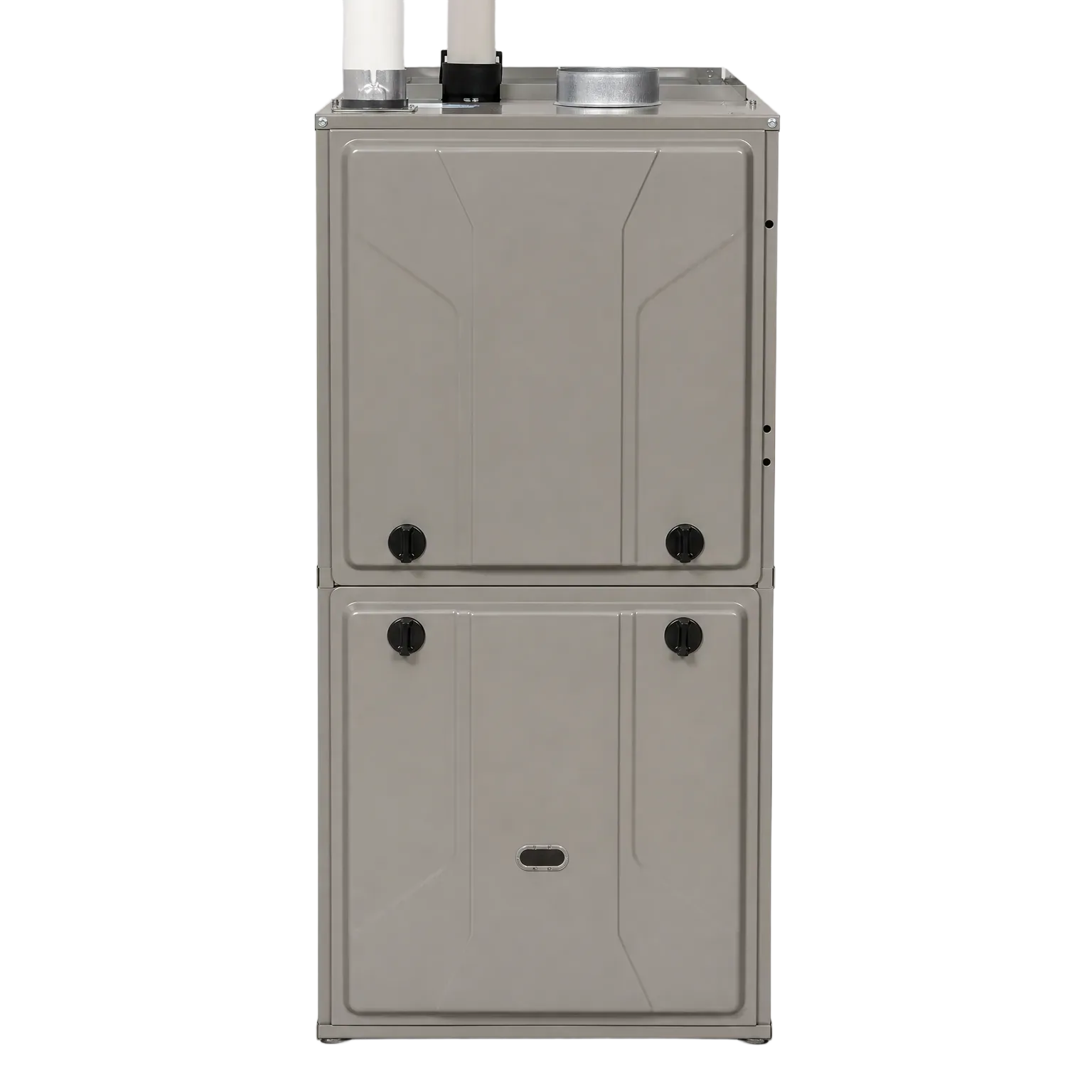


Furnace leaking water in Greenfield, IN

A Hancock County pro who repairs furnaces gets your request.

Connect with a pro

Water pooling near your furnace usually comes from condensation or a cracked line, and which one it is depends on what kind of furnace you have. If it's a high-efficiency furnace, the kind with a PVC pipe running outside for exhaust, it produces condensation as a normal part of burning gas, and that water drains out through a condensate line and pump. That line clogs, or the pump fails, and the water backs up and leaks instead of draining away. An older furnace without that PVC vent shouldn't be producing condensation at all, so water there often means a cracked heat exchanger or a problem with a humidifier attached to the system. Either way, a furnace leaking water should get shut off and looked at rather than left running, since water near the burner compartment and electrical parts is not something to wait out through a cold snap.

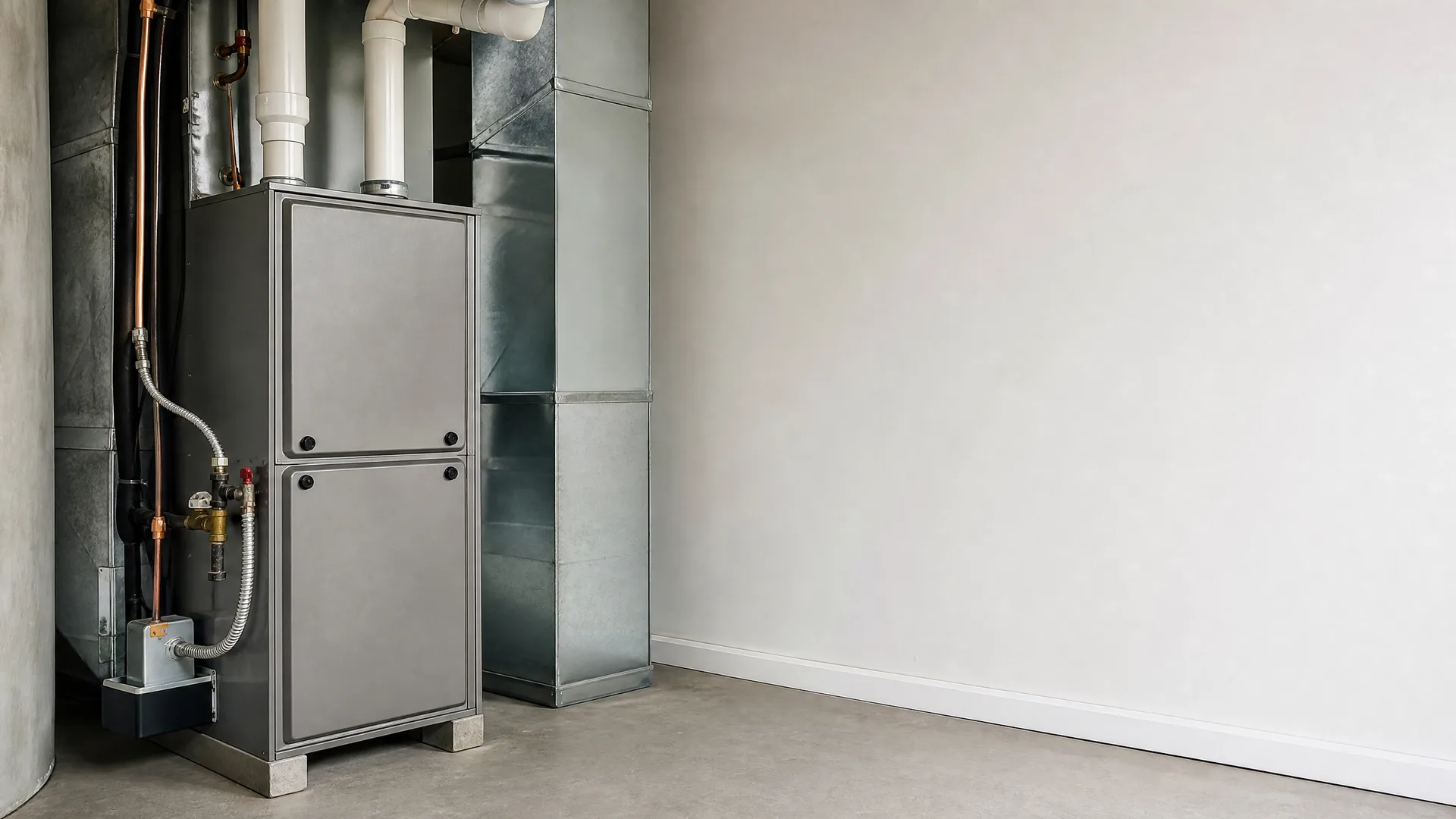
A gray high-efficiency furnace with white PVC vent pipes, copper and flexible piping, and galvanized sheet-metal ductwork stands against a wall in a room with a bare concrete floor and plain light-colored wall.

Where the condensate actually forms

A high-efficiency furnace cools its exhaust enough to pull the heat back out before venting it through PVC pipe. That cooling turns part of the exhaust to water, and that water has to go somewhere. It drains through a trap and a plastic line, usually into a floor drain or a condensate pump. If that line clogs with sludge or sags and traps water, it backs up and finds the floor instead.

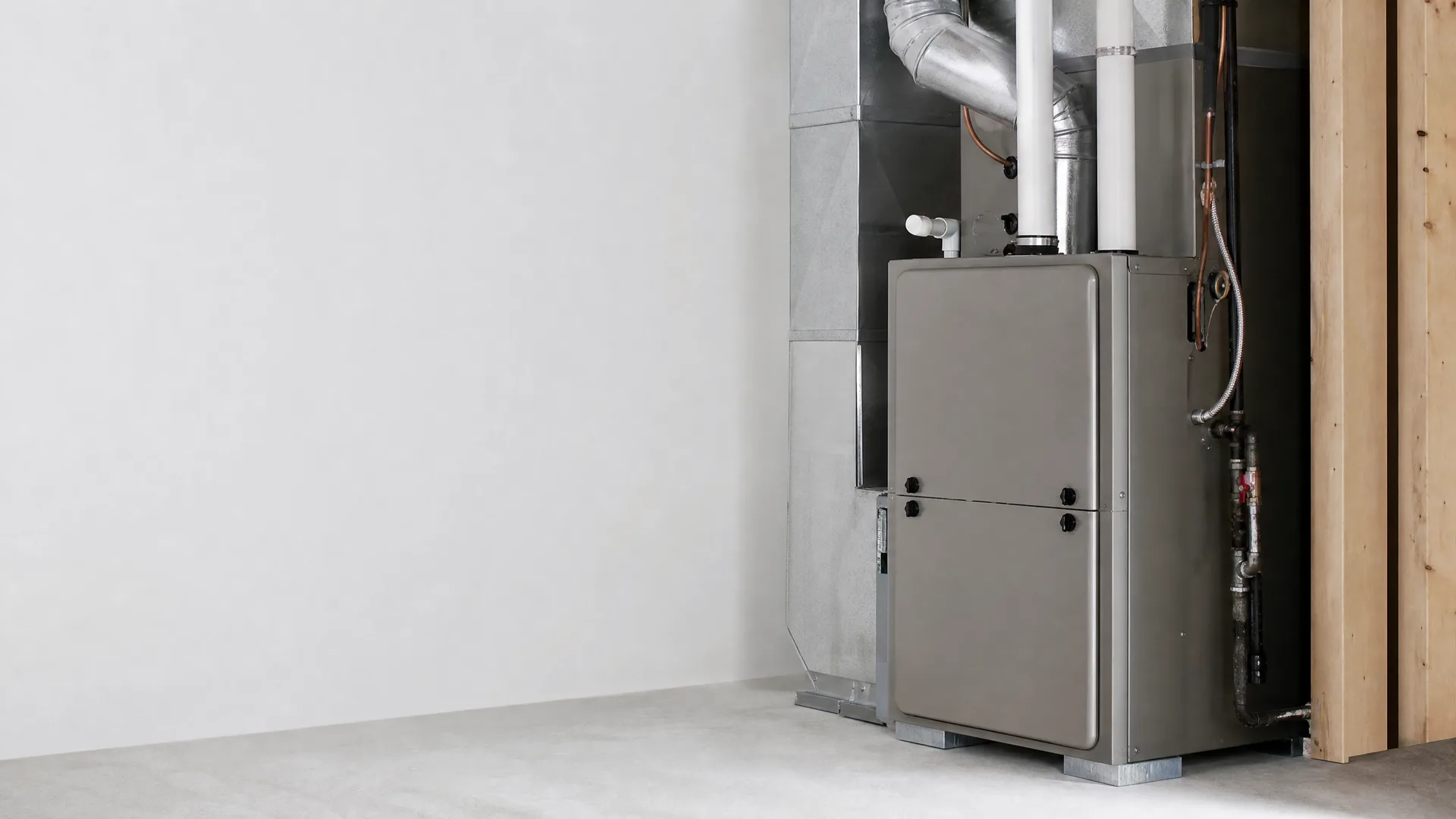
A gray residential furnace with attached sheet-metal ductwork, white PVC vent pipes and copper lines stands against a plain white wall on a concrete floor, beside exposed wooden framing.

Why the crack matters more

An older furnace vented through metal pipe doesn't make condensate on purpose, so water near one of these usually means a cracked heat exchanger letting flue gas condense where it shouldn't, or a leak from the humidifier line or the AC coil above it sharing the same cabinet. Figuring out which depends on exactly where the water is pooling and whether your furnace is the high-efficiency type or not.

Why is my furnace leaking water from the bottom?

Water collecting under the furnace cabinet is one of the more common calls in Hancock County once the furnace starts running steady through the cold months. The reader has likely checked the floor near the unit more than once and wants to know where the water is actually coming from before deciding if this is something to shut off and leave alone or keep an eye on.

Look at the drain line and the drain pan first

Water at the bottom of the cabinet usually means it missed the drain line somewhere along the way. On a high-efficiency furnace, condensate travels through a PVC line to a drain, often by way of a condensate pump, and if that line is clogged or the pump has failed, the water backs up and finds the floor of the cabinet instead. A cracked drain pan underneath the unit does the same thing even when the line itself is clear. Either way, the water is coming from inside the furnace, not from outside it, so it's worth shutting the unit off until someone can check the line, the pump and the pan.

  1. Exhaust gas cools inside the heat exchanger and condenses.

  2. Condensate drips down into the drain trap below the burner.

  3. The condensate pump or gravity line carries water to the drain.

  4. A clog or crack anywhere in that path sends water to the floor.

Why does my furnace leak more in the dead of winter?

  • Winter nights average 23°F

    Overnight lows near 23°F mean the furnace fires often and runs long, so a high-efficiency unit is making condensate for hours at a stretch.

  • Heat runs October through May

    Heat runs here from October through May, about eight months of the year, which is eight months for a clogged trap or cracked line to show itself.

  • 60.6% of homes heat with gas

    Most homes in Hancock County heat with gas, 60.6% of them, and gas furnaces are the ones that produce condensate in the first place.

NOAA nClimDiv 1991-2020 · ACS 2020-2024

A little water, drips now and then

If what you're finding is a small puddle that shows up now and then, mostly on the coldest nights, that's likely the condensate line keeping up but just barely, or a drain trap that needs a rinse. The furnace still fires, still heats the house, and the water stays contained near the cabinet. It's worth getting looked at before a clog turns a small drip into a steady leak, but it's not an emergency tonight. Keep a towel down and watch whether the puddle grows over the next day or two before deciding how fast to act.


Steady water, furnace won't start

If the furnace has shut itself off and there's a real amount of water on the floor, that's the safety switch doing its job. Most high-efficiency furnaces won't run with a blocked or full condensate line, so the unit stops rather than flood further or push exhaust somewhere it shouldn't go. On a night near 23°F that means no heat until someone clears the line or fixes the crack. This is the version that needs attention the same day, especially with Hancock County winters running as cold as they do.

A smiling woman with long dark hair in a gray sweater sits behind a white countertop holding a glass of red wine, with a dimly lit living room and dark kitchen island in the background.
A woman in a beige knit sweater with her hair up laughs while looking to the side, seated in a dimly lit living area with a sofa, windows and a kitchen counter behind her, a glass of red wine in the lower right foreground.
A woman in a black sweater laughs while seated at a light stone counter with a glass of red wine, in a dimly lit living and dining room with bookshelves, a table lamp and framed artwork behind her.
A smiling woman with long dark hair in a beige sweater sits at a granite counter with a glass of red wine, with a living room, fireplace and dining area behind her.

Get matched with a furnace pro in Hancock County

Explain the furnace problem once instead of to every shop in Hancock County.

Asking costs nothing, and the choice to hire stays yours.

Leave it running and that water finds the cabinet floor, the control board, or the gas valve underneath it. Once a furnace in Hancock County shuts itself off on a safety switch, you're not waiting for a repair, you're without heat the same night you found the puddle.

Catching the leak before it reaches anything electrical is the difference between a drain line service call and a furnace that won't fire back up on a night in the 20s.

An older gas furnace with a louvered front panel stands on a concrete basement floor beside galvanized sheet-metal ductwork, a metal flue pipe, gas piping and a flexible conduit along a concrete wall.
Before you get your furnace repair
A gray furnace with sheet-metal ductwork, PVC vent pipes and a yellow gas line stands on a concrete basement floor beside wooden stair framing.
After you get your furnace repair

The secondary heat exchanger pulls the last heat out of the exhaust, and that's where most of the water actually forms, not down in the burner compartment. From there it drips into the condensate trap, which holds a water seal so flue gas can't back up through the drain line into your house. A pressure switch checks for proper draft before the burner is even allowed to light, so a blocked line can stop the furnace from starting at all, not just cause a puddle. The line itself runs at a slight downward pitch toward the drain, and it doesn't take much, just one flat spot or sag, to let water sit and back up instead of draining. If the furnace uses a condensate pump instead of a gravity line, a float switch in the basin trips the pump on as water rises. One more thing worth knowing: the PVC intake and exhaust pipes run side by side on the outside of the house, so a leak dripping from one is easy to blame on the other.

How the condensate path works

  • The condensate trap uses a water seal to keep flue gas from backing up through the drain line.
  • A pressure switch checks for proper draft before the burner is allowed to light at all.
  • Most condensate lines pitch at a slight downward angle, and a flat spot is enough to let water back up.
  • The secondary heat exchanger is where most of the condensate actually forms, not the burner compartment below it.
  • A condensate pump, when the furnace has one, switches on by a float that rises as water collects in its basin.
  • PVC intake and exhaust pipes run side by side, so a leak on one can get mistaken for the other.
A gray high-efficiency furnace in a basement with PVC venting pipes, a yellow gas line, metal ductwork, concrete walls and floor, and a wood-framed stairway at left.
A high-efficiency furnace like this one drains condensate through its own PVC line while the burner fires normally.
A beige furnace with a louvered front panel and metal ductwork stands on a concrete basement floor beside pipes and a white cylindrical water heater.
An older furnace like this one, set near the water heater, is more likely leaking from a cracked heat exchanger or a failed water heater nearby.
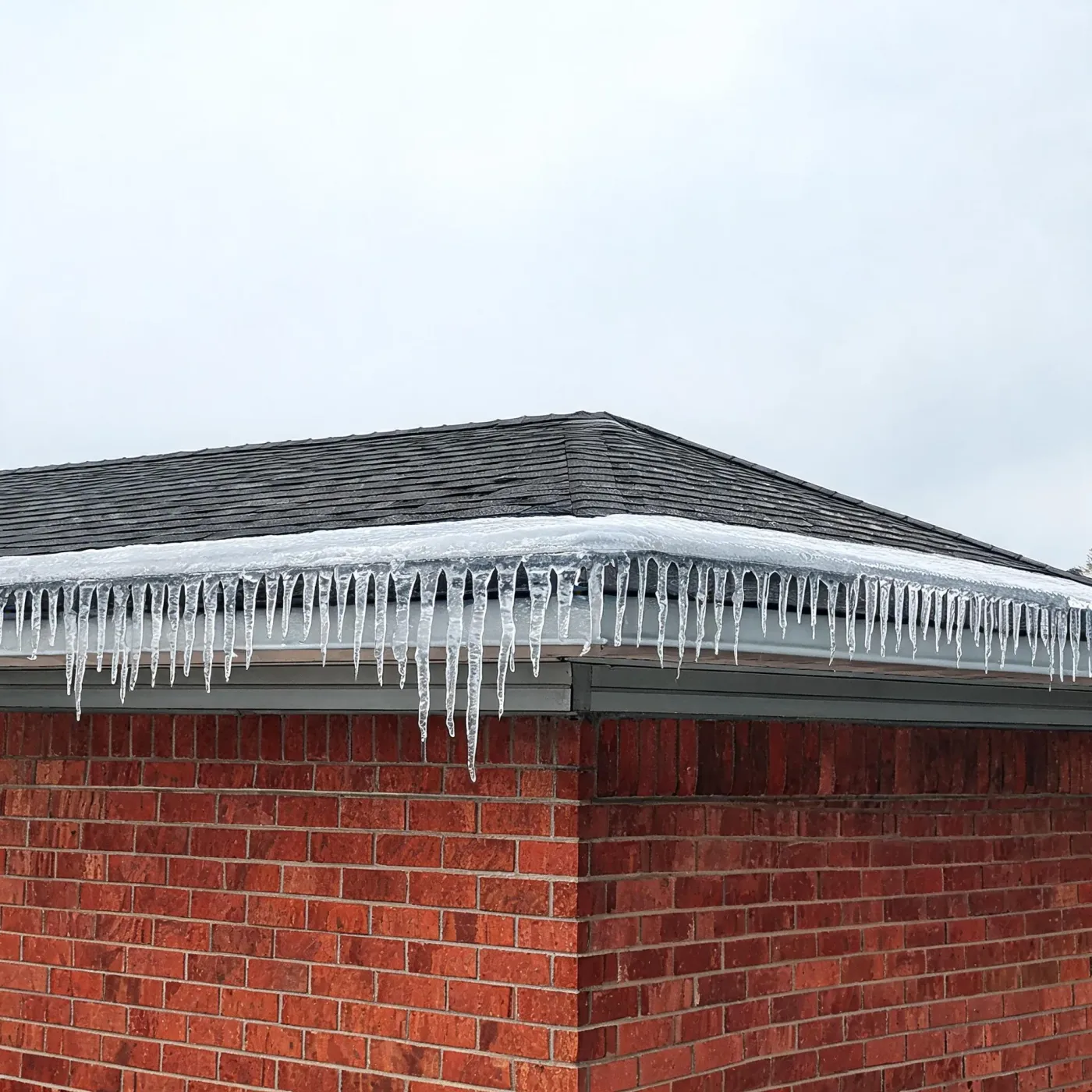
Corner of a red brick building with a dark shingled hip roof, a row of icicles hanging from the ice-covered gutter, under an overcast white sky.

December through February, nights in Hancock County average 23°F, according to NOAA climate data. At that temperature your furnace isn't cycling on and off, it's running long stretches to keep up, and a high-efficiency unit makes condensate the whole time it fires. More runtime means more water moving through that drain line and trap every night. If the line's got a partial clog or the trap needs a rinse, a cold snap like this is when it finally shows itself as a puddle on the floor instead of water that quietly drains away like it should.

NOAA nClimDiv 1991-2020

A woman stands in the open front doorway of a single-story house with stone and wood siding while a man in a dark polo shirt and cap walks toward it along a concrete path.

Water under the furnace has an answer, not a mystery

A high-efficiency furnace drips condensate down a line that can clog or crack. An older furnace sitting near the water heater is more likely leaking from a cracked heat exchanger. Either way, the water is telling you something specific about your furnace, not something random. Once you know which kind you have, you know roughly where to look.

What you don't have to do is figure out the rest yourself. You don't have to search through contractors, call a handful of them, explain the puddle and the model of your furnace each time, then sit with a stack of quotes trying to compare them. Answer a few questions about what you're seeing and a contractor who works on furnaces like yours in Hancock County will reach out to you directly, already knowing what you've found.

A speckled beige ceramic vase holding thin dried branches sits on a round wooden table near a window with sheer curtains, with a dark upholstered chair and draped blanket blurred in the background.
A modern two-story house with dark siding and stone base at dusk, with lit soffit lights, a path of large rectangular pavers set in dark gravel, planting beds, a lawn, and an orange and blue sunset sky above distant trees and water.

Furnace Repair

Find a furnace repair pro in Hancock County

RepairFurnace or heatingHancock County, IN
Step 1 of 2

What ZIP code is the job in?

  • A dimly lit living room corner with a beige upholstered sofa holding a dark green cushion and a chunky knit throw, beside a wooden sideboard with a lit ceramic table lamp, a small potted plant, and a wooden bowl, with a framed artwork on the wall and a mug on a book in the foreground.
    • Get matched with a pro who fixes furnaces in Hancock County.
    • Get matched with a pro who works on furnaces in Hancock County.
  • A round wooden coffee table holding a round stone vase of green foliage, a lit candle in a glass container, and a small dark bowl, with a beige sofa, cushions and knit throw behind and a window at left.
    • Get the furnace repair search off your mind today.
    • Once you send the form, finding a pro is off your list.
  • Sunlit living room with a wooden coffee table holding a ceramic vase of leafy branches and a carved wooden tray with two stacked books, in front of a beige sofa with tan and green cushions and a potted plant near a window.
    • Answer a few questions instead of calling shop after shop.
    • Fill out one short form instead of calling around.
  • Interior corner with a lit ceramic table lamp and wooden bowl on a wood sideboard, a framed picture and branch-filled vase behind, a knit throw over an upholstered chair, and a lit candle in a glass holder, stoneware mug and round planter of green foliage on a wooden table in the foreground.
    • The pro who gets in touch is licensed in Indiana and works in Hancock County.
    • A licensed pro who works in Hancock County gets your request.