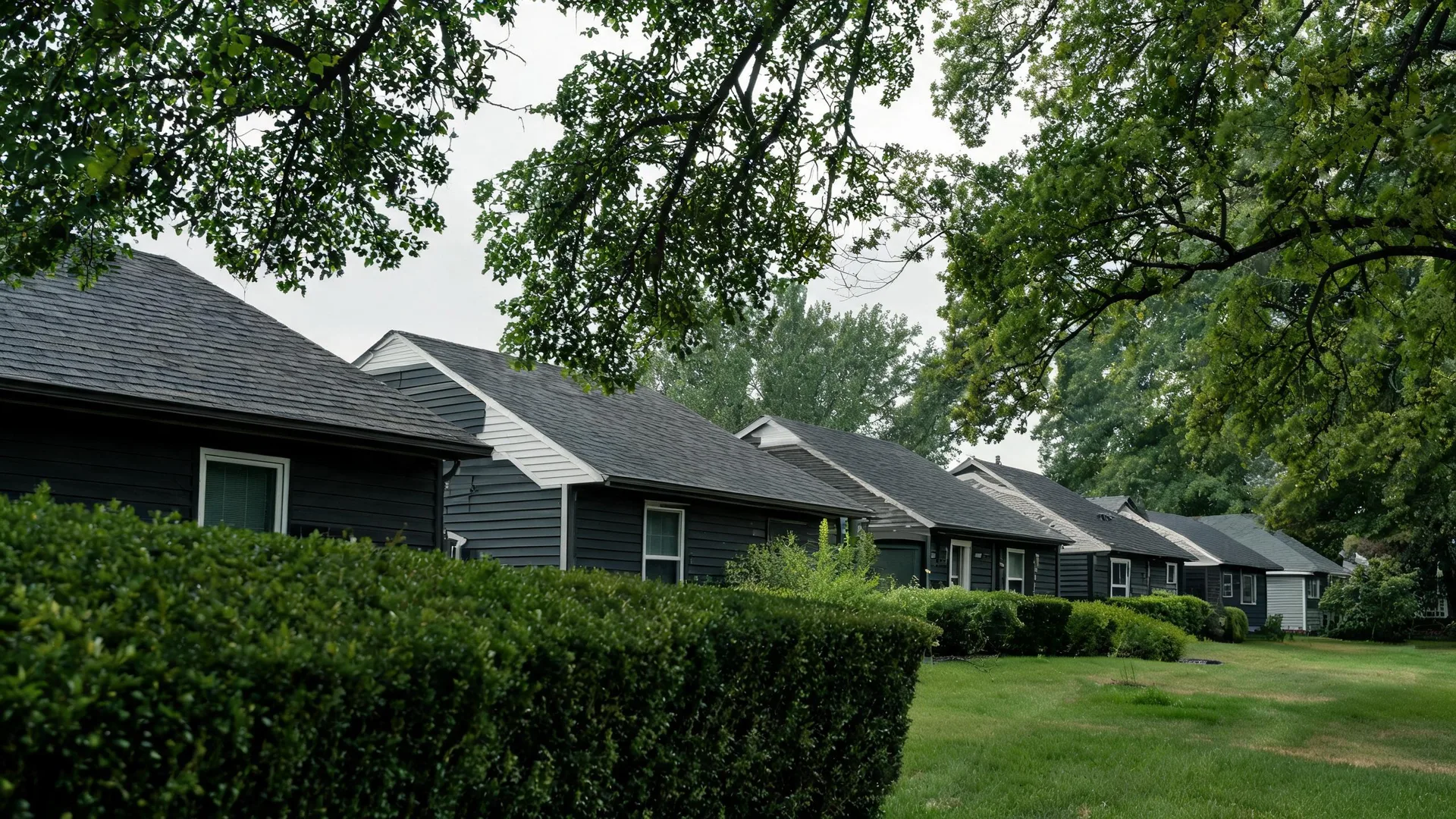




A row of dark gray single-story houses with asphalt shingle roofs behind trimmed hedges and a mown lawn, framed by overhanging tree branches under an overcast sky.

Furnace Maintenance in Plainfield, IN

Tell us about the job

Takes about a minute. No obligation.

Tune-up, service, or cleaningFurnace or heatingHendricks County, IN
Step 1 of 2

What ZIP code is the job in?

Furnaces here run from October through May, about eight months of the year. Once that stretch starts, the furnace is working most nights, especially with overnight lows averaging 22 degrees across December, January and February. A furnace that's going to have a problem usually shows it when it's run the hardest, which is why a check before October matters more than one in the middle of January. One visit a year, timed before the season starts, is enough to catch a weak igniter or a cracked heat exchanger before it leaves you without heat on a cold night. There's nothing about homes in Hendricks County that asks for more than that.

Furnaces in Hendricks County start working for real in October.

Get yours checked in September, before that first cold night asks something of it.

Half the furnaces here are younger than this county's homes, which means they're worth keeping that way

Half the homes here were built by 1998
Heat runs October through May
Winter nights average 22°F

Hendricks County has seen its share of rough weather, 115 severe weather events in the last ten years between wind, hail and winter storms. None of that is what wears out a furnace. Wind and hail hit the roof, the siding, the AC unit outside. A furnace sits in a closet or basement, away from any of it. What a storm can touch is the power the furnace runs on, and a lot of Indiana households lost power for a full day or more last year. That's worth knowing before a bad night, not after, but it's a different problem than maintenance solves. One visit before the cold settles in still covers what's actually wearing on the furnace itself, which is the long run of cold nights ahead, not the weather outside the house.

Most furnaces here run on gas, and gas needs more than a filter change

Gas heats 55.1% of homes in Hendricks County, more than electric and LP combined. A gas furnace has a burner, a flue and safety controls that an electric furnace doesn't, and those are the parts a yearly check is for. Get it looked at before the cold settles in, while there's still time to fix what it finds.

Find a contractor
A gray residential gas furnace installed in an unfinished basement, surrounded by ductwork, a metal flue pipe, and a gas supply line.

What the furnace tells you before it fails

A furnace gives warning before it quits. The burner flame should burn steady and blue. If it's flickering or showing yellow, the burner needs cleaning or the gas mixture is off. Listen at startup too. A bang or boom when the burner lights means gas is pooling before it catches, which points to a dirty burner or an igniter that's slow to fire. Short cycling, where the furnace kicks on and off every few minutes instead of running a full cycle, usually means a clogged filter, a failing flame sensor, or a blower pulling less air than it should. Rooms heating unevenly, or the furnace running longer than it used to for the same result, both say something inside has started to slip. None of these mean the furnace is done. They mean it's asking for a look before the part that's struggling now becomes the part that fails on a cold night.

A quick visit checks that it runs

A fast tune-up lights the burner, watches it catch, and calls it done. That tells you the furnace works today. It doesn't tell you the heat exchanger is free of cracks, or that the flue is drafting the way it should, or that the flame sensor still reads clean after a full season of burning.

A thorough one checks why it runs that way

A full tune-up pulls the burner assembly to clean it, tests the flame sensor instead of just looking at it, and checks gas pressure against what the furnace calls for. It inspects the heat exchanger for cracks a quick look would miss, since that's the part that can fail quietly behind a flame that still looks fine.

A furnace doesn't just make heat, it has to move it, and that's where the filter and coil come in. A dirty filter chokes the air coming back to the furnace, so the blower works harder to pull the same amount through, and the heat exchanger runs hotter than it was built to. That extra heat is what cracks a heat exchanger over time. The coil, if the furnace shares a cabinet with the AC, picks up dust the same way, and a coated coil blocks airflow the same way a dirty filter does. The condensate drain matters more in shoulder seasons when the system is doing both jobs, but a clogged one still backs up and trips the safety switch that shuts the furnace down rather than let it overflow. None of these parts fail on their own. They fail because something upstream of them was never cleaned.

A tune-up is also where small adjustments happen that a homeowner would never think to check. Blower speed gets set against the ductwork it's pushing air through, not left wherever the last tech left it. Belts, if the furnace has one on the blower, get checked for wear and tension, since a slipping belt moves less air without making enough noise to notice. Electrical connections get tightened, because a loose wire at the blower motor or control board runs hot and eventually fails right when the furnace is working hardest. The thermostat gets checked against what the furnace is actually doing, not just what it's set to, since a miscalibrated one can short cycle a furnace that's otherwise fine. Each of these is a small thing on its own. Skipped every year for several years running, they're what turns a furnace that should last into one that doesn't.