Electricity here runs $43.28 per million Btu
Indiana homes paid that rate in 2024, and most furnaces in Jackson County run on electric heat. A furnace working harder than it needs to turns that rate into a bigger number on the bill.
Takes about a minute. No obligation.
Indiana homes paid that rate in 2024, and most furnaces in Jackson County run on electric heat. A furnace working harder than it needs to turns that rate into a bigger number on the bill.
A clogged filter, a weak igniter or a dirty blower makes the furnace run longer to heat the same rooms. In a house that heats with electricity, that extra runtime is what a tune-up catches.
A quick visit swaps the filter and checks the thermostat, nothing more.
A thorough one pulls the blower wheel, checks amp draw, and tests the flame sensor and igniter under load.



Electricity heats most homes in Jackson County, but gas is not rare here. Utility gas heats close to three in ten homes, and another 8 percent run on bottled or LP gas. A gas furnace has a burner, a flue and a set of safety controls that an electric furnace does not. The burner needs to be clean enough to light evenly, the venting needs to carry exhaust out of the house, and the flame sensor needs to actually shut the system down when something is wrong. Those are the parts a thorough tune-up is checking when it tests the flame sensor and igniter under load. If your furnace runs on gas or propane, that part of the visit matters as much as anything done to the blower.
A tune-up catches the extra draw before it shows up on a winter bill. Getting the furnace checked now means it's working the way it should before the cold sets in.
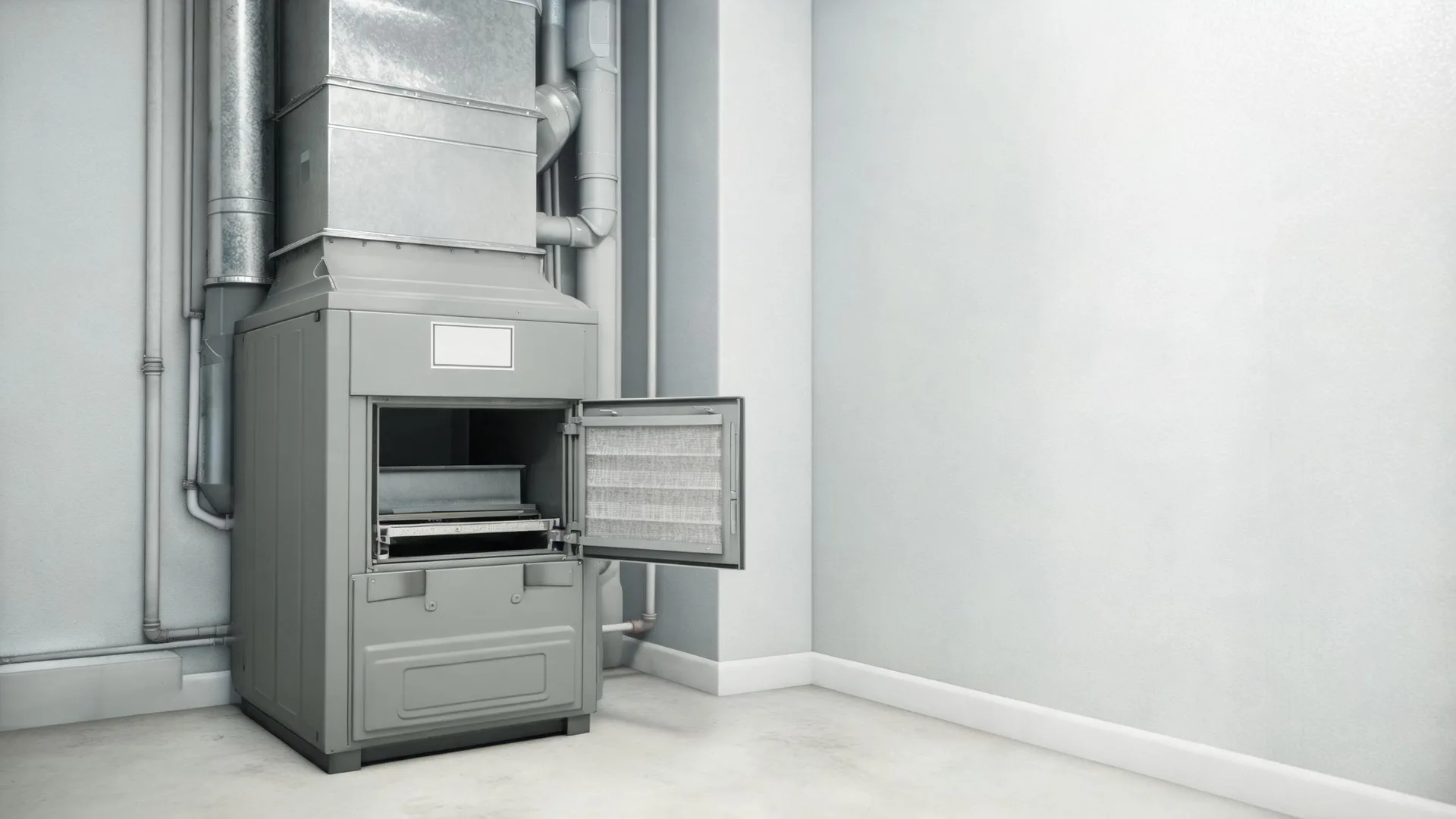
Find a contractorA furnace pulls air across a filter before any of it reaches the heat exchanger. Once that filter loads up with dust, the blower has to work harder to pull the same volume of air through, and the whole system runs longer to reach the temperature on the thermostat. Some furnaces pair with an evaporator coil for summer cooling, and that coil needs to stay clean too. Dust on the coil acts like a blanket, so the system fights to move heat through it in either direction. The condensate drain matters for the same reason a clogged filter does: when it backs up, the system can shut itself down rather than risk water damage, and that's a furnace sitting idle on a cold morning for a reason that had nothing to do with the heat exchanger or the igniter. None of these parts fail on their own on a set schedule. They fail because something upstream kept them working harder than they were built to.
A burner that used to light with a soft whump starts banging. The blower runs louder than it did last year, or it kicks on and off more than it used to. Rooms that used to heat evenly now have cold spots. A burning smell lingers longer than the first few minutes after startup. None of these mean the furnace is about to die, but each one means something inside it is working harder than it should.
A furnace that shuts off a few minutes after it starts, then fires again soon after, is short cycling. That puts more wear on the igniter and the flame sensor than a normal heating cycle does, because those parts work hardest at startup. A furnace that short cycles all winter is aging those parts faster than one that runs its full cycle and shuts off clean.
A tune-up gets inside places a homeowner never opens. The burner is pulled and cleaned so the flame burns even and blue instead of ragged and yellow. The flame sensor gets tested under load, not just looked at, because a sensor can look clean and still read weak. Amp draw on the blower motor gets checked against what that motor is supposed to pull, which catches a motor on its way out long before it seizes up. The heat exchanger gets inspected for cracks that you would never see from the floor vent, and that one matters because a cracked exchanger can let exhaust mix with the air moving through the house. None of this shows up from the thermostat. The furnace will keep answering the call for heat right up until one of these parts fails outright, and a tune-up is what finds the part that is close to that point while it can still be fixed on a schedule instead of in an emergency.
A tune-up is not one task, it's a list, and a proper one works through all of it. The igniter gets checked for a crack or a weak glow, since that part draws current every single start and wears a little each time. The blower wheel gets pulled and cleaned, because caked-on dust throws it off balance and makes the motor work to push the same air. Electrical connections get checked for a loose screw or a melted spot, since a bad connection makes heat right where it shouldn't. The gas valve, where there is one, gets checked for a steady supply and a clean light-off. Belts, where a furnace still has one, get checked for cracking or slack, though most newer blower motors drive the wheel directly and skip the belt entirely. The thermostat gets checked against the actual temperature in the room, because a thermostat reading wrong makes a perfectly good furnace look like it's failing. Each piece on its own looks small. Skipped together over a few seasons, they are what turns into a furnace that won't start on the coldest morning of the year.