




An unfinished basement featuring concrete block walls, exposed floor joists, and a metal forced-air furnace with ductwork near a central pillar.

Furnace Maintenance in Vincennes, IN

Tell us about the job

Takes about a minute. No obligation.

Tune-up, service, or cleaningFurnace or heatingKnox County, IN
Step 1 of 2

What ZIP code is the job in?

September is the month to get your furnace looked at here. Homes in Knox County start running heat in October and keep it going through April, seven months straight. That's the first real cold snap of the year, and it's not the time to find out the igniter's failing or the heat exchanger's cracked. A furnace that's been sitting quiet since spring needs someone to check it before it has to work hard. Get it done in September and it's ready when you need it.

One furnace check before October holds up through seven straight months of heat.

Overnight lows average 25°F in Vincennes come January, so that checkup needs to happen before the cold sets in.

Half the furnaces here are as old as the houses

Half the homes here were built by 1962
Heat runs October through April
Winter nights average 25°F

Most homes in Knox County heat with gas, 55.1% of them. That means a furnace with a burner and a flue, not just a blower and a filter. It lights that burner, pulls combustion gas through a heat exchanger, and vents it outside through a flue pipe. Maintenance on a gas furnace means checking the flame, the vent, and the safety controls that shut it down if something's wrong. Electricity heats another 34% of homes here, and those furnaces skip the burner and venting checks but still need the heating elements and airflow looked at. Either way, a contractor needs to see the system before it has to carry the house through winter.

Book it before the season

It starts running hard in the first month of the season here. Book the check the month before.

Find a contractor
A man in a dark long-sleeved shirt and tan work pants, seen from behind, carries a canvas tool bag up porch steps toward a blue paneled front door of a house with light lap siding and a potted flowering plant.
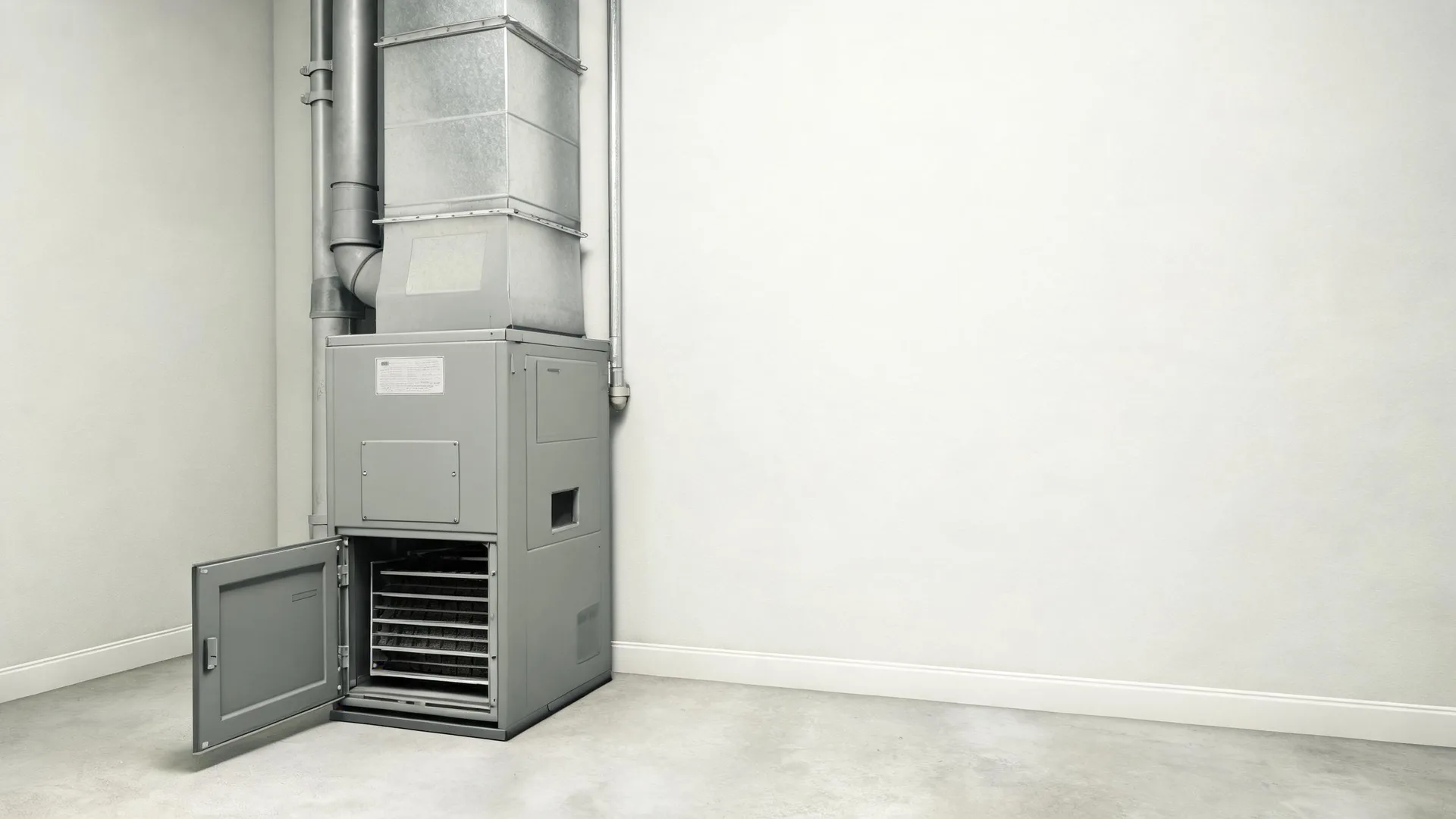
A gray high-efficiency gas furnace installed in an unfinished basement, surrounded by gas lines, a condensate drain, and sheet-metal ductwork.

If it's never been checked, this is the year

A furnace installed when the house was new has had decades to wear out an igniter, a blower motor, a heat exchanger. Half the homes here go back to 1962 or earlier, and nothing tells you whether the furnace was swapped out since or is original to the house. If you don't know which one is yours, a yearly check is how you find out before a cold morning does.

The cracked heat exchanger you won't see

A cracked heat exchanger can leak combustion gas into the air the blower pushes through the house, and it won't show itself as a smell or a sound you'd notice. A technician checks for it with a camera or a pressure test, looking at the metal itself, not just how the furnace runs. A furnace can fire up, blow warm air, and still have this problem underneath.
What burns out quietly over a season of not running

An igniter wears down a little every time it heats up and cools off, and it tends to fail on the cycle it can't finish, usually the first cold morning that asks a lot of it. A flame sensor collects a film from normal combustion that can make the furnace shut off on its own partway through a cycle. Both get checked and cleaned before that happens, not after.

A furnace moves air, not gas, through most of what fouls it up. The filter sits in that airflow and catches what the blower pulls in. Let it clog and the blower has to work harder to push air through, which stresses the motor and can starve the heat exchanger of airflow it needs to shed heat. A furnace doesn't have refrigerant coils like the AC side does, but if yours shares a cabinet with the cooling coil, a dirty coil there restricts the same airflow a furnace depends on to heat the house evenly. The condensate drain matters most on a high-efficiency furnace, the kind that condenses moisture out of the exhaust. Let that drain clog and the furnace can shut itself down on a safety switch rather than let water back up into the cabinet.

A tune-up starts with the burner. A technician pulls it to clean off scale and buildup, then checks that the flame burns steady and blue, not yellow or lifting off the burner ports. Yellow flame means incomplete combustion, and that's worth finding before the first cold night, not after. From there it's the heat exchanger, checked for cracks, and the flue, checked for a clear path outside. The igniter and flame sensor get cleaned or tested so they don't pick the first hard cycle of the season to fail. Airflow gets checked too, filter, blower wheel, and the coil if the furnace shares a cabinet with the AC. Last comes the safety controls, the limit switch and the pressure switch on a high-efficiency unit, making sure they'll shut the furnace down if something's actually wrong instead of failing silent.