How long a heat pump lasts in Columbus, IN

Your new heat pump project goes to an installer who works in Bartholomew County.

Find my pro

A heat pump in Columbus lasts about 10 to 15 years. The number moves around because of how hard the system works here. Winters in Bartholomew County get cold enough that the heat pump has to pull heat out of outside air that has little to give, and it runs long hours doing it, sometimes backed up by electric resistance heat when the outdoor coil can't keep up. Summers get sticky too, so the same unit runs hard most of the year with barely a break between heating and cooling. Most homes in the area heat with gas, so a lot of these heat pumps split the load with a furnace, which can ease the wear somewhat. A system that's kept up with, filters changed, coils cleaned, refrigerant checked, tends to land on the later end of that range. One that runs short on maintenance or sits through a few rough winters without attention often needs replacing sooner.

An older man with gray hair, a dark coat and scarf dusted with snow stands in a warmly lit entryway with an open wooden door, a table lamp, framed pictures, and a plant in a vase.
An older man with gray hair and a beard wearing a dark snow-dusted coat stands in a home entryway, with a lamp-lit living room and a wooden staircase behind him.
An older man with gray hair and a beard, wearing a dark snow-dusted coat, stands in a warmly lit home entryway with a hallway, console table with lamp, patterned rug, and living room visible behind him.
A gray-haired bearded man in a dark snow-dusted coat and scarf stands inside a dimly lit home entryway, with a hallway, framed picture, lit table lamp and staircase behind him.

Keep It Going or Replace It

Keep running it

  • You avoid the cost of replacement for now, and a well-maintained heat pump can still get through another Columbus winter.
  • Parts for most units stay available for years past the point when the compressor starts to struggle, so repairs are usually possible.
  • Each winter the defrost cycle runs more often as the system ages, and that adds wear you cannot see from inside the house.
  • A system past 12 or 13 years may keep the house warm but use more power doing it, especially on the coldest days.
  • You risk a breakdown on a sub-zero night when the heat pump is working its hardest and has the least help from outside air.

Replace it now

  • A new heat pump is sized and set up for how cold it actually gets in Bartholomew County, not just for a mild day.
  • You get a system that holds up through winters here instead of one already showing its age.
  • The upfront cost is real, but you stop paying for emergency repairs on a unit near the end of its life.
  • You skip the work of researching what size and type of heat pump fits your house and finding someone to install it correctly.
  • A new system means no more guessing whether this is the winter it finally fails.
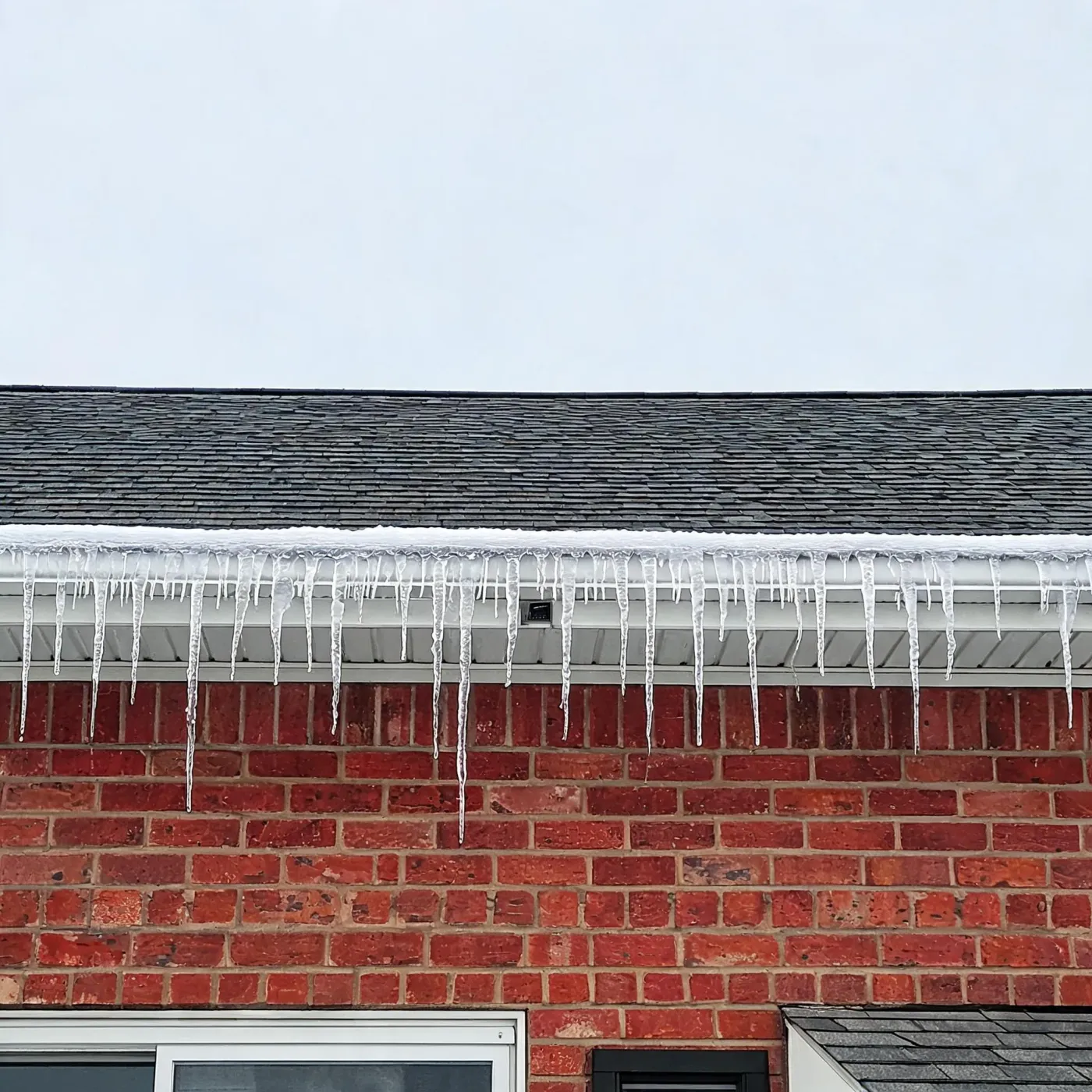
Icicles hang from a white gutter along the eave of a shingled roof above a red brick wall, with an overcast white sky above.

Source: NOAA climate normals, Bartholomew County. Through December, January and February, the overnight low here averages 24°F. That's the kind of cold where a heat pump is pulling heat out of air that barely has any to give, so it has to run longer to get the same warmth it could grab in fall or spring with less effort. Night after night of that adds up over a winter, and winter after winter it's part of why the compressor wears down faster here than it would somewhere milder. You'll notice it as a system that seems to run most of the night in January, and as years go by, as one that can't quite keep up the way it used to. A contractor who knows how Columbus winters run a heat pump down can look at yours and tell you where it stands.

NOAA nClimDiv 1991-2020

A pro who works on heat pumps

Describe the project once instead of to every installer.

You only hire the pro if you want to.

What wears the compressor down

Every time the heat pump switches between heating and cooling, or cycles on and off to hold a temperature, the compressor takes a hit. In Bartholomew County it does both jobs all year, warming the house in January and cooling it in July. A furnace only works half the year. A heat pump that doubles as your heating and cooling never gets that break, and the compressor is the part most likely to end its life.

Where gas heat changes things

Most homes around Columbus heat with gas, and if that's true for yours, your heat pump may only be running the cooling side. A unit that handles cooling alone, and lets a gas furnace carry the coldest months, isn't working as hard as one pulling double duty. If your setup splits the work this way, it's worth knowing which job your heat pump actually does before you guess at how many years it has left.

An outdoor condenser unit sits on a concrete pad beside a house with horizontal vinyl siding, with a gray electrical disconnect box and conduit on the wall and a shrub at left.
Before you get your heat pump installation
A gray outdoor condenser unit on a concrete pad beside a light-colored horizontal-siding house, with a disconnect box and refrigerant line on the wall, ornamental grasses and a shrub in mulch nearby, and a concrete patio in the foreground.
After you get your heat pump installation

10 to 15 years

That's the span you're working with in Columbus. Past the midpoint, a breakdown in January, when it's doing the most work, becomes more likely than it was a few winters back.

Describe it once

One cold snap away

A compressor that's been straining through Bartholomew County winters for over a decade can fail right when you need heat most, not on a mild afternoon in April.

Describe it once
A woman wrapped in a thick cream knit blanket sits in an armchair beside a lit table lamp, with an open book in the foreground and a frost-covered window behind her.
An older woman in a cream knit sweater smiles while looking off-camera in a warmly lit kitchen, with a round loaf of bread on a wooden board in the foreground and a dark window behind her.
  1. The compressor pulls heat from outside air, even when it's cold.

  2. Refrigerant carries that heat inside and releases it through the coil.

  3. A reversing valve flips the cycle to pull heat from inside instead.

  4. Below about 35°F, strip heat or a furnace kicks in to help.

Winter nights average 24°F

At 24°F, your heat pump can't just coast through a January night. It's pulling heat from air that's almost out of it, so the compressor runs longer and harder to keep the house warm. That's the stretch of winter that tends to expose a unit already past its best years.

NOAA nClimDiv 1991-2020

Where Your Heat Pump Stands

  • A heat pump in Columbus typically lasts 10 to 15 years given the cold winters and year-round cycling it does here.
  • Past the midpoint of that range, a breakdown during a hard January cold snap becomes more likely than in earlier years.
  • Checking a unit's age and condition now beats finding out during a 24°F night when the system can't keep up.
  • Comparing contractors, explaining the same situation more than once, and sorting through quotes takes time most homeowners would rather not spend.
  • Getting matched with a contractor who knows Bartholomew County winters skips the search and the repeat phone calls.
  • Where you stand with your own system is the thing worth knowing before the next cold stretch arrives.

A heat pump in Columbus holds up for about 10 to 15 years. That range exists because of what the system does here. It switches between heating and cooling as the seasons turn, and it cycles on and off all year trying to hold a set temperature, and both of those wear on the compressor. Cold winters make the back half of that range harder on the unit than the front half. Once a system is past the midpoint, a hard cold snap in January is a different kind of risk than it was when the unit was newer. That's the plain answer. What you do with it depends on where your own system falls in that span, and that's not something a page can tell you. It takes someone looking at the unit itself, its age, how it's been running, whether it's kept up with the demands of a Bartholomew County winter.

That's usually where homeowners get stuck. Finding a contractor means calling around, explaining the same system and the same symptoms to each one, then waiting on quotes that are hard to compare because no two are written up the same way. None of that gets easier by waiting for a cold night to force the issue. Getting matched with a contractor who already knows what winters here do to this equipment skips most of that work. You explain your situation once, and the rest moves from there. Where your system stands today is worth knowing before the next hard freeze tests it.


An outdoor air conditioning or heat pump condenser unit sits on a concrete pad surrounded by gravel beside a dark horizontal-sided house, with grass and shrubs nearby.

Find a heat pump installation pro in Bartholomew County

Skip the round of in-home estimates for a new heat pump.

New system or replacementHeat PumpBartholomew County, IN
Step 1 of 2

What ZIP code is the job in?