Your new heat pump project goes to an installer who works in Elkhart County.
A heat pump in Elkhart County works year round. It keeps the house warm when winter sets in hard, and it pulls the sticky heat out all summer. That means it runs more hours than almost anything else in your home, and it wears accordingly.
Most of what decides whether to repair or replace comes down to a few things. The age of the unit, what it would cost to keep fixing it compared to a new one, and whether it's still keeping up on the coldest nights or hottest days. A heat pump that's struggling to hold temperature when it's below freezing outside is telling you something, especially with how hard winters get here.
Power here isn't cheap, and most homes in the area lean on gas for backup heat when temperatures drop. A heat pump that's lost efficiency doesn't just run longer, it costs more to run every month it stays in the ground. That gap tends to grow, not shrink.
There's no single answer that fits every house. The right call depends on the unit you have, how it's been maintained, and what it's doing right now. That's not something to guess at from a search result.
A contractor who works on heat pumps in this area can look at yours and tell you where it actually stands. Not a general estimate, but something specific to your system and your house. Once that's in motion, you're not the one tracking down who to call or waiting on hold. The contractor reaches out to you, and from there it's their job to walk you through what they find and what your options are.
Fill out the form and that process starts.
Most heat pumps last 10 to 15 years. Past that point, replacement usually makes more sense than another repair. Your winters here are hard on the system. A heat pump works harder to pull heat from cold outside air than it does to cool the house in summer, so the compressor and the outdoor coil take the brunt of it. If yours is in that age range and it's struggling to keep up on the coldest days, running long cycles, or needing the backup heat strips more than it used to, that's the system telling you it's losing the fight. Frost that builds up on the outdoor unit and won't clear in the defrost cycle is another sign the compressor is wearing out. A repair bill that's a big fraction of a new system's cost isn't worth paying twice. At that age, with winters like these, a new heat pump will run more efficiently and keep the house comfortable without the strain.
What does Elkhart County weather ask of your heat pump?
Winter nights average 20°F
Winter nights here average 20°F, and that's exactly when a heat pump has to work hardest to pull any warmth out of the air.
Heat runs October through May
Heat runs October through May, about eight months a year. That's most of the calendar leaning on the same system.
Cooling runs June through August
Cooling runs June through August, so the unit barely gets a break before winter asks something harder of it again.
NOAA nClimDiv 1991-2020
Repairing a heat pump that's 9 years old or younger usually makes sense, especially if the repair is a minor one like a capacitor or a contactor. The unit still has years of service left in it.
Past 10 to 15 years, a repair just delays the same decision. Parts for older units get harder to find, and a system that's worked this hard through Elkhart winters is closer to its last breakdown than its first.
Send the form and the search for an installer is over.
You're not committing to anything by asking.
What a backup heat source does
Many heat pumps in Elkhart County pair with a backup, often electric strip heat or a gas furnace, that kicks in when the outdoor air gets too cold for the heat pump alone to keep up. If yours leans on that backup more than it used to, through more of a 20°F night, that's the heat pump losing ground, not the backup doing its job as designed.
What the outdoor coil is up against
The outdoor coil has to pull heat out of cold air in winter and dump heat into hot, humid air in summer. It does this for eight months of heating and the full stretch of muggy summer besides. A coil that's spent that many years cycling through both jobs develops leaks and loses capacity in ways a cleaning won't reverse.
Is your heat pump struggling to keep up this winter?
Notice the house staying a few degrees cooler than the thermostat says it should, especially on the coldest nights. Listen for the system running almost constantly instead of cycling off, or for a hissing or grinding sound from the outdoor unit. Check if the backup heat kicks on earlier in the evening than it used to, or stays on longer. Frost that builds up on the outdoor coil and won't clear during the defrost cycle is another sign. A unit working this hard to keep the house warm is also costing more to run every month it keeps struggling, and if it's near the end of its life, waiting it out can mean no heat at all on the night you need it most.
Running the way it should
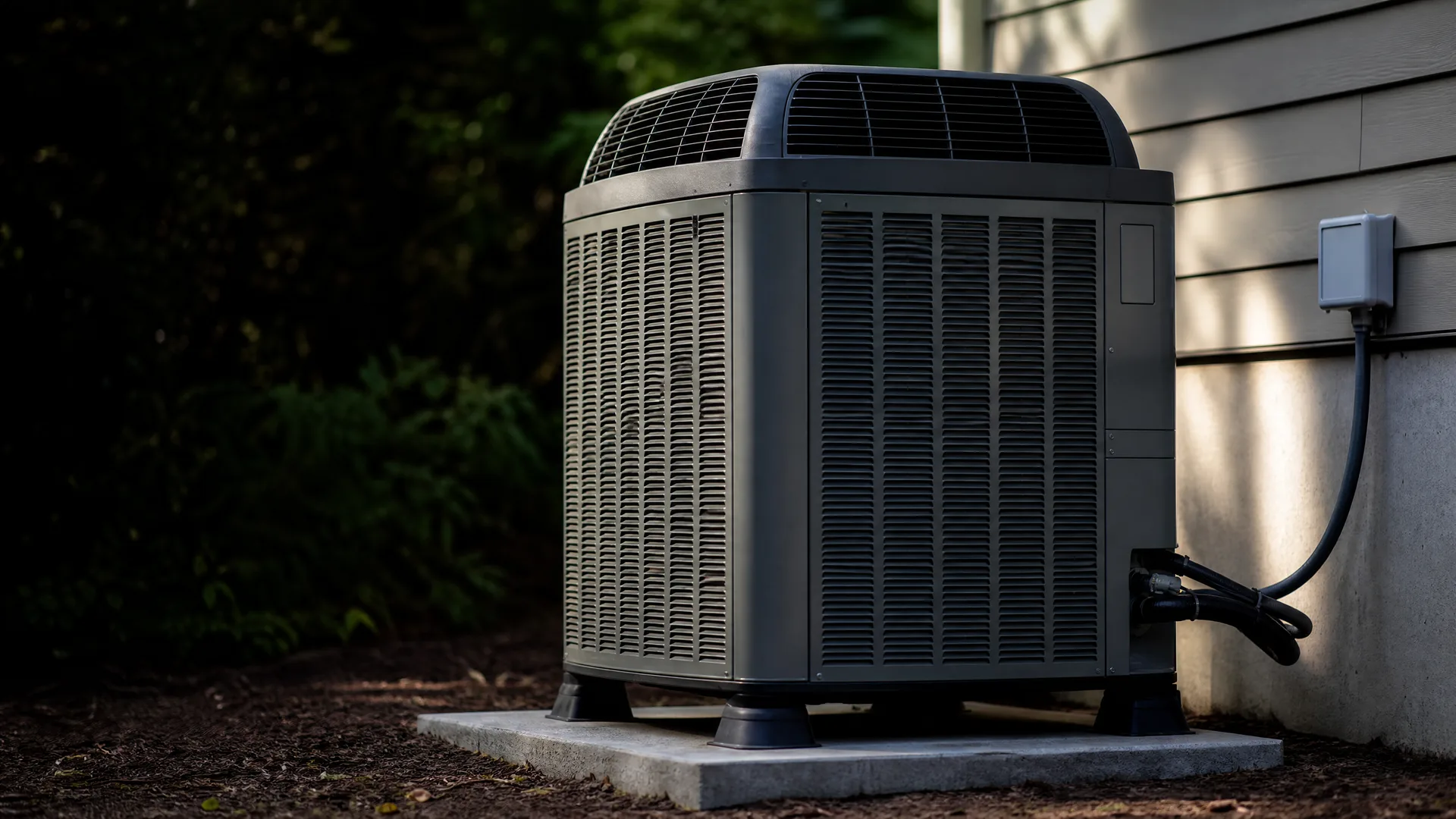
The unit sits level on its pad, lines and conduit running clean to the disconnect box on the wall. It cycles on, runs, and shuts off without strain. No odd sounds, no ice built up on the coil, no struggle to keep the house at temperature on a cold night.
Showing its age
The cabinet is weathered and faded from years outside against the house. A unit that looks like this has likely been through a decade or more of Elkhart County winters. If it's also running longer than it used to, or the house isn't holding temperature, that wear is more than skin deep.
How a heat pump decides between heating you and defrosting itself
A heat pump pulls heat from outside air, and in cold weather that moisture in the air freezes onto the outdoor coil. The system has to stop and melt that frost off or it can't absorb heat at all. It does this by reversing itself for a few minutes, sending warm refrigerant outside to clear the coil while a backup source covers the house. You might notice the outdoor unit steaming or the fan stopping for a bit. That's normal in December and January. What isn't normal is frost that keeps building back faster than the defrost cycle clears it, or a unit that goes into defrost every few minutes instead of every hour or two. That points to a problem with the reversing valve or the sensor that tells it when to defrost, and on an older unit, it's often cheaper to stop chasing it.
If you're seeing that and you're not sure whether it's worth fixing or replacing, a contractor who works on heat pumps in Elkhart County can look at the unit and tell you which one you're dealing with.
Power here costs 18.46 cents per kilowatt-hour
At 18.46 cents per kilowatt-hour, an aging heat pump costs you more just by losing efficiency as it wears. A unit still running fine on a 10 year old compressor pulls more power to do the same job it used to do on less. Replacing it before it fails outright stops that slow creep in your electric bill.
EIA-861 2025
Deciding on Your Heat Pump
Age past 10 to 15 years is the clearest sign a heat pump in Elkhart County is due for replacement, not another repair.
A repair under 9 years old usually makes sense, but the same repair past that age only delays the real decision.
A heat pump leaning hard on its backup heat, or losing ground on the coldest nights, is already telling you it can't keep up.
Rising power use on a unit that hasn't changed its output is the cost of an aging compressor working harder for the same result.
Once you send the form, finding a contractor to look at your specific unit is no longer something you have to chase down yourself.
Age is the number that matters most. A heat pump in Elkhart County works through eight months of heating and a sticky summer besides, and that kind of year-round load catches up with a unit past 10 to 15 years. Under 9 years, a repair is usually still the right call, especially something small like a capacitor. Past that age, the same repair just buys a little time before the same decision comes back around. Watch how the unit behaves, too. One that leans hard on backup heat, or lets the house drift a few degrees cooler on the coldest nights, is already struggling to keep pace with what winter here demands of it. A power bill that climbs while the house stays the same tells a similar story, an aging compressor pulling more to do the same job it used to do on less. None of these signs need a guess. The unit's age is on a sticker inside the cabinet, the bill is in your hand, and the house either holds temperature or it doesn't. Once you've got a sense of where your system stands, sending the form is the easy part. A contractor who knows Elkhart County winters takes it from there, and the work of tracking one down stops being yours to carry.