Heat pump not cooling in Hammond, IN

Get a heat pump pro

A heat pump that won't cool in July is not a small thing to live with in Hammond, especially once the humidity sets in. The blower might be running while the air coming out stays warm, or the system might short cycle and never catch up. Either way, you want someone who knows what usually causes it in a heat pump specifically, not a furnace tech guessing at an unfamiliar system. Heat pumps fail in their own ways: a stuck reversing valve, a low charge, a defrost board that won't switch the system back to cooling. A contractor who services these year round in Lake County has seen the pattern before. Tell us about your system and what it's doing, and you'll get matched with one licensed local contractor who works on heat pumps regularly, not a list of names to call through yourself. They will reach out to you directly about your unit and what it needs.

A heat pump that blows warm air in cooling mode usually means it's stuck in heating, low on refrigerant, or the outdoor unit can't do its job. Check the thermostat first. If it's set to cool and the fan runs but the air isn't cold, look at the outdoor unit. A reversing valve that's failed or stuck can keep the system running in heat mode no matter what the thermostat says. Ice on the outdoor coil points to something different, often low refrigerant or airflow blocked by a dirty coil or a fan that isn't turning. In Hammond's humidity, a system already working harder to pull moisture out of the air has less room to spare when something's off, so a small problem shows up fast as warm air and a house that won't cool down. Running it in that state can push a struggling compressor toward a harder failure, which is why it's worth having someone look at it before the next heat wave.

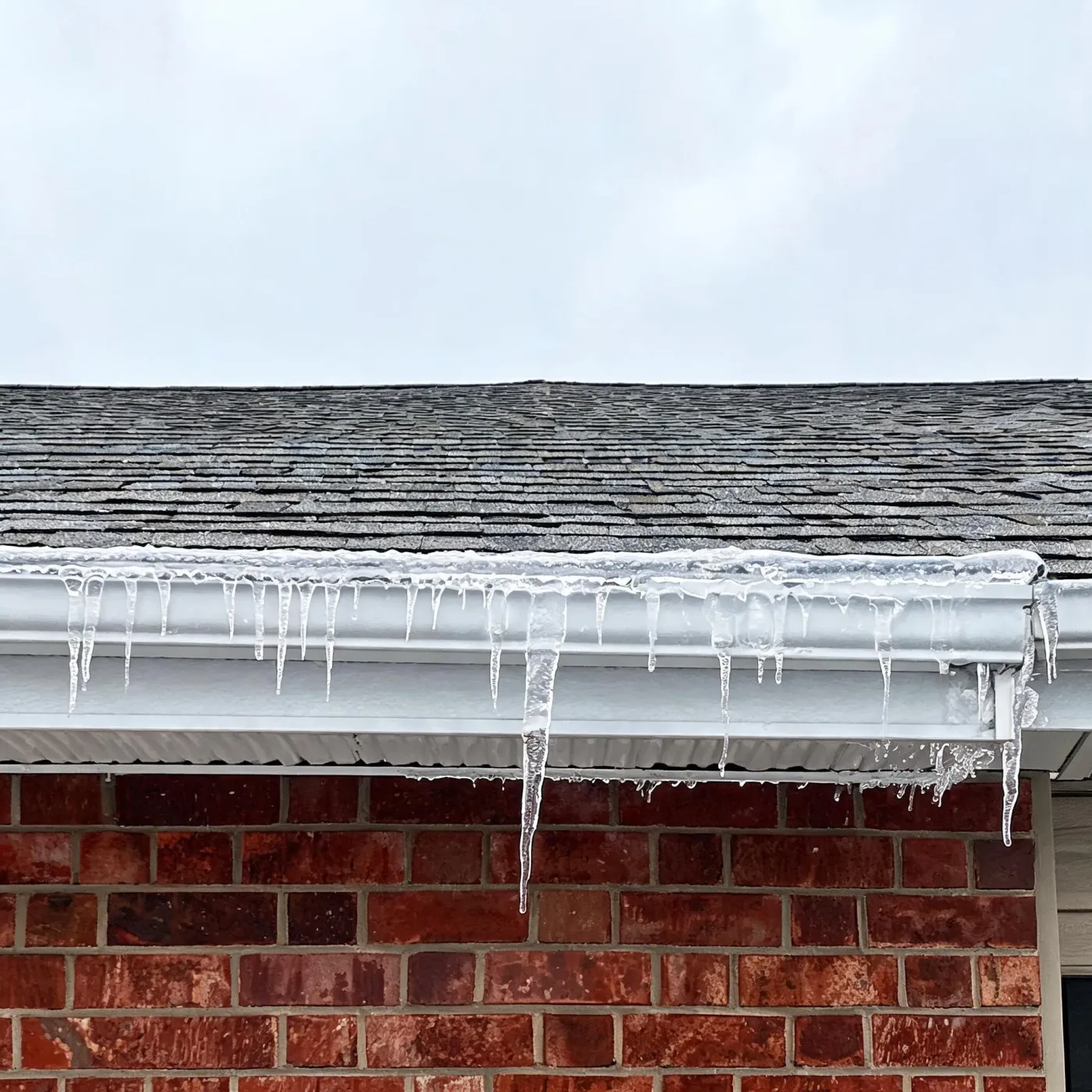
Icicles hanging from a white gutter and soffit below an asphalt-shingle roof on a red brick house, against an overcast sky.

Winter nights in Lake County average 20°F, according to NOAA climate data, and your heat pump leans on its reversing valve hard to keep up on nights that cold. That valve is the same part that has to switch back and forth every time you flip from heat to cool. A valve that's been working all winter is a common reason a heat pump gets stuck in heating mode come summer and blows warm air instead of cold. If your system struggled at all over the winter, that's worth mentioning when a contractor looks at it.

NOAA nClimDiv 1991-2020

A middle-aged man with grey hair and a beard, wearing a grey knit sweater, sits on a light sofa in a sunlit living room with a houseplant, wooden cabinet and framed landscape picture behind him.
A man with greying hair and a beard in an olive sweater sits on a sofa in a living room, looking to his left, with an armchair, round side table and large glass doors onto trees behind him.
A gray-haired bearded man in a dark blue shirt over a white t-shirt sits on a leather sofa in a living room with built-in shelves, a floor lamp, an armchair and large windows, looking off to the side.
A man with gray-brown hair and stubble in a dark sweater sits on a light-colored sofa in a living room, looking off to the side, with a houseplant, framed picture, shelving and a sunlit window behind him.

Why does a heat pump get worked so hard here year round?

  • Winter nights average 20°F

    Overnight lows averaging 20°F mean the reversing valve switches under real strain, and a valve that's been sticking in winter often shows it the first hot day you need cooling.

  • Heat runs October through May

    Eight months of heat, October through May, leaves a short window before summer to catch a problem. A heat pump that struggled all winter doesn't get easier to ignore in June.

  • Cooling runs June through August

    Three months of cooling, June through August, is all the time this system gets to prove it still works both ways. If it can't cool now, it won't on its own.

NOAA nClimDiv 1991-2020

Reversing valve stuck in heating

If your heat pump heats fine but won't cool, the reversing valve is a likely reason. That valve tells the system which direction to move refrigerant, and after a winter of switching back and forth it can stick in the heating position. The outdoor unit runs, the blower runs, but the air coming through your vents stays warm because the refrigerant is still flowing the way it did in January. A contractor can test the valve directly and tell you whether it's stuck, failing, or fine. This one often gets blamed on the thermostat first, since the symptom looks the same from inside the house, but swapping a thermostat won't fix a valve that won't move.

Low refrigerant from a slow leak

A heat pump low on refrigerant will often still blow air, just not cold air, and the outdoor unit may ice up even in July heat. Refrigerant doesn't get used up the way fuel does. If the level is low, it's low because it's leaking out somewhere in the line set or the coil, and it will keep dropping until that leak is found and sealed. Adding refrigerant without finding the leak buys you a short run of cool air and not much more. This is worth ruling out alongside the reversing valve, because both can leave you with the same warm air and a working blower, and only a contractor checking pressures can tell you which one you're dealing with.

An outdoor air conditioning condenser unit on a concrete pad beside a house with light horizontal siding and a concrete block foundation, with bare soil and small green plants around it.
Before you get your heat pump repair
A dark gray outdoor condenser unit on a concrete pad beside a house with beige horizontal siding, with a gray electrical disconnect box and conduit on the wall, mulch beds, a hosta plant, a shrub, and mowed lawn in front.
After you get your heat pump repair
A beige outdoor condenser unit on a gray pad beside a house with gray horizontal siding, with refrigerant lines and an electrical disconnect box on the wall, bordered by dark mulch, a stone retaining wall with shrubs, and a paver walkway.

Get matched with a heat pump pro in Lake County

A licensed pro who repairs heat pumps in Lake County gets your request.

Get matched with a pro who fixes heat pumps in Lake County.

Find a licensed pro

Sending the form costs nothing.

A gray outdoor condenser unit on a raised pad beside a house with horizontal lap siding, with refrigerant lines, conduit and an electrical disconnect box on the wall, and shrubs on a mulch bed to the left.
This unit sits clean on its pad, with clear space around it so air moves through the coil the way it's supposed to.
A weathered gray outdoor condenser unit on a concrete pad beside a house with horizontal vinyl siding, with conduit, refrigerant lines, and an electrical disconnect box on the wall behind it.
A grille packed with dust and leaves chokes airflow, and that's often why the coil can't pull enough heat to cool the house.
A dimly lit bedroom at dusk with a made bed, a table lamp on a nightstand, and a condensation-covered sash window with a dark curtain.

It's past eleven and the bedroom is still thick with heat. The sheets are damp where you've been lying, and you've already kicked the blanket to the floor. Outside, Lake County hasn't cooled off much from the afternoon, and the window glass is fogged along the edges from the mismatch between the air in here and the air out there. The vent above the closet is pushing air, you can hear it, but nothing coming out of it feels like relief. You've turned the thermostat down twice already. Somewhere down the hall the unit keeps cycling on, then off again, like it's trying and giving up.

Is your heat pump running but not keeping up?

You probably noticed it first by the sound: the outdoor unit running, the blower pushing air, but the vents blowing room-temperature air instead of cold. Maybe you've felt the walls holding heat longer than they should, or the thermostat reading three or four degrees above what it's set to no matter how long the system runs. Some houses show it as the system never shutting off, straining through the afternoon and losing ground anyway. If this keeps going through a Hammond summer, it's not just discomfort. A system working that hard without cooling the house is running up your electric bill for nothing, and whatever's wrong with it now is unlikely to fix itself before the heat does.

A gray outdoor heat pump unit with a large fan grille sits on a concrete pad beside a house with horizontal lap siding, next to a green shrub, mulch bed, and lawn.

Clear coil, clear airflow

This outdoor unit sits open on its pad, with mulch and the shrub kept back from the cabinet. Air passes through the coil fins without resistance, so the unit can pull heat out of your house the way a heat pump is supposed to in July.

An outdoor air conditioning condenser unit with a top fan grille sits on a concrete pad beside a house with horizontal siding and a concrete step.

Coil caked with dust

The fins on this one are dark with built-up grime and the grille is choked. Refrigerant can't shed heat through a coil like this, so the system runs and runs while the air coming out of your vents barely changes.

Power here costs 21.86 cents per kilowatt-hour

At 21.86 cents per kilowatt-hour, every hour your heat pump runs hard without actually cooling costs you more here than almost anywhere else. A unit stuck in heating mode or short cycling doesn't just leave you hot, it runs up the bill doing it.

EIA-861 2025

A gray outdoor condenser unit on a concrete pad beside a white horizontal-siding house, with refrigerant lines and conduit running to a wall-mounted disconnect box, bare soil in front and a green shrub at left.

Clear cabinet, good airflow

This condenser sits open on its pad, a few feet off the siding, with the shrub bed kept back from the cabinet. The conduit and refrigerant lines run straight to the disconnect, nothing pinched or buried. Air moves through the coil freely, which is what lets a heat pump actually pull heat out of your house in August.

An outdoor air conditioner condenser unit on a concrete pad beside a house with horizontal lap siding, with a shrub to the left, bare dirt in front, and conduit and a metal disconnect box on the wall.

Crowded cabinet, weak airflow

This unit sits close to the wall with a shrub growing right against the side of the cabinet. Once a plant starts crowding the coil, the unit can't draw air through it the way it needs to. A heat pump working against blocked airflow runs longer and still can't get the house as cool as you set it.

Call Now or Let It Ride

Call a contractor

  • A licensed tech can tell you in minutes whether the reversing valve is stuck or the charge is low, instead of you guessing.
  • Opening the refrigerant circuit to check charge takes gauges and recovery equipment, not something to do from the thermostat.
  • If the valve itself has failed, it gets replaced correctly the first time, rather than swapped again next season.
  • Someone who works on these systems all year in Lake County has likely already seen this exact failure this summer.
  • A proper repair gets your air cold again instead of masking the symptom for a few days.

Wait it out

  • The house stays hot through the muggy stretch while you put off the call.
  • A reversing valve that's sticking tends to get worse, not better, the more it's cycled.
  • Running the system hard without real cooling adds to a power bill that's already among the highest in the country.
  • A refrigerant leak left alone can starve the compressor, turning a repair into a bigger one.
  • Short cycling in this state puts wear on parts that were fine before the valve stuck.
A woman with shoulder-length graying brown hair in a cream knit cardigan sits in a dark armchair indoors, looking off to the side with a slight smile, with a shelf, window and houseplant blurred behind her.
A woman with dark hair in a bun sits on a sofa with a child resting his head on her shoulder, both wrapped in a cream knit blanket, with a lit lamp and bookshelf in the dim background.

Where This Leaves You

  • Warm air from the vents with the thermostat set to cool points to a stuck reversing valve, a low charge, or a blocked outdoor coil.
  • A licensed tech can check the valve and the charge with gauges in minutes rather than you guessing at the problem all afternoon.
  • A contractor who works on heat pumps through Lake County's hard winters and muggy summers has likely seen this exact failure before.
  • Matching you with one local, licensed contractor means a single call back, not your phone ringing with several companies at once.
  • Clearing debris from the outdoor unit is worth doing now, but a stuck valve or low charge needs a tech to fix.
  • Left alone, the unit keeps running without cooling the house, and at 21.86 cents per kilowatt-hour that adds up fast.

A heat pump blowing warm air with the thermostat set to cool comes down to one of three things. The reversing valve is stuck, the refrigerant charge is low, or the outdoor coil can't move air the way it needs to. You can walk out and clear leaves or mulch away from the cabinet, and that's worth doing. But if the vents are still warm after that, the problem is inside the system, and that means gauges, not guesswork. A licensed tech can check the valve and the charge in minutes and tell you which one it is. That's not something you can see from the thermostat or the side of the unit. This is also a system that's worked hard in both directions, heating through Lake County winters and now trying to cool through a muggy summer, and a contractor who services heat pumps in this area has likely already seen a valve stick the way yours might be sticking now. When you request service here, you're matched with one local, licensed contractor, not a handful of companies competing for the job. That means one call back, from someone who already has a sense of what tends to fail on these units after a winter like the last one, rather than your phone ringing all afternoon. The unit isn't going to fix itself by running longer. Left alone, it keeps drawing power without actually cooling the house, and at 21.86 cents per kilowatt-hour, that's not a cost worth waiting out.

A gray outdoor condenser unit on a concrete pad beside a house with horizontal lap siding, bordered by mulch, shrubs and a mowed lawn.

Find a heat pump repair pro in Lake County

RepairHeat PumpLake County, IN
Step 1 of 2

What ZIP code is the job in?
















