
How long a heat pump lasts in Greenwood, IN

One request ends the search for a heat pump installer.

Hand off my installation

A heat pump in Greenwood lasts about 15 years, sometimes close to 20 if it's been looked after. The number here has a reason behind it: your system doesn't just heat the house through Johnson County's cold winters, it also carries the full cooling load all through the sticky summer months, running both directions all year with no furnace to split the work. That's more hours of operation than a gas furnace paired with a separate AC ever sees, and it adds up over the years. The compressor and the outdoor coil take the brunt of it, cycling on in freezing weather and again in July humidity. By year 12 or so, it's worth paying attention to how the system is running, since repairs start costing more and happening more often as it closes in on the end of its life. If yours came with the house and you don't know its age, the data plate inside the outdoor unit will tell you the year it was made.

A gray outdoor heat pump unit on a concrete pad beside a house with horizontal lap siding, connected by conduit and a flexible line to a wall-mounted disconnect box, with low shrubs and mulch nearby.

Running the way it should

A heat pump that's keeping up looks like this: steady airflow, the fan turning freely, no ice building up on the coil when it shouldn't be there. It cycles on, runs, and shuts off without you noticing. That's a system on track to reach its full years.

An outdoor air conditioner condenser unit on a concrete pad beside a house with beige horizontal siding, with conduit running from an electrical box on the wall.

Signs it's falling behind

Short cycling, warm air when it should be hot, ice that won't clear on its own. A unit working this hard in Johnson County's summers and winters wears faster than one that isn't. Left alone, these signs point toward a shorter life, not a longer one.

Why does your heat pump seem to be struggling lately

You might notice the air coming out isn't as warm as it used to be, so the system runs longer to keep the house comfortable through a cold snap. Maybe it's cycling on and off more than it did last winter, or you're hearing a clicking or buzzing when it starts up. Ice building up on the outdoor unit and not clearing during the defrost cycle is another sign. Your power bill climbing without a change in how you use the house usually means the system is working harder to do the same job. Left alone, a heat pump in this shape tends to fail at the worst time, on the coldest night or the hottest afternoon, and costs more to run until it does.

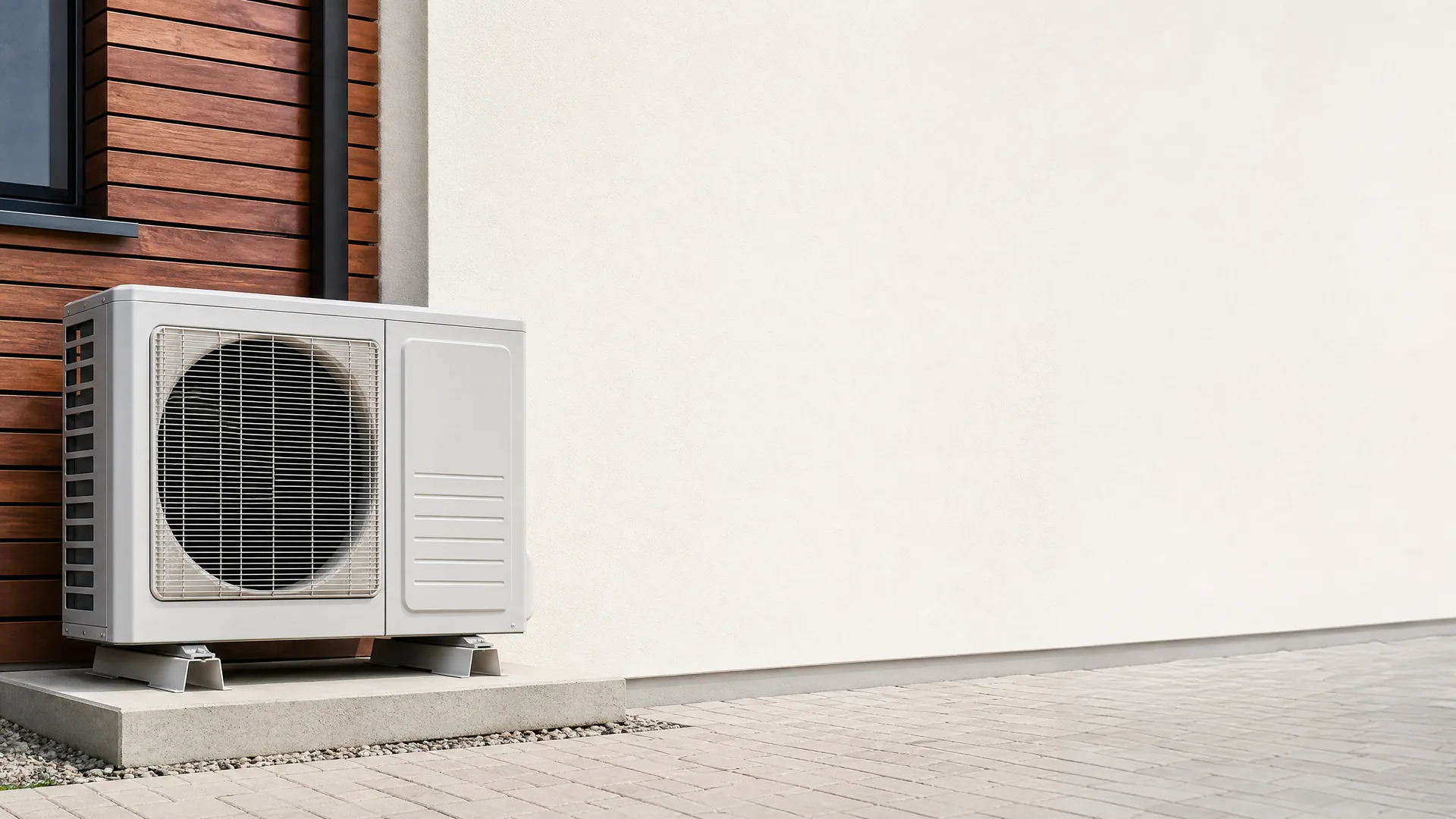
A white outdoor heat pump unit on a concrete pad beside a house with wood-slat siding and a large plain light-colored stucco wall, with paving stones in the foreground.

Why the workload runs it down faster

A furnace in Johnson County only has to fire up October through April. Your heat pump works every month of the year, switching between cooling the house all summer and heating it all winter. That doubled workload wears on the compressor and the outdoor coil in a way a furnace never experiences, which is part of why a heat pump's years run shorter than a gas furnace sitting next to it.

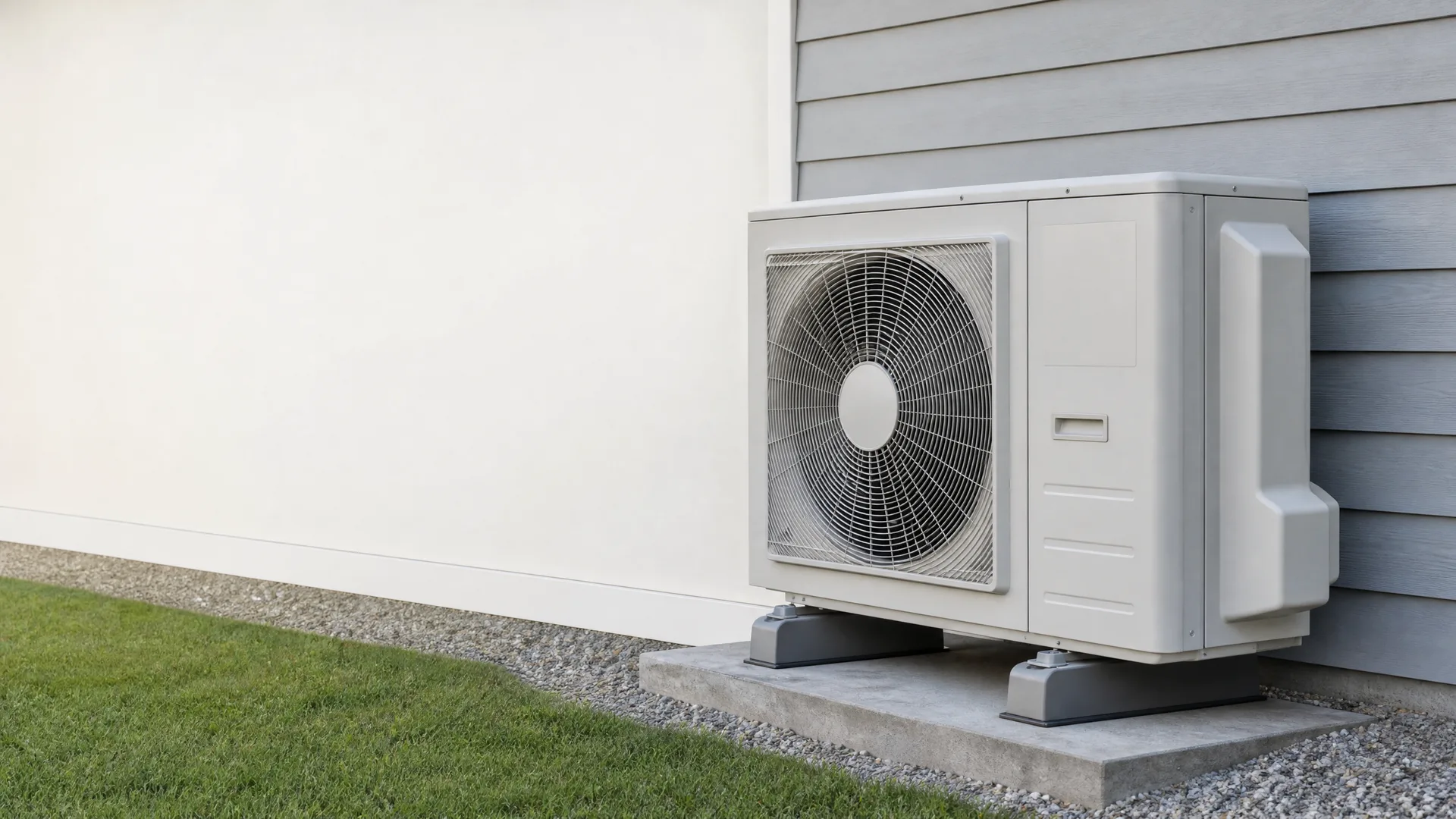
A white outdoor heat pump unit on rubber feet sits on a concrete pad beside a gray-sided house wall, next to a smooth light wall, gravel strip and lawn.

What a yearly checkup catches early

A technician checking a heat pump looks at refrigerant charge, the condition of the outdoor coil, and whether the fan motor and contactor are holding up under the cycling. Low refrigerant forces the compressor to work harder to reach the same temperature, and a dirty coil makes it struggle to shed heat in summer or pull it in during winter. Catching either early is usually what separates a system that reaches 20 years from one that doesn't.

A closed laptop and a speckled ceramic mug sit on a wooden table beside a stoneware vase with a leafy branch, with a wooden chair, kitchen counter with cutting board and bowl, and dark upper cabinets in the dim background.

What happens inside the unit each time it switches

A heat pump moves heat instead of making it, and the part that lets it do both jobs is the reversing valve. Flip it one way and the system pulls heat from outside air into your house. Flip it the other way and it pulls heat out of your house and sends it outside. That valve is working every single day of the year, not just in July or January. A furnace has no equivalent part sitting in the line, switching back and forth, taking the wear.

When a heat pump stops cycling the way it should, most homeowners in Johnson County don't know whether they need a repair, a part replaced, or a whole new unit, and they don't know which contractors nearby actually work on heat pumps versus furnaces only. That usually means calling a few places, describing the same noise or the same warm-air complaint three or four times, and waiting on quotes that are hard to compare because no two contractors inspected the same thing. Sending one form here means that sorting gets done for you instead of by you.

A gray upholstered sofa with a matching cushion sits beside a potted plant and a wooden table holding a small green plant in a stone pot, near a curtained window.
A man in a gray quarter-zip sweater sits with closed eyes and a slight smile in a dark leather armchair in a wood-paneled room, with a window, framed picture, bookshelf and a table holding a mug and papers nearby.
A man with greying hair and a beard, wearing a dark blue sweater, reclines with closed eyes and a slight smile in a brown leather armchair in a room with a bookshelf, houseplant, window, and a folded newspaper on a wooden table.
A man in a dark green sweater reclines with eyes closed in a brown leather armchair beside a wooden table holding a dark mug and a folded newspaper, with houseplants, a framed picture and a bookshelf in the background.
A man in a dark blue sweater reclines with closed eyes in a brown leather chair, beside a side table with a mug and folded newspaper, a potted plant and shelving in the background.

It's off your list after this

Describe the project once instead of to every installer.

You only hire the pro if you want to.

Keeping the system past 15 years

A heat pump that gets to 18 or 20 years usually had help getting there. The coil got cleaned, not just the filter changed. A low charge got topped off before it made the compressor work harder than it should have. The outdoor unit had room to pull in air instead of sitting against overgrown bushes or packed leaves. None of that undoes the wear from running every month of the year, but it keeps the wear from compounding. A system that's never been neglected can still be worth repairing at year 12 or 13, where one that's been ignored usually isn't.

Losing years to the workload

A heat pump that struggles to make 10 or 12 years usually ran harder than it had to, for longer than it should have. A dirty coil makes the compressor work to move the same amount of heat. A low charge does the same thing, quietly, for months before anyone notices. Add Johnson County's full year of cycling, summer and winter both, and the compressor logs hours a furnace never has to. By the time it's loud or short-cycling or running constantly, the wear is already done. That's the unit heading toward replacement well ahead of 15.

An outdoor air conditioner condenser unit on a concrete pad beside a house with horizontal vinyl siding, with refrigerant lines and an electrical disconnect box on the wall and dry leaves on the ground.
Before you get your heat pump installation
A gray outdoor heat pump unit on a concrete pad beside a house with horizontal lap siding, with a conduit running to a wall-mounted disconnect box and a green shrub to the left.
After you get your heat pump installation

Repair the system you have

If the compressor and coil are sound, a repair can get you through this winter and the summer after it without the cost of a full replacement.

Skip calling around

Replace a system past 15 years

Past that age, a breakdown in January means sourcing a contractor fast, in the middle of a cold snap, instead of planning the work on your schedule.

Skip calling around

Winter nights average 23°F

A 23°F night doesn't let your heat pump coast. At that temperature it's still pulling heat out of outside air, just with less of it to work with, so the system runs longer to hold the house at temperature. Those long December and January runs add hours the summer side of the job never asks for.

NOAA nClimDiv 1991-2020

What you now know, in short

  • A heat pump in Greenwood typically runs 15 years, sometimes close to 20 with steady upkeep along the way.
  • Year-round use, from July cooling through January heating, puts more hours on the compressor than a furnace ever sees.
  • Ice on the coil, weak airflow, or longer run times are signs the system is wearing toward the end of its life.
  • A repair can carry a sound compressor and coil through another winter and summer without the cost of replacing the system.
  • Past 15 years, a breakdown on a cold January night means sourcing a new system fast instead of planning ahead.
  • Finding a licensed contractor in Johnson County, checking reviews, and comparing quotes takes time you may not have during a cold snap.

Fifteen years is the number to plan around. Some systems in Johnson County get closer to 20, and the difference usually comes down to whether the coil got cleaned and the charge got checked along the way, not luck. The reason your heat pump wears faster than a furnace isn't a flaw in the equipment. It runs every month of the year, pulling heat out of cold air in January and pushing it out of the house in July, and that workload adds up in hours the compressor carries that a furnace never does. Watching for the signs, ice where it shouldn't be, weak airflow, run times that stretch longer than they used to, tells you where your system stands before it tells you with a breakdown. If the compressor and coil are still sound, a repair can get you through this winter and the summer after it. Past 15 years, that same breakdown on a cold night means scrambling for a system fast, with no time to compare options. Either way, the next step is the same work: finding a licensed contractor in Johnson County, checking who's reliable, calling around, explaining the problem more than once, sorting through quotes. That part doesn't have to fall on you in the middle of a cold snap. Once you know where your system stands, whether it's a repair or a replacement, getting the right person on it is the only thing left to sort out.

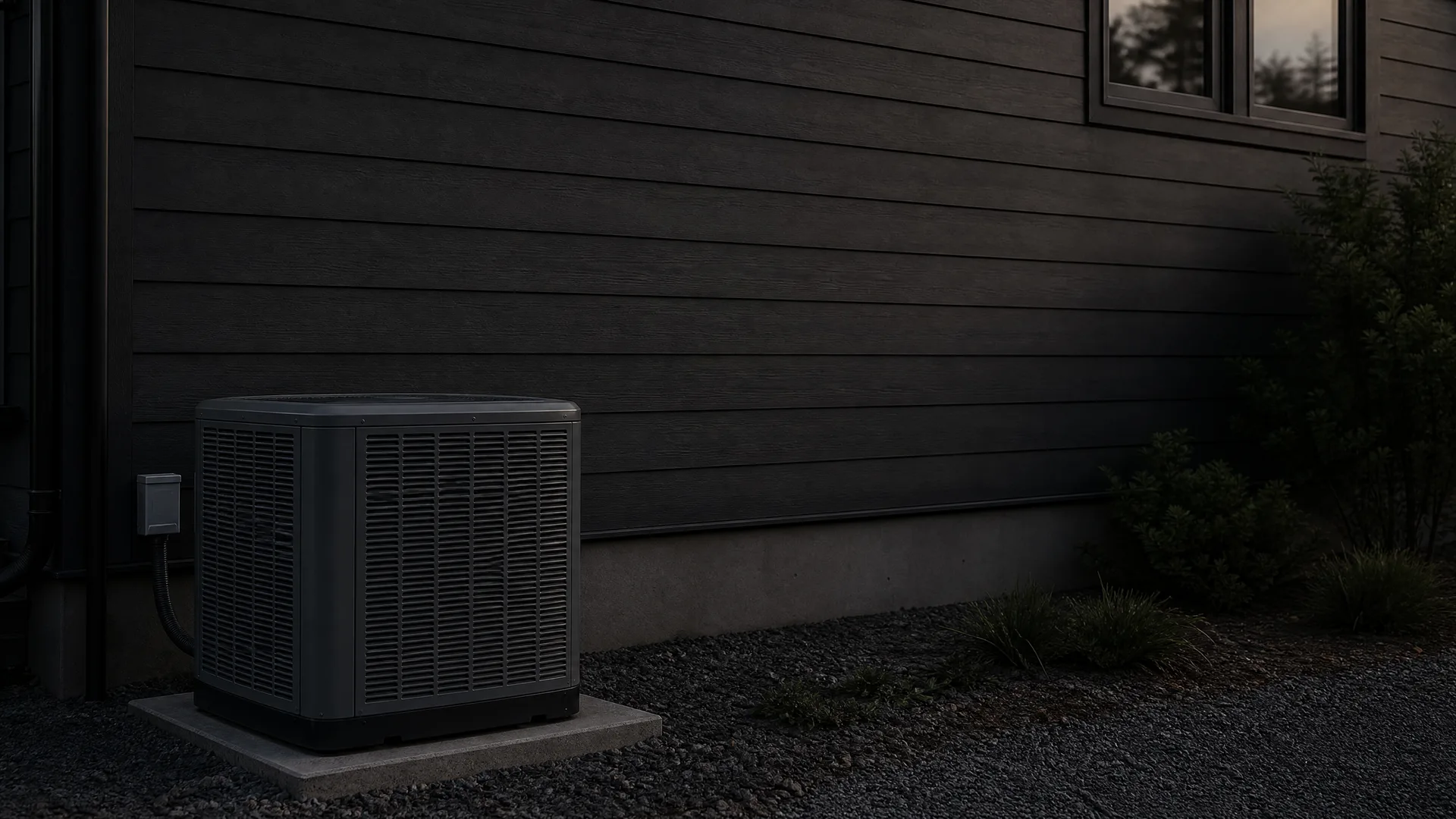
An outdoor condenser unit on a concrete pad beside a dark horizontal-lap-sided house, with gravel, shrubs and a small electrical disconnect box on the wall, in dim light.

Send one request and you're done looking

Skip the round of in-home estimates for a new heat pump.

New system or replacementHeat PumpJohnson County, IN
Step 1 of 2

What ZIP code is the job in?