Side profile of a bearded man wearing a faded dark blue baseball cap and a matching dark T-shirt against a plain light gray background.

Is a heat pump enough for winter in Greenwood, IN

New system or replacementHeat PumpJohnson County, IN
Step 1 of 2

What ZIP code is the job in?

Will my heat pump keep up during a Greenwood winter?

You've got a heat pump and you're wondering if it can actually handle a Johnson County winter, or if you'll be shivering through January waiting on backup heat that never kicks in right. Maybe you've heard heat pumps struggle once it gets really cold, or maybe your system has felt weaker than you expected on the coldest mornings. You want a straight answer before you decide whether to live with it or look at other options.

Yes, but it needs backup heat on the coldest days

A heat pump pulls warmth from the outside air, and the colder that air gets, the less heat it has to give. Once temperatures drop into the 20s and below, which happens plenty of winters in Greenwood, most heat pumps can't keep up on their own. That's why nearly every heat pump here is paired with backup heat, usually electric resistance coils or a gas furnace working alongside it, that switches on automatically when the outdoor unit can't carry the load by itself. If your system has that backup and it's sized right for your house, it will keep you warm from the first cold snap through the deepest part of winter. If you're not sure your setup includes backup heat, that's worth checking.

A gray outdoor condenser unit on a concrete pad beside a light-green sided house, surrounded by mulch, ornamental grasses and a shrub, with mowed lawn in the foreground.

Running the way it should

A heat pump in good shape keeps pulling heat out of the cold air all winter, cycling on and off like it's supposed to. The outdoor unit stays clear, the coil stays clean, and it switches over to backup heat only when the temperature actually drops low enough to need it.

An outdoor condenser unit on a concrete pad beside a horizontal-sided house, with insulated refrigerant lines running to a wall-mounted box, surrounded by bare dirt.

Struggling to keep up

An older unit that's lost refrigerant or has a worn-out compressor has to work harder for the same heat, and sometimes can't get there at all. If yours is leaning on backup heat more than it used to, or the air coming out feels lukewarm, something inside it has worn down.

An outdoor air conditioner condenser unit on a concrete pad beside a house with horizontal siding above a concrete block foundation, with insulated refrigerant lines and a vertical white pipe on the wall.
Before you get your heat pump installation
A gray outdoor heat pump unit on a concrete pad beside a house with horizontal lap siding, connected by conduit and a flexible line to a wall-mounted disconnect box, with low shrubs and mulch nearby.
After you get your heat pump installation

How the backup heat kicks in

Every heat pump system in Johnson County pairs with a backup source, usually electric resistance heat or a gas furnace, and a thermostat that calls for it automatically. When the outdoor temperature drops low enough that the heat pump alone can't pull enough warmth from the air, the system switches over on its own. You don't flip a switch or change a setting. If your thermostat has an emergency heat option, that's a manual override for when the heat pump itself has a problem, not something you need to touch on a normal cold night.

What a properly sized unit means

A heat pump that was sized for your house accounts for Johnson County's coldest stretches, not just the mild days. That sizing is based on your home's heat loss, the square footage, the insulation, the windows, figured out before installation. If a unit was sized correctly, it should carry the house through most of the winter on its own power and only lean on backup heat during the hardest cold snaps. A unit that was undersized for the house, or installed as a quick swap without that calculation, will call for backup heat far more often than it should.

Power here costs 14.91 cents per kilowatt-hour

At 14.91 cents per kilowatt-hour, running your heat pump through a cold snap costs about what you'd expect, nothing out of line. The real number to watch is how often backup heat kicks in, since that's what pushes a bill up, not the heat pump doing its normal job.

EIA-861 2025

How a heat pump handles cold

  • A heat pump moves heat by reversing refrigerant flow through a reversing valve, not by burning fuel.
  • Below a balance point, usually somewhere in the 30s, the unit pulls less heat than the house loses, so backup heat has to fill the gap.
  • Frost builds on the outdoor coil in cold, damp weather, so the system runs a defrost cycle that briefly reverses to melt it off.
  • During defrost the outdoor fan stops and the unit may send a stream of cooler air inside for a few minutes, which is normal.
  • A thermostat set to recovery mode instead of emergency heat lets the heat pump and backup work together instead of the backup taking over completely.
  • Short cycling or ice that doesn't clear after defrost usually points to a refrigerant charge or airflow problem, not a heat pump that's too small for winter.

A heat pump doesn't make heat the way a furnace does. It moves heat that's already in the outdoor air into your house, using a reversing valve to switch the refrigerant flow between cooling and heating. That works fine down into the 30s and even the 20s. Below a certain outdoor temperature, the balance point, the unit can't pull in heat as fast as your house loses it, so the backup heat source has to make up the difference. That's by design, not a sign anything's wrong.

Cold, damp air causes frost to build on the outdoor coil. When that happens, the system runs a defrost cycle, reversing briefly to melt the ice off before going back to heating. The outdoor fan shuts off during this and you might feel a short burst of cooler air inside. That's normal too, as long as it passes in a few minutes and the coil stays clear afterward.

How your thermostat is set matters here. If it's set to emergency heat, the backup runs by itself and the heat pump stops helping. Recovery mode lets both work together, which is how the system is meant to run on a cold morning.

If you're seeing ice that won't clear, or the system short cycling, that's usually a refrigerant or airflow problem a technician needs to look at, not proof the unit is too small for your house.

How cold does it actually get, and how long does your heat pump have to work

  • Winter nights average 23°F

    Overnight lows average 23°F through December, January and February, so your heat pump is regularly working below the temperature where backup heat has to help it.

  • Heat runs October through May

    Heat runs October through May here, about eight months. That's a long stretch for a heat pump and its backup source to share the load correctly.

  • Cooling runs June through September

    Cooling only runs June through September. The other eight months, how well your heat pump handles cold is what actually matters.

NOAA nClimDiv 1991-2020

A man in a navy sweater reclines in a leather armchair with his eyes closed and a slight smile, beside a side table with a mug and folded newspaper, in a room with a bookshelf and a sunlit window.
A bearded man in a navy robe over a gray shirt reclines with closed eyes in a brown leather armchair, with a houseplant, folded newspaper on a wooden table, and a bookshelf behind him.
A bearded man in a navy sweater reclines with closed eyes in a leather armchair beside a table holding a folded newspaper and a green mug, with a dresser, potted plants, a lamp and framed artwork behind him.
A man in a dark green sweatshirt reclines with his eyes closed and a slight smile in a brown leather armchair, with a window, table lamp, mug and newspaper beside him.

Finding a pro stops being your job

One installer gets your project, so there's no bidding war over it.

No charge to send it. You decide if you hire them.

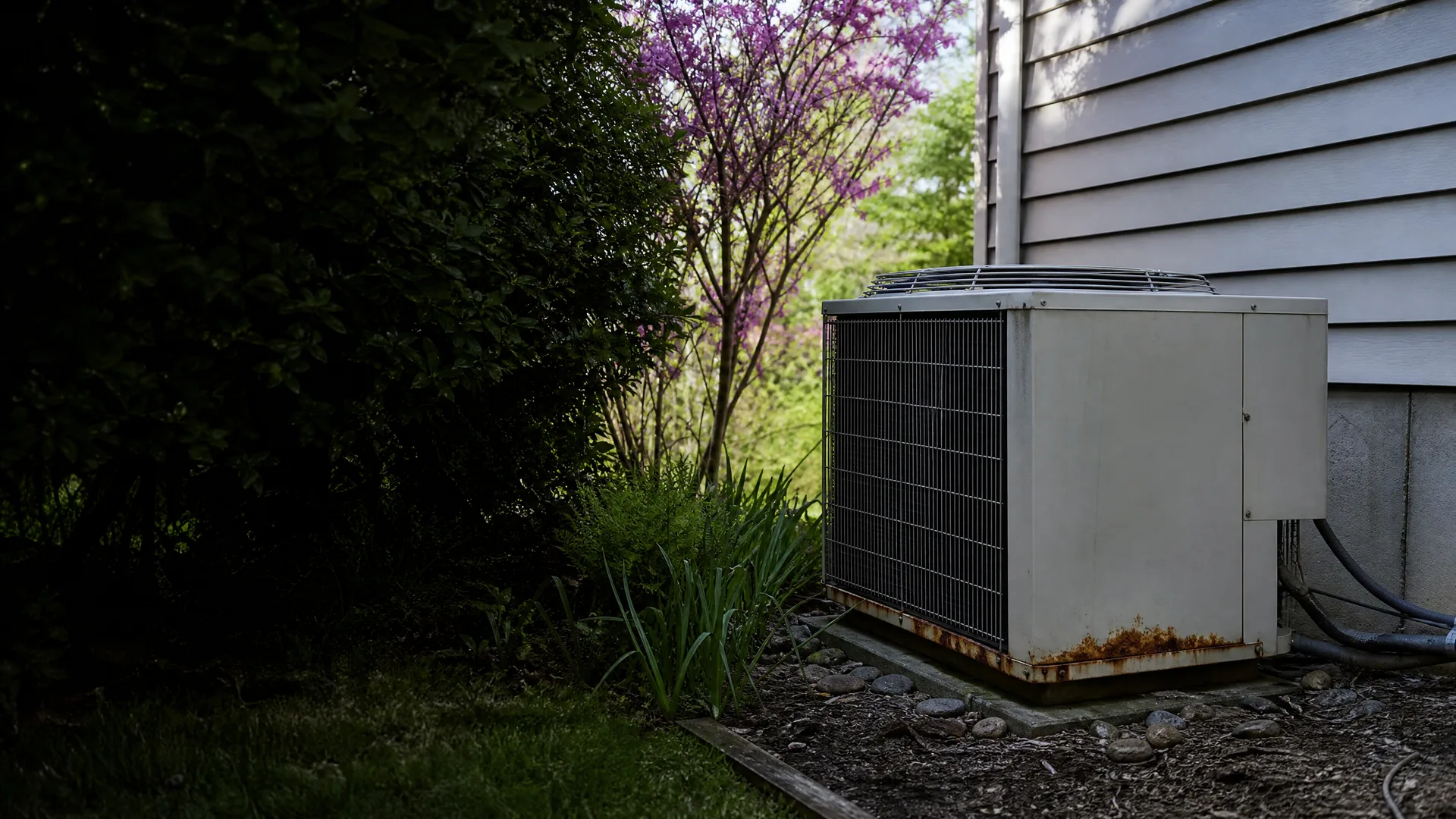
An outdoor air conditioning condenser unit with rust streaks sits on a concrete pad beside a light-colored lap-sided house, surrounded by shrubs, gravel and a flowering tree.

You walk out to the side yard in March, the first warm afternoon after a run of cold weeks, and the outdoor unit is still ticking as it cycles down. You crouch to check the base and see rust along the bottom edge, flaking where the panel meets the pad. The coil fins above it look fine, but that rust line wasn't there last spring. You run a finger along it and a piece comes away. The unit got you through another Johnson County winter, backup heat and all, but you stand there wondering how many more Januarys are left in it before something along that rusted seam gives out on a night you need it most.


A gray outdoor heat pump unit on a concrete pad beside a house with horizontal lap siding, with a conduit running to a wall-mounted disconnect box and a green shrub to the left.
A clean unit like this one cycles on and off all winter without added strain, pulling what heat it can from the cold air.
An outdoor air conditioning condenser unit with dusty coils sits on a concrete pad against light horizontal siding, with an electrical disconnect box and refrigerant lines on the wall and a shrub and mulch at left.
Years of grime and a bare soil bed like this leave the coil working harder for less heat, long before anyone notices.
  1. Thermostat calls for heat and the reversing valve shifts flow.

  2. Refrigerant in the outdoor coil pulls heat from cold air.

  3. Compressor raises refrigerant temperature before it moves indoors.

  4. Indoor coil releases that heat into air moving through ducts.

Heat Pump Alone vs. With Backup

Heat pump alone

  • Below the balance point the unit still pulls heat from the air, just less of it, so the house loses ground on the coldest days.
  • Without backup heat running, recovery after a cold night takes longer since the heat pump is working at its weakest right when you need the most.
  • A heat pump alone gives you no second source if the compressor or reversing valve ever fails on a January morning.
  • Humidity and frost on the outdoor coil cut capacity further, so output drops right when overnight lows hit the low 20s.

Heat pump with backup

  • The thermostat calls in electric resistance heat or a gas furnace automatically once the heat pump can't keep up on its own.
  • Overnight lows in the low 20s through December, January and February are covered by backup heat filling the gap the heat pump leaves.
  • If the compressor or reversing valve ever has a problem, the backup source still carries the house while a contractor sorts out the heat pump.
  • A working backup keeps indoor temperature steady instead of drifting down slowly during the coldest stretch of a Johnson County winter.
  • The added run time from backup heat is what shows up on the bill, not the heat pump cycling through a normal night.
A gray outdoor condenser unit on a concrete pad beside a house with horizontal lap siding, with a wall-mounted disconnect box, conduit and insulated refrigerant lines, a shrub at left and gravel at right.

Clear and running right

This is a heat pump set up to last the winter. Good clearance on the pad, lines and wiring kept neat against the wall, nothing crowding the coil. Gravel underneath instead of bare dirt means less moisture working its way up into the cabinet over a cold, wet season.

An outdoor air conditioning condenser unit on a concrete pad beside a house with horizontal lap siding, with a green shrub to the left and a wide concrete slab in the foreground.

Set up to struggle

Same unit, poured flat onto bare concrete against the siding with nothing to break up standing water after rain or melt. A coil that stays wet longer frosts up faster in January and leans harder on backup heat, which is the part of your bill worth watching.

A heat pump handles a Johnson County winter fine, as long as it's matched with backup heat that actually kicks in when it should and a system that's been looked after. Overnight lows in the low 20s mean your unit leans on that backup more nights than not, and that's normal, not a sign anything's wrong. What decides whether you stay warm isn't the idea of a heat pump, it's the condition of the one outside your house right now: the coil, the refrigerant charge, the defrost cycle, the backup element or furnace waiting behind it. A unit kept clear and serviced carries you through January the way it's supposed to. One that's been neglected falls behind right when you need it most, and you find out on the coldest night of the year instead of before it. If you're not sure which one you've got, that's worth sorting out before the next cold snap, not during it.

A gray-haired man in a blue sweater over a checked collared shirt sits in an armchair with his eyes closed and head tilted back near a bright window, with a houseplant and lamp nearby.
A woman in a grey knit sweater leans back with closed eyes in an armchair beside a window, with a ceramic mug on a round wooden side table and a yellow-leaved tree outside.

Let someone else find the pro

A new install gets the balance point and the backup heat sized right from the start, so your system in Greenwood handles those 23°F nights without guesswork. You get a licensed local contractor who works on heat pumps all winter and knows what tends to fail first in Johnson County cold. It's one contractor matched to your job, not a handful of companies competing for your callback. Send the request and let someone who knows this equipment take it from here.

Get one local pro

A licensed installer who works in Johnson County gets your project.

There's no charge for the request.