



A lit brick residential street at dusk showing a row of two-story homes with covered porches and mature trees.

Furnace Maintenance in Crawfordsville, IN

Tell us about the job

Takes about a minute. No obligation.

Tune-up, service, or cleaningFurnace or heatingMontgomery County, IN
Step 1 of 2

What ZIP code is the job in?

Furnaces here run from October through May, about eight months of the year. That is a long stretch, but it does not call for maintenance more than once. One visit a year, done before the cold sets in, covers it. The best time to have it looked at is late summer or early fall, ahead of the first cold nights. Overnight lows average 21°F in December, January and February, so by the time winter settles in you want the furnace already checked, not waiting on a call.

Your furnace in Crawfordsville goes to work the day October starts.

September is the month to have it checked, before that first cold stretch asks anything of it.

Most homes here heat with gas, which means a burner and vent system worth checking every year

47.7% of homes heat with gas
Heat runs October through May
Winter nights average 21°F

Half the homes in Montgomery County were built in 1967 or earlier. A furnace that old has usually been swapped out at least once, but the ductwork and gas line running to it often date back to the house itself. A yearly check gives someone a chance to look at the connections and the venting before a small leak or a cracked heat exchanger turns into a bigger problem. None of this means an older home has a worse furnace. It just means more of them are due for a look.

Get the connections and venting checked before winter

If the ductwork or gas line to your furnace dates back to the house, a yearly check is how it gets looked at before a small problem turns into a bigger one.

Find a contractor
A gray residential gas furnace installed in an unfinished basement, surrounded by ductwork, a metal flue pipe, and a gas supply line.

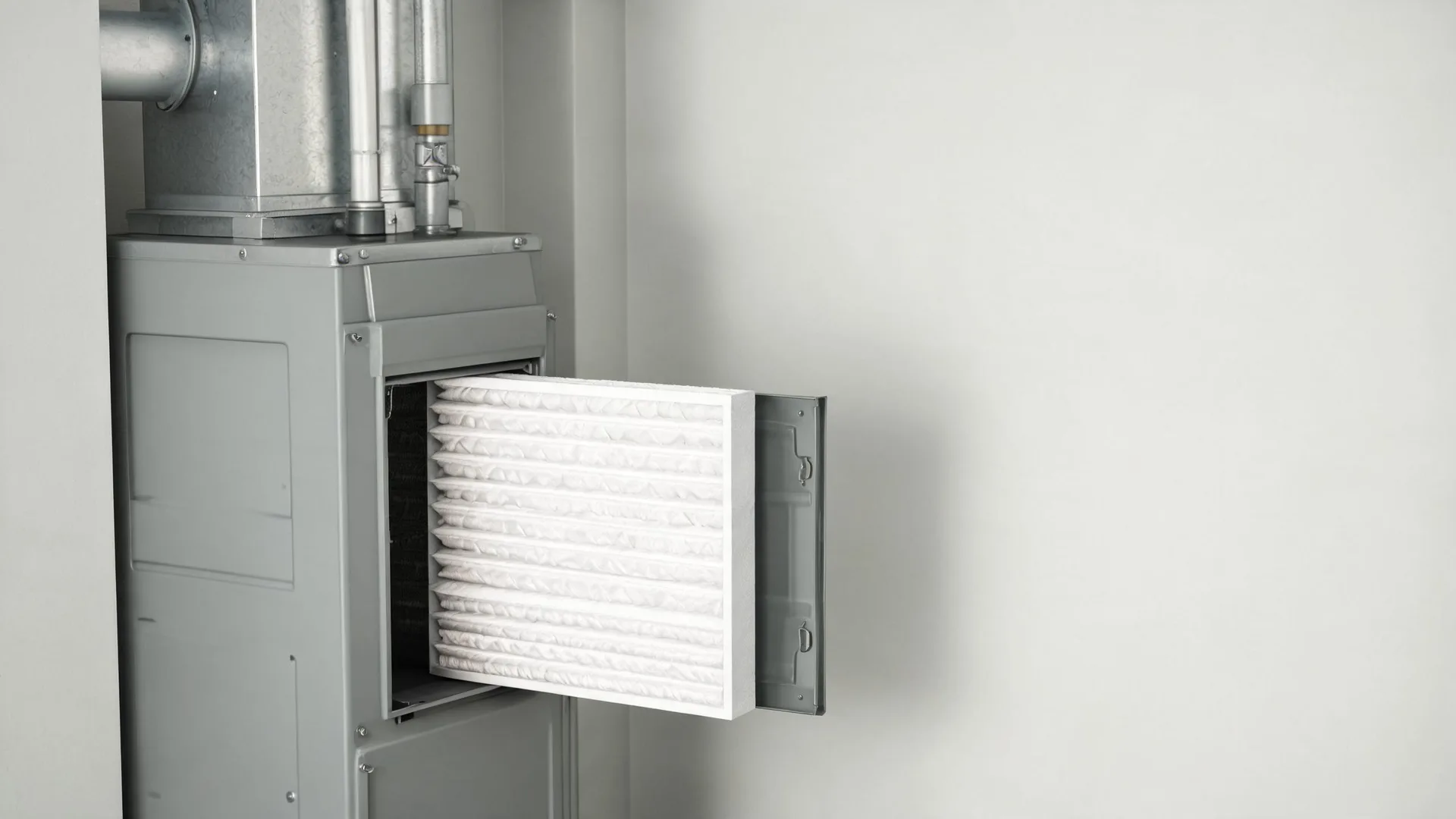
A filter change is not a tune-up

A quick visit gets the filter swapped and the thermostat checked, then the tech is out the door. A thorough one has the cabinet open. The burners come out and get cleaned, because a burner coated in dust or rust burns dirty and uneven. The flame sensor gets cleaned too, since a thin layer of buildup on it is one of the most common reasons a furnace shuts off on its own partway through a cycle. The heat exchanger gets inspected for cracks, which matters more than almost anything else on the list since that is what keeps exhaust gases out of the air moving through the house. Someone checks the inducer motor and the pressure switch, confirms the flue is drafting the way it should, and tests the gas pressure at the valve rather than just assuming it is set right. A thorough tune-up also means amp draw gets checked on the motors, since a motor pulling more current than it should is wearing out even if it still runs fine today. None of this takes long to do right, but all of it takes longer than swapping a filter.

A furnace that short-cycles is telling you something

A furnace that fires, runs a couple minutes, then shuts off before the house warms up usually has a flame sensor losing its signal or a flue not drafting right. It will keep doing this, and getting worse, until someone cleans or adjusts the part causing it.
A yellow flame means the burners need attention

A clean gas flame burns blue. If it's burning yellow or flickering orange, the burner is not getting enough air or is coated with buildup, and it's putting more carbon monoxide into the exhaust than it should. That's worth a look even if the furnace seems to be heating fine.

Between visits, the main thing worth doing is checking the filter and swapping it when it's dirty. A clogged filter starves the furnace of airflow, and that makes it run hotter and longer than it should to get the house to temperature. Look at it in good light. If you can't see through it, it needs to be changed. Keep the area around the furnace clear too, nothing stacked against the cabinet, since it needs room to pull in air. Walk past the vents and registers now and then and make sure none of them are blocked by furniture or rugs. If the thermostat has a display, glance at it once in a while for anything unusual, like the fan running constantly or the schedule not matching what you set. None of this replaces having the burners and heat exchanger looked at, but it keeps the furnace from working harder than it has to in between.

A tune-up is also the one time anyone checks parts that don't fail often but cause real trouble when they do. The limit switch is one. It shuts the furnace off if the air inside the cabinet gets too hot, and if it's stuck or miscalibrated, the furnace either shuts off when it shouldn't or keeps running when it shouldn't. The igniter is another. It's what lights the burners each cycle, and it weakens with age rather than failing all at once, so a furnace that's slow to start or skips a cycle here and there is usually telling you the igniter is near the end. Belts aren't part of this, since the blower motor runs direct-drive, but the blower wheel itself gets checked for dust buildup, because a dirty wheel moves less air even when the motor is running fine. None of these show up on a quick filter swap. They show up when someone opens the cabinet and actually tests them.