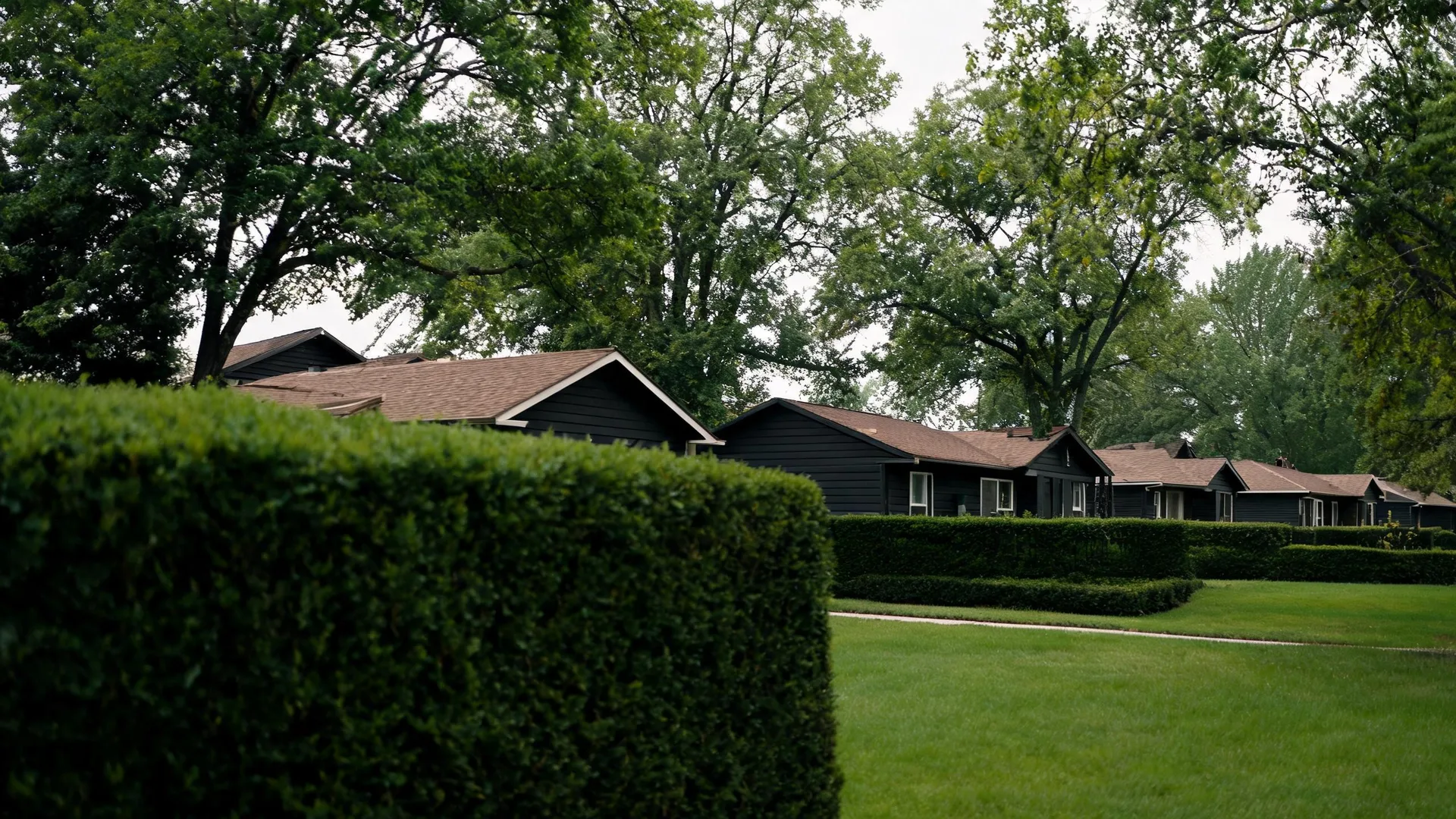




A row of dark-sided single-story cottages with brown shingled gable roofs behind trimmed hedges, mown lawn and a light-colored path, surrounded by large deciduous trees under an overcast sky.

Furnace Maintenance in Evansville, IN

Tell us about the job

Takes about a minute. No obligation.

Tune-up, service, or cleaningFurnace or heatingVanderburgh County, IN
Step 1 of 2

What ZIP code is the job in?

Furnaces in Vanderburgh County start working in October and keep going through April. That is seven straight months with no real break. A furnace with a cracked heat exchanger or a weak igniter will show it fast once it has to run every day, and October is when that starts. Have it checked in September, before the cold sets in and before a service call has to compete with everyone else's breakdown.

A clean filter is the one thing a homeowner controls without opening a panel.

Check it monthly once the furnace is running every day, and swap it when it looks gray.

Weather here is reason for backup, not for more than one tune-up a year

148 severe weather events from 2015 to 2024
17% of homes statewide lost power a day or more in 2024
103 damaging wind events from 2015 to 2024
Most furnaces here run on gasUtility gas heats 60% of homes in Vanderburgh County. That means a burner and venting to check, not just a filter.

Half the homes in Vanderburgh County were built in 1970 or earlier. A furnace that old has usually been replaced at least once, but if yours came with the house, it's worth finding out. An older system has had more years for a connection to work loose or a part to wear down quietly. A yearly check is when a tech catches that, while it's still small and before it shows up as no heat on a cold morning.

Get it looked at once a year, connections included

Get the ductwork and gas line checked along with the furnace, not just the unit itself. If it's been a year since the last visit, this is the time to get on the schedule.

Find a contractor
A gray high-efficiency gas furnace installed in an unfinished basement, surrounded by gas lines, a condensate drain, and sheet-metal ductwork.

A furnace that's skipped doesn't quit. It wears quietly until it does

Skip a year and the furnace doesn't fail outright. It drifts. The burner flame goes from blue to yellow when it's getting dirty air or the wrong mix of gas and air, and that yellow flame leaves soot behind on the heat exchanger. Soot holds heat, so the metal underneath runs hotter than it should, cycle after cycle, until it cracks. A dirty flame sensor will make the igniter light the burner and then shut it right back off, over and over, because the sensor can't tell the flame is there anymore. None of this announces itself. It shows up as a furnace that runs longer to do the same job, or short-cycles, or smells faintly of exhaust it shouldn't. One tune-up a year is what catches the soot and the weak sensor while they're still a cleaning and an adjustment, not a cracked exchanger and a replacement.

What a tech checks that you can't

A tune-up includes a look inside the heat exchanger with a camera or mirror, checking for cracks that don't show from outside the cabinet. It also means testing the gas pressure at the manifold and checking the amp draw on the blower motor, numbers that tell a tech whether a part is wearing out before it fails. None of that is visible from the thermostat or the filter slot.

Why it matters before the cold sets in

A cracked heat exchanger or a blower motor pulling too many amps still runs fine when the furnace is barely working. Neither one announces itself until the furnace has to run every day, and by then a bad part means the furnace is down, not just due for service. Finding it early is the difference between a repair on the schedule and a breakdown that isn't.

A thorough tune-up starts with the burner pulled and looked at, not just glanced at through the viewport. The tech checks flame color, tests gas pressure at the manifold, and pulls the flame sensor to clean it rather than leave it be. The heat exchanger gets inspected with a camera or mirror, since a crack in it doesn't show from outside the cabinet. The blower motor's amp draw gets tested against what it should be, not just listened to for noise. A quick visit skips most of that. It's a filter swap, a glance at the flame, maybe a reading off the thermostat, and the tech is out the door. Both get called a tune-up. Only one of them tells you what shape the furnace is actually in.

The ignitor is worth a look even on a furnace that starts fine every time. A hot surface ignitor glows to light the gas and gets more brittle every time it heats and cools, so it tends to fail without warning rather than fade out slowly. A tech can check its resistance and tell you if it is close to the end, instead of waiting for a furnace that won't start at all. Same with the inducer motor, the one that pulls exhaust out before the burner lights. If its bearings are going, it'll sound different before it quits outright, and that sound is easy to miss unless someone is listening for it on purpose. A tune-up also means checking the limit switch, which shuts the furnace down if it's running hotter than it should. That switch only matters on the one day it has to work, and there's no way to test it except by hand.