




What winter here does to a heat pump
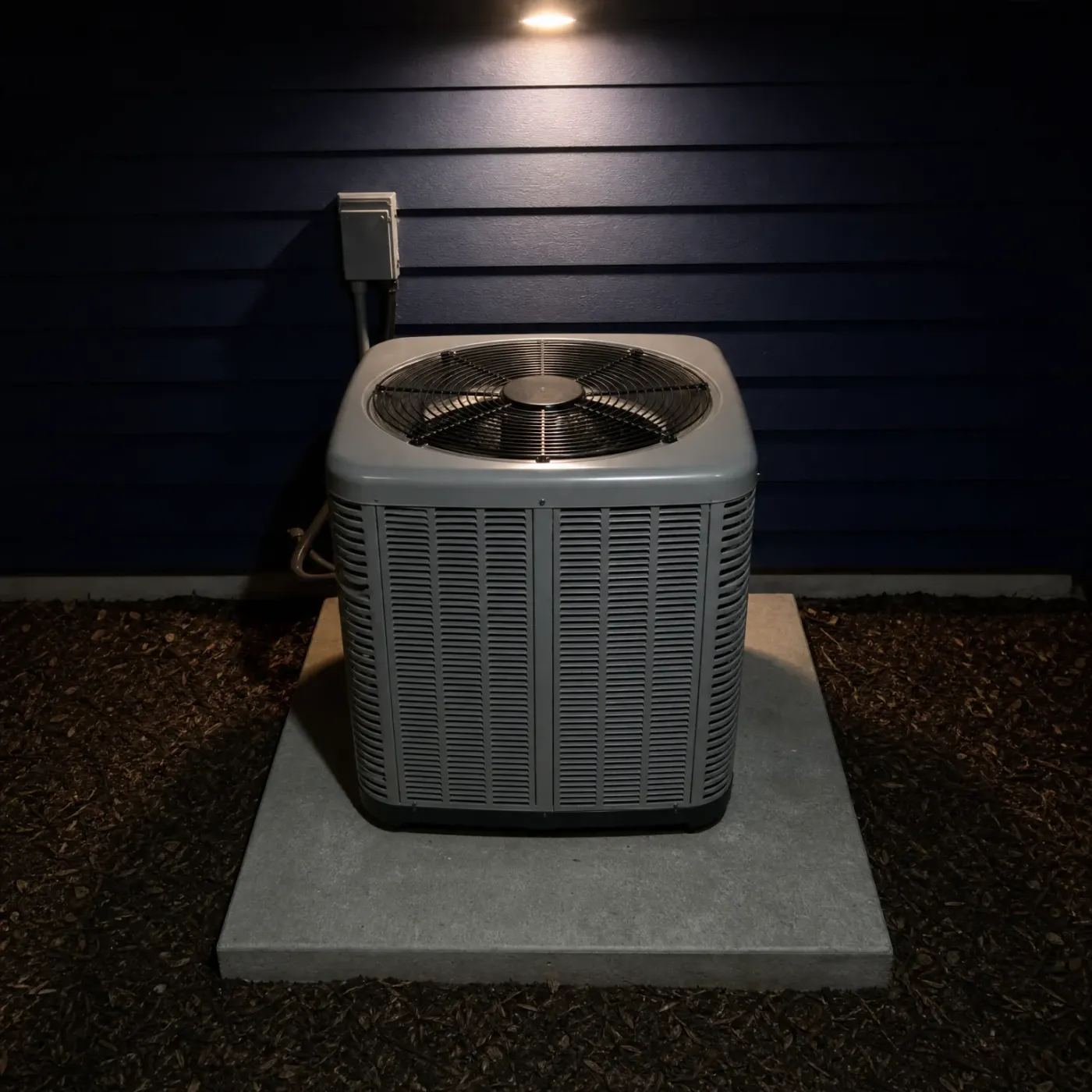
Your heat runs seven months a year here, October through April, and the overnight low averages 27°F across the three coldest months. That number matters because of where a standard heat pump starts losing ground. Below 40°F it puts out less heat than its rating says. Below about 35°F it often needs backup heat to keep up. An average winter night here is below both marks, and so is every one of the roughly 80 nights a year that drop to freezing or under.
That doesn't mean the house goes cold. It means a standard heat pump is working below its rated output on most winter nights, and leaning on backup heat on a good number of them. Backup heat is usually electric resistance heat, the most expensive kind to run, and it's on top of the $1.97 per 100,000 Btu the heat pump itself costs to run here.
A cold-climate heat pump changes that math. To earn the ENERGY STAR Cold Climate label, a heat pump has to deliver at least 1.75 units of heat per unit of electricity at 5°F and hold on to 70 percent of its 47°F capacity at that temperature, and that's measured by independent testing, not the manufacturer's word. Field testing of these units over two winters in occupied homes found backup heat covered only a small share of the heat needed between 0°F and 35°F, and the units rarely ran on backup alone even above 0°F. Only about one night a year here reaches 0°F. A cold-climate model, not the standard one the $1.97 figure assumes, is what makes a heat pump a serious option through a Vanderburgh County winter.