



A trimmed hedge borders a mown lawn in front of single-story houses with dark siding and shingled roofs, surrounded by large leafy trees under an overcast sky.

Furnace Repair in Evansville, IN

Tell us about the job

Takes about a minute. No obligation.

RepairFurnace or heatingVanderburgh County, IN
Step 1 of 2

What ZIP code is the job in?

A furnace that's struggling usually gives a warning before it quits for good. A cracked heat exchanger gets worse every cycle the burner fires, because the metal keeps flexing against the same weak spot. A failing igniter weakens a little more each time it tries to light, until one day it doesn't. Even a dirty flame sensor will make the furnace shut off sooner each run, as soot builds on the rod. Letting the system keep running through this isn't just a matter of a bigger repair later. A cracked exchanger can let combustion gases into the air the furnace is supposed to be warming. If your furnace is short cycling, making a new noise, or smells off when it kicks on, that's worth a call now rather than after another month of use.

7 months
October through April, your furnace is on duty
27°F
the average winter night it heats against
60%
of homes here heat with gas, so most furnaces here burn gas
11 winter storms
in ten years, the nights a failure hurts most
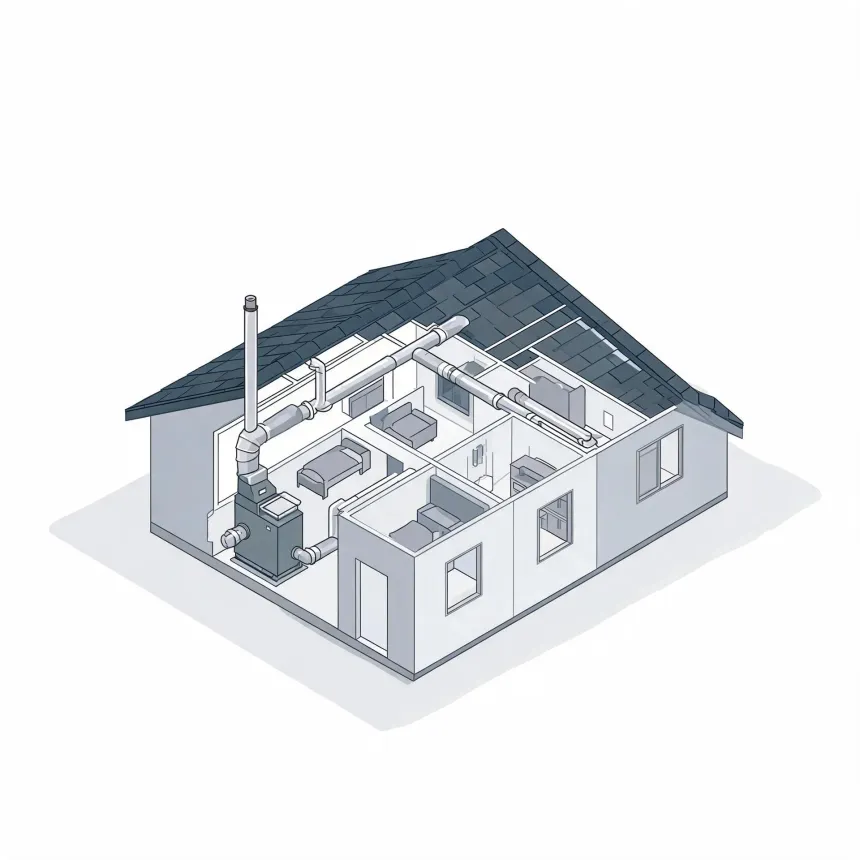
Isometric cutaway illustration of a single-story house showing interior rooms with furniture, ceiling ductwork, a furnace unit with a tall flue pipe, and a dark shingled roof.
Your furnace works hardest from November through March.

NOAA nClimDiv, 1991–2020 normals

Furnaces in Vanderburgh County start running in October.

If something was already weak, late September through October is when it shows up.

Half the homes in Vanderburgh County were built in 1970 or earlier

Half the homes here were built by 1970
Heat runs October through April
Winter nights average 27°F

Vanderburgh County sees its share of severe weather, 148 events between 2015 and 2024 between wind, hail, tornadoes and winter storms. None of that is hard on a furnace specifically. Wind and hail hit the roof and siding, not the burner or the heat exchanger inside. What does matter is what happens after a storm knocks the power out. A furnace that loses power mid-cycle and comes back on is usually fine, but if yours was already due for trouble, that restart can be what finally shows it. If your furnace quit after an outage and won't fire back up, that's worth a call before you assume the worst.

If your furnace is original to the house, find out before you pay for the repair

If your furnace came with the house, ask the contractor how much life it has left before you pay for the repair. That answer should decide what you spend.

Find a contractor
A gray gas furnace with attached ductwork and piping installed in an unfinished concrete basement.

What to check before you call

Before anyone comes out, a few things are worth checking. Start at the thermostat. Make sure it's set to heat, not just fan, and that the setpoint is actually above room temperature. A blank display usually means the batteries are dead, and that's an easy swap. At the furnace itself, pull the filter and look at it. A filter packed with dust chokes off airflow, and a lot of furnaces will shut themselves down rather than run hot or overwork the blower. If it's gray and solid, replace it and see if the furnace behaves differently. Check the power switch on or near the furnace, the one that looks like a light switch. It gets bumped off by accident more than people expect. If your furnace runs on a standing pilot, check whether it's still lit. There's usually a relight procedure printed right on the panel if it's gone out. Last, check the breaker. A tripped breaker is worth resetting once. If it trips again right away, stop there and leave it to someone licensed, since that points to an electrical problem rather than a furnace problem. None of this fixes a real failure. It just rules out the simple stuff before anyone pays to find out the filter was the issue.

Most failures come from a few parts

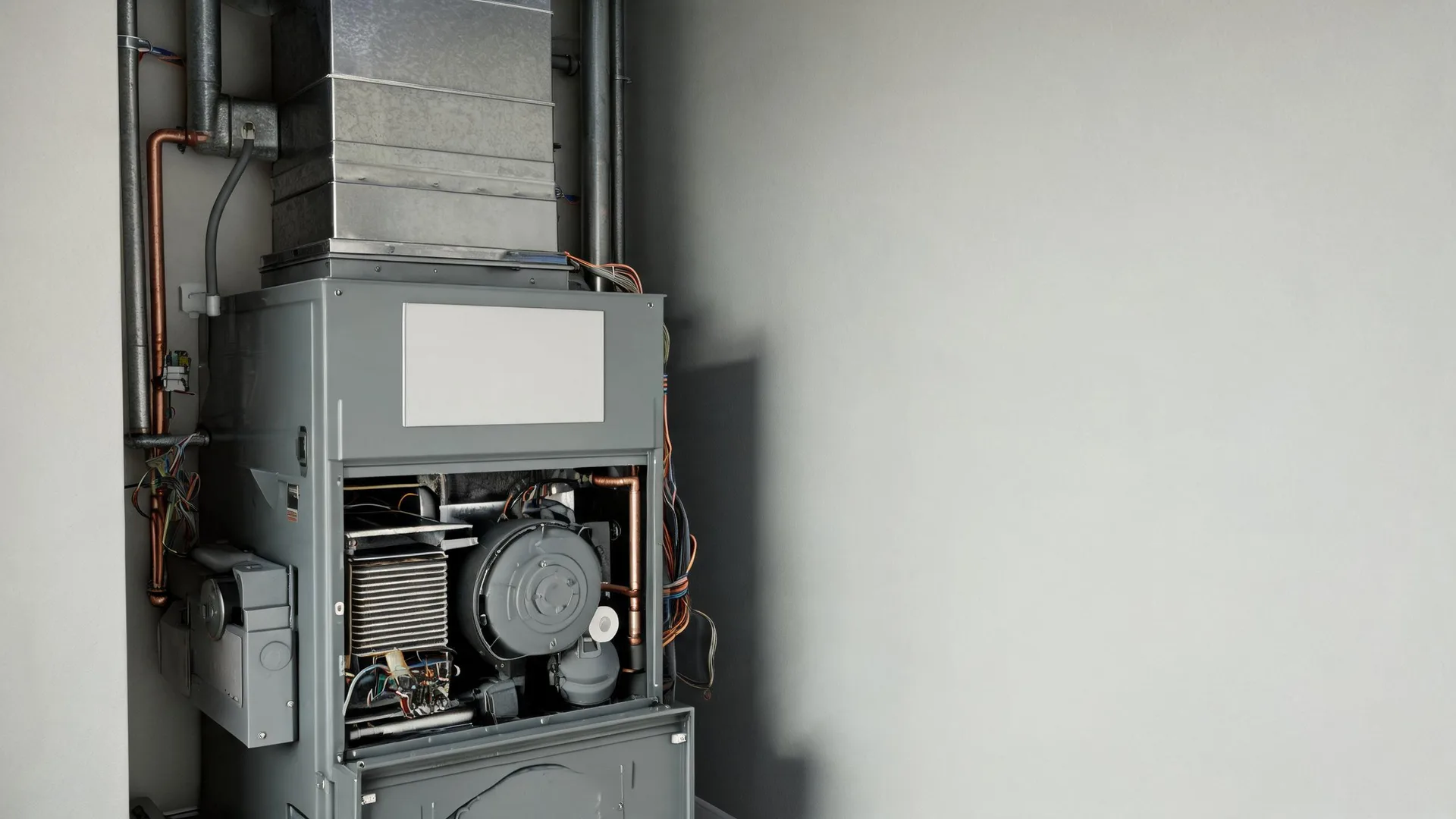
The igniter, the flame sensor, the draft inducer motor and the blower motor account for most service calls. Each one has a job that wears it down over time. The igniter heats up and cools down every cycle, so it eventually cracks like a light bulb filament. The inducer motor runs almost every time the furnace fires, so its bearings wear the way any motor's would with that much use. Knowing which part failed is most of the diagnosis.

Airflow problems cause other parts to fail

A clogged filter or blocked return doesn't just weaken heat output. Choked airflow lets the heat exchanger run hotter than it should, and that heat has nowhere to go but back into the furnace's own components. A blower motor working against restricted airflow pulls harder and burns out sooner. Many parts that get replaced failed because something upstream of them was never the real problem.

An unfinished concrete basement containing a metal HVAC air handler, exposed wooden ceiling joists with sheet-metal ducts, a hanging bare bulb, copper pipes, and stacked cardboard boxes.

A new furnace would cut about $80 a year off heating for a typical Vanderburgh County home.

  • A new high-efficiency furnace$340 a year
  • An older furnace$420 a year

Estimates for a typical Vanderburgh County home, compared with an older unit built to the previous federal minimum, from EIA household energy data, Indiana fuel prices and NOAA climate normals. Your home will differ.

Repair makes sense when one part has failed and the heat exchanger is sound.

Replacement makes sense when the heat exchanger is cracked or the furnace keeps needing parts.

A repair is worth doing when the failure is one part and the rest of the furnace checks out sound. A cracked heat exchanger is the one exception, since that's the core of the furnace, and replacing it usually costs close to putting in a new unit. Beyond that, how the furnace has been treated tells you something too. One that's had clean filters and regular attention tends to hold up better than one that's been run against blocked airflow, since heat stress is what wears these parts out early. A good contractor will tell you what failed, why, and whether that failure says anything about the rest of the system. If they can't answer that, ask again before you decide.