Running right
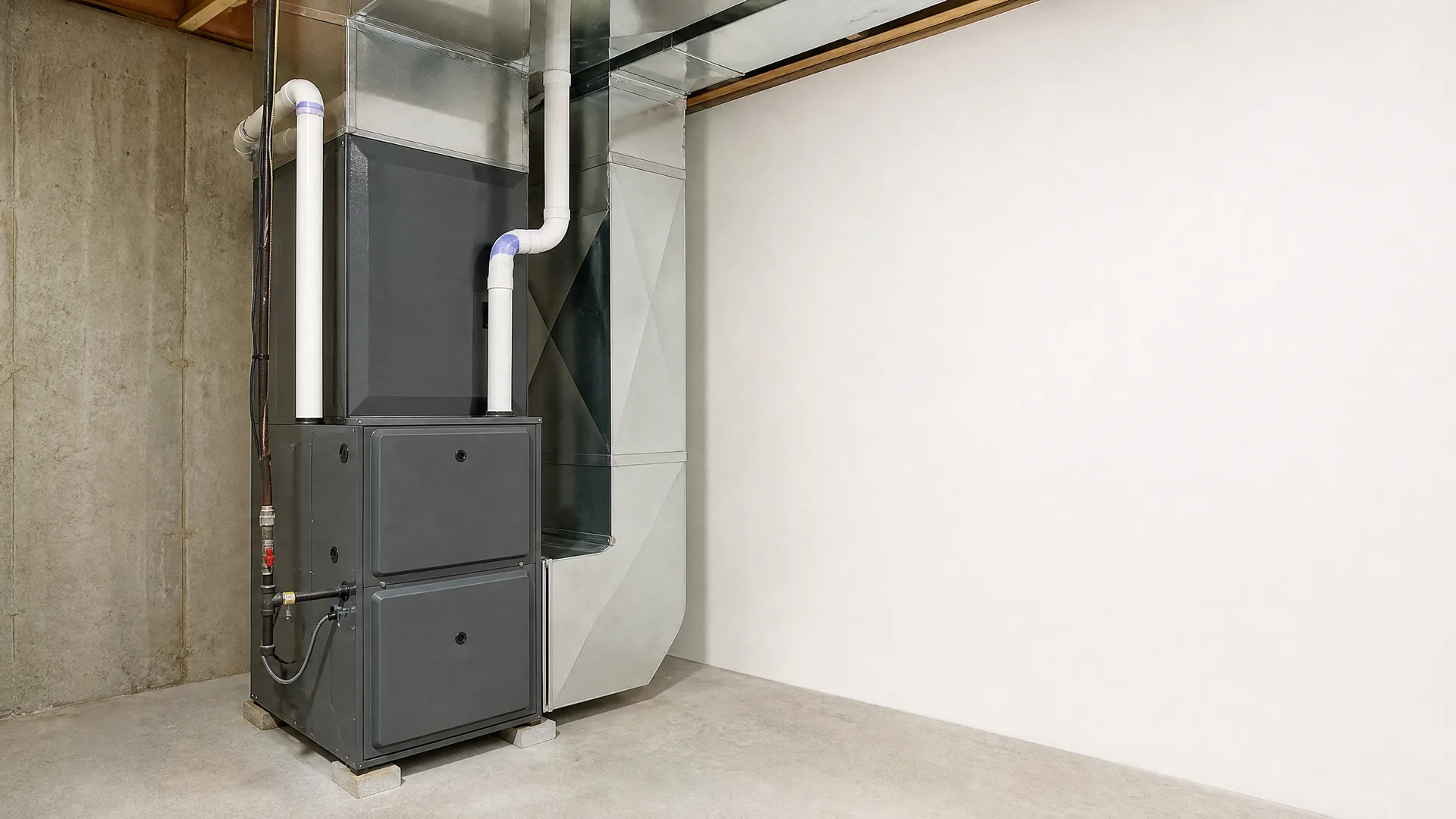
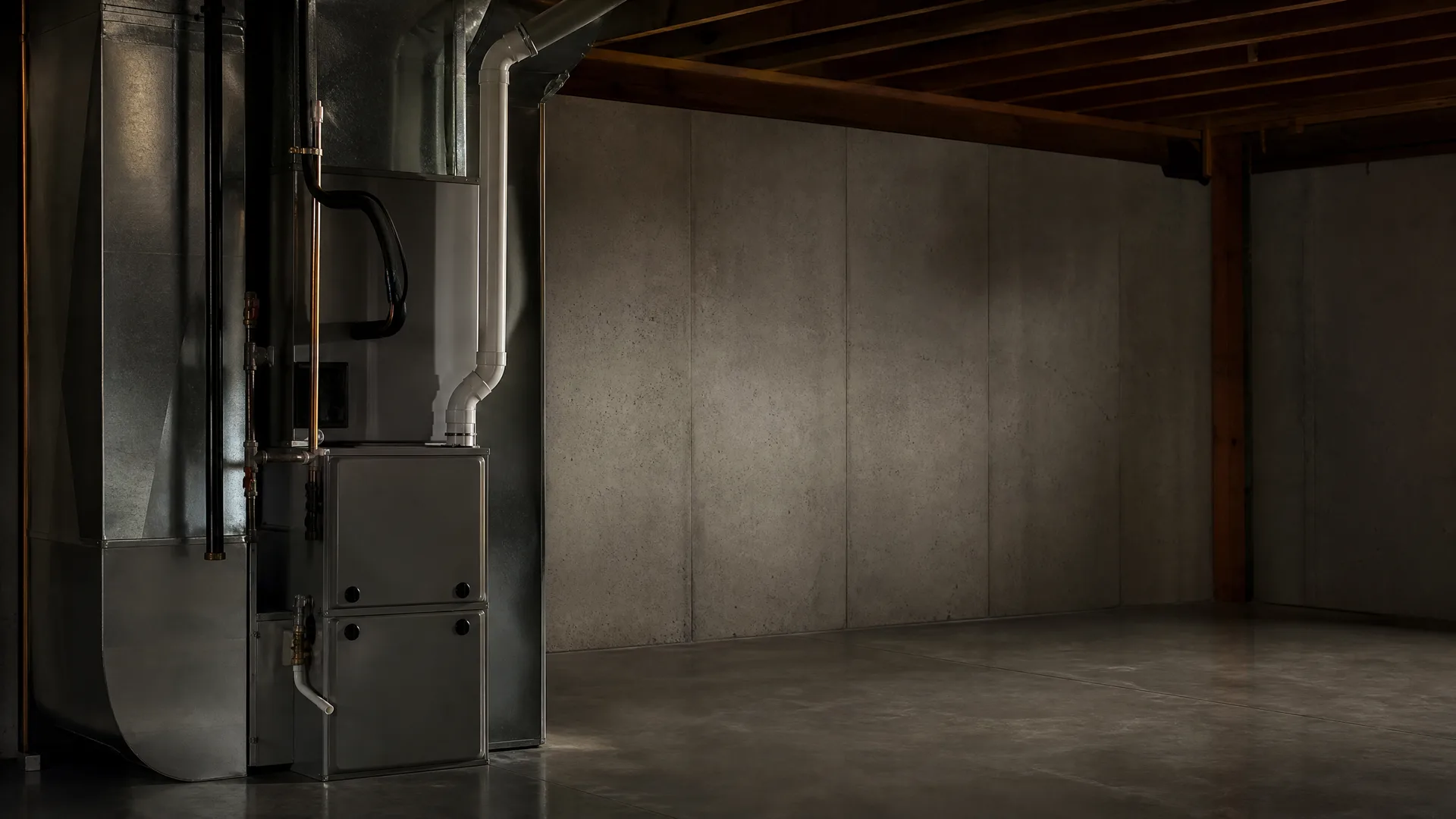
A furnace venting and draining this way is doing its job. The PVC pipes stay clear, the gas line connections are tight, and air moves through the ductwork the way it should. Nothing here is fighting itself to keep your house warm.
Explain the furnace problem once instead of to every shop in Johnson County.
Answer a few questionsFirst, check the thermostat is set to heat and the batteries are good, then check the breaker for your furnace hasn't tripped. If the furnace runs but no warm air comes out, or it won't start at all, that usually points to the igniter, the flame sensor, or the pressure switch rather than anything you can fix yourself. In Greenwood, a dead furnace in January or February isn't something to sit on. Most homes here run on gas, and a furnace that won't light is often a safety shutoff doing its job after a failed ignition, not a simple fuse. If the furnace runs constantly but the air feels cool, check your filter first, since a clogged one can choke the system. Past that, you're looking at a repair that needs a license to do safely, especially with a gas appliance. Get it looked at the same day if you can. A house in Johnson County loses heat fast once the temperature outside drops into the teens or lower.




Winter nights average 23°F
Nights average 23°F here in December, January and February. A furnace that quits on one of those nights leaves your house losing heat fast.
Heat runs October through May
Furnaces here run from October through May, about eight months of the year. That's most of the year this repair can't just wait.
64% of homes heat with gas
64 percent of homes in Johnson County heat with gas. If yours is one of them, a gas furnace needs a licensed hand, not a guess.
NOAA nClimDiv 1991-2020 · ACS 2020-2024
If you're handy and the problem turns out to be a tripped breaker or a dead thermostat battery, you can solve it in minutes. But past that, furnace repair means working with gas lines, a flame sensor, or wiring that can hurt you or the furnace itself if it's done wrong. There's no manual that covers every model sitting in Johnson County basements, and guessing wrong can mean a second repair on top of the first.
A licensed contractor who works on furnaces around Greenwood every winter has seen your symptom before, often on the same models common to this area. Instead of searching, calling a few companies, and explaining the problem over and over, you get matched with one contractor who already knows what questions to ask. They come out, test the actual part, usually the igniter, the flame sensor, or the pressure switch, and fix what's actually wrong instead of what might be wrong.
Thermostat calls for heat and signals the furnace control board.
The inducer motor starts and purges the heat exchanger first.
The igniter heats up or the pilot lights the burners.
The flame sensor confirms the burners are actually lit.




A furnace that quits in Greenwood is not a project to take on alone once you get past the breaker and the thermostat. You already know what the nights feel like here in January, and a cold house is not something to sit with while you call around to find someone free. Finding a contractor on your own means searching, calling two or three companies, explaining the same problem each time, then waiting on quotes to compare. That's the part this page takes off your plate. One contractor gets your request, someone local who works on furnaces around Greenwood every winter and has seen what usually goes wrong on the brands common here. You tell your situation once. No fielding calls from five different companies trying to win the job. With the heat out and the temperature dropping, that's time and effort you'd rather not spend, and it's the piece you can hand off right now while you deal with everything else a cold house brings.

A furnace venting and draining this way is doing its job. The PVC pipes stay clear, the gas line connections are tight, and air moves through the ductwork the way it should. Nothing here is fighting itself to keep your house warm.

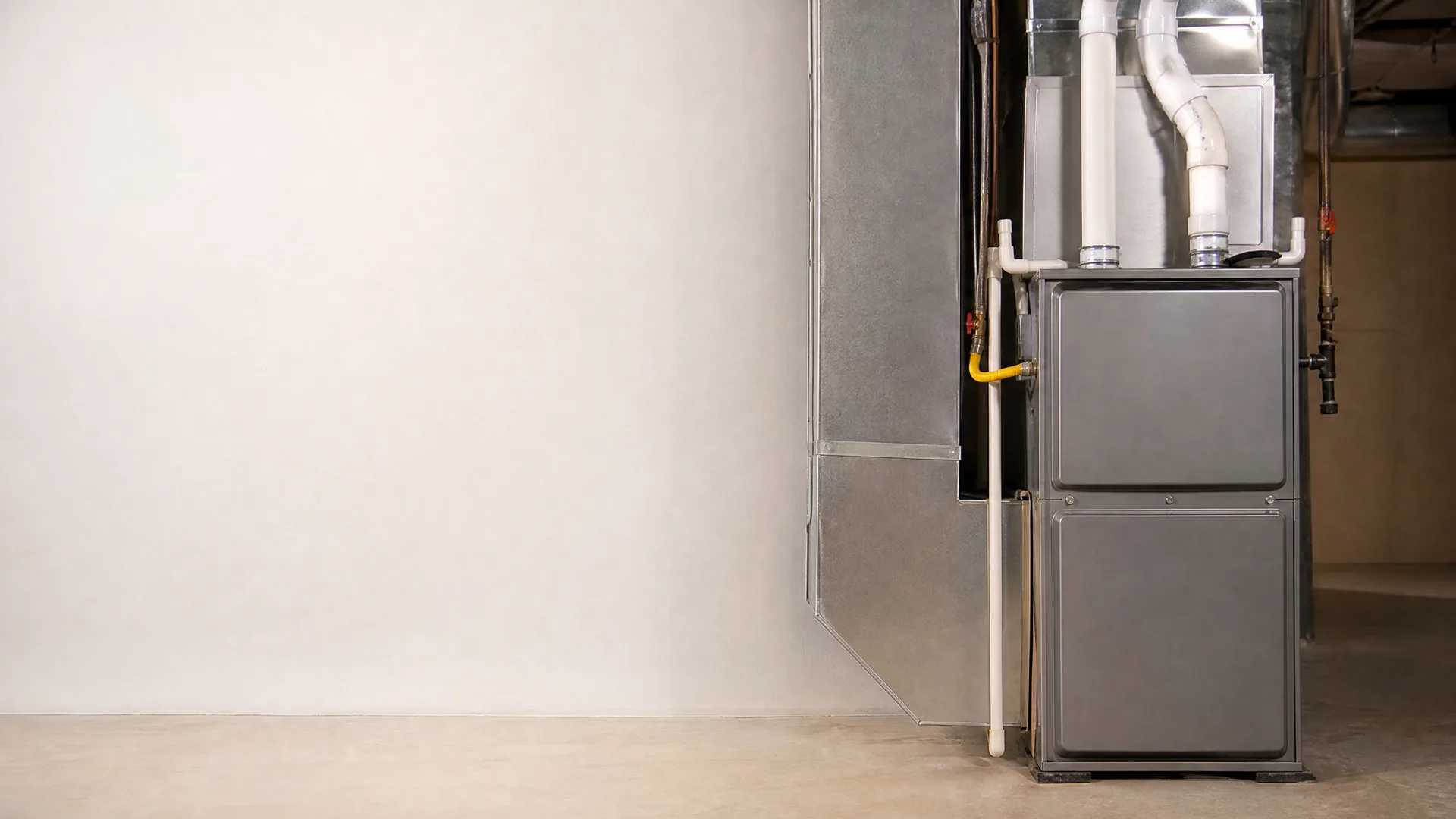
Dust built up around the base like this usually means it's been collecting for a while, not days. An older cabinet like this has put more winters on its heat exchanger, its draft motor, and its control board than a newer one has, and any of those can be what quits on you.
You notice it in the mornings first. The thermostat reads 68 but the air coming out of the vents feels barely warm, or not warm at all. Rooms farthest from the furnace cool off quicker than the rest of the house. You might hear the furnace cycling on and off more than it used to, or catch a burnt dust smell when it starts up, or notice it running without ever shutting off. Some homes pick up a faint gas smell near the unit, which means stopping and calling a contractor right away rather than waiting. Left alone through a Johnson County winter, a furnace that's struggling tends to fail completely rather than get better on its own.



This is what a furnace looks like doing its job. The PVC pipes run clean to the unit, the gas lines sit tight, and the air handler moves warm air through the ductwork without a fight. A setup like this holds steady through a Johnson County winter.

Same kind of furnace, same gas line and shutoff valve, but this one is on borrowed time. A heat exchanger, draft motor or control board wears out after enough winters, and when it goes, it tends to go on one of the cold nights, not a mild one.

Check the thermostat and the breaker first. Past that, a furnace that won't heat your house in Greenwood comes down to a part: the igniter, the flame sensor, the inducer motor, or something else in that chain. A licensed contractor who works on furnaces all winter in Johnson County can usually tell you which one it is before taking the panel off.
That's the part you don't have to do yourself. Instead of calling a few companies, explaining the same problem each time, and sitting with quotes to compare, you tell it once to one contractor who already knows what tends to go wrong on these units in a Greenwood winter. They show up with a reasonable idea of the fix already in mind.

A licensed pro who works in Johnson County gets your request.