

When to replace a furnace in Jeffersonville, IN
Your new furnace project goes to an installer who works in Clark County.
Request a proHow do I know when it's time to replace my furnace?
Your furnace is getting older, or it's been acting up, and you want to know if it's worth fixing again or if replacement is the smarter move. Winters in Jeffersonville get cold enough that you don't want to guess wrong. Maybe the repair bills are adding up, or the house just doesn't feel as warm as it used to. You want a straight answer before you spend more money on a system that might not last much longer anyway.
Replace it once repairs cost more than it's worth, or it can't keep up on the coldest nights
A furnace that needs a repair every heating season, or one quoted for a major fix like a cracked heat exchanger or a failed blower motor, has reached the point where putting more money into it stops making sense. The same is true if rooms stay cold while it runs, or your gas bill has climbed without any other change in the house. Clark County winters put a furnace to work for months at a time, and a system that's struggling in October won't hold up through January. If your furnace came with the house and you don't know its age, a local contractor can check its condition and tell you whether it has years left or whether replacement is the better bet.




Repair the Furnace or Replace It
Repair
- A furnace under ten years old is usually still worth fixing if one part has failed, like an igniter or a flame sensor.
- If this is the first repair it's needed, a single fix now doesn't tell you much about what's coming next.
- A cracked heat exchanger is the one failure that means replace, not repair, no matter the furnace's age.
- Gas furnaces here run hard from November through March, so a furnace that's kept up with regular service has earned another season.
- If parts for your model are still easy to get, repair costs stay predictable instead of climbing with every visit.
Replace
- A furnace past 15 years that's needed two or more repairs in as many winters is costing you more by staying.
- If your gas bill has crept up while the furnace runs more just to hold the same temperature, the unit is losing efficiency, not just reliability.
- A furnace that can't keep the house warm on the coldest nights of a Jeffersonville winter is already failing at its one job.
- Once a repair quote gets close to what a new furnace costs installed, the math favors replacing it.
- An older furnace that short cycles or won't hold a steady temperature is wearing out its parts faster than a newer one would.
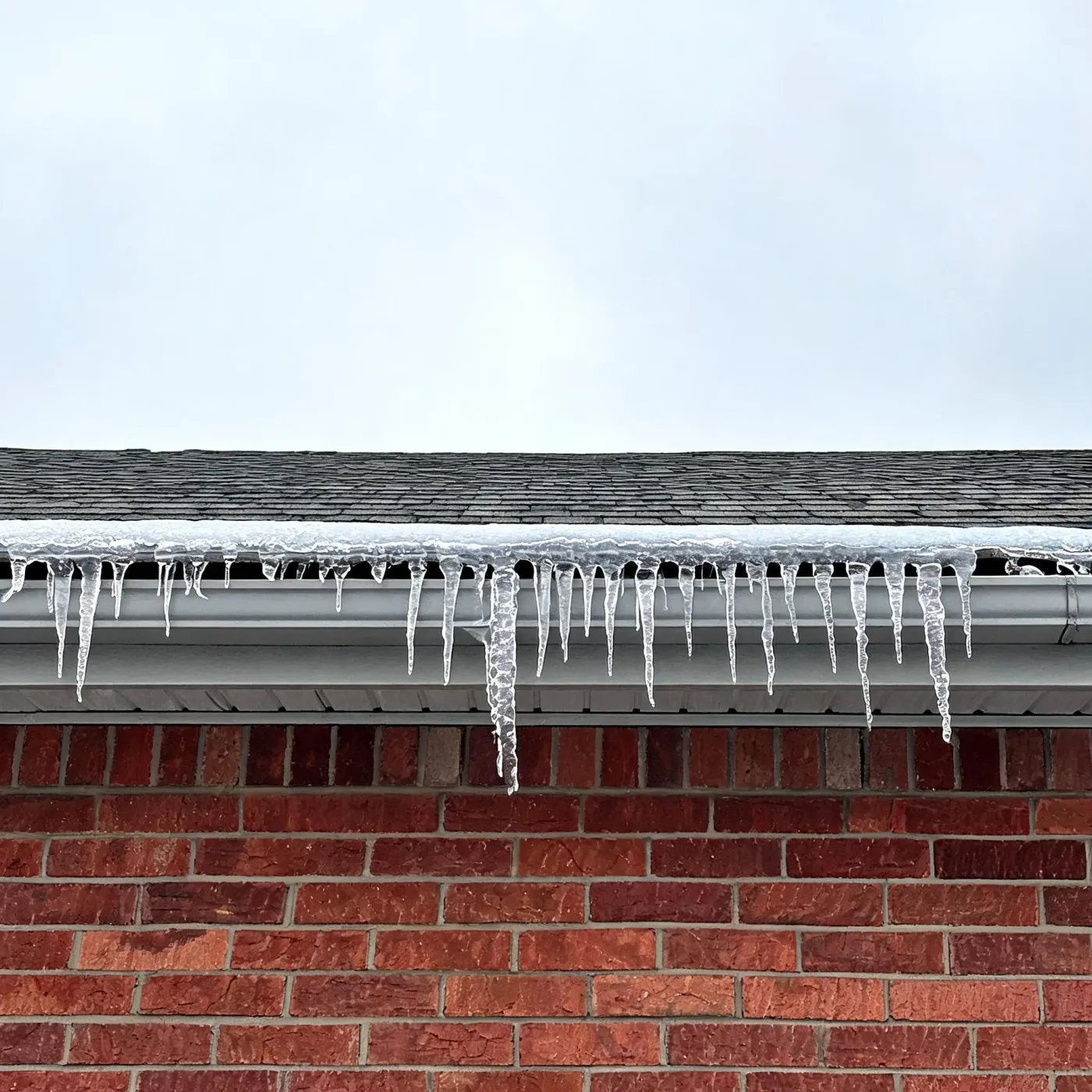
Winter nights in Clark County average 26°F, according to NOAA climate data. That means your furnace is firing up often, and staying on longer each time to keep the house even close to comfortable. A unit that's already struggling, short cycling, running cool air before it warms up, or working overtime to hit the thermostat setting, gets tested hardest on nights like these. If yours has been limping along, this is when it tends to show. A local contractor who services furnaces all winter in this county knows what tends to give out first in weather like this, and can tell you quickly whether your furnace still has some life in it or whether you're better off replacing it before the next cold stretch.
NOAA nClimDiv 1991-2020
A local pro for your furnace installation
One installer gets your project, so there's no bidding war over it.
You're not committing to anything by asking.
What a heat exchanger crack means
A furnace's heat exchanger is the metal chamber that separates the flame from the air blowing through your ducts. Once it cracks, carbon monoxide can mix into that airflow instead of going out the flue. There's no patch for this. A cracked heat exchanger is a replace decision, not a repair decision, no matter how old the rest of the unit is or how well it's otherwise running. A contractor who finds one will shut the furnace down on the spot rather than let it run until parts arrive. That's the one failure on a furnace where the age of the unit doesn't factor into the choice at all.
What an AFUE number tells you
Furnaces sold today carry an AFUE rating, which is the percent of fuel that becomes heat in your house rather than going up the flue. A furnace installed under current standards runs well above older units built decades ago, which wasted a lot more gas just getting the house warm. That gap matters more here than somewhere mild, because a Clark County furnace runs for months at a stretch, not just on the coldest nights. An older, lower-rated unit is burning gas at that lower rate every single one of those hours, all winter long, while a new one turns more of what it burns into heat in your rooms.


A furnace doesn't fail all at once. The AFUE rating on the nameplate is what it earned new, and that number falls as the heat exchanger and burners pick up wear year after year. Most furnaces are built for 15 to 20 years of service, and the gas valve, blower motor and control board all age on roughly the same timeline, so when one starts failing the others usually aren't far behind. The efficiency loss is gradual enough that a lot of homeowners don't notice until they compare a few winters of gas bills side by side. If your furnace went in before 1992, it's likely running well under 80 percent efficiency, far below what a new unit delivers. Parts get harder to find too. Once a model is 15 years old or more, manufacturers often stop stocking components for it. And a blower motor straining to move air through a system that's lost efficiency tends to show it, with longer, louder cycles than it used to run.
How a furnace wears down
- A furnace earns an AFUE rating when it's new, but that number drops as the heat exchanger and burners age and gather wear.
- Most furnaces are built to run 15 to 20 years, and the gas valve, blower motor and control board all age together, not one at a time.
- An older furnace often loses efficiency gradually, so the rise in your gas bill can be easy to miss until a few winters have passed.
- Furnaces installed before 1992 generally run well under 80 percent efficiency, far below what a new unit delivers today.
- Replacement parts for a furnace older than 15 years are often harder to source, since manufacturers stop stocking them for discontinued models.
- A blower motor working harder to push air through a system losing efficiency will usually show it through louder, longer running cycles.


Winter nights average 26°F
At 26°F, your furnace is running most of the night, not just kicking on now and then. An older unit that can't hold a steady cycle at that temperature is going to struggle through a lot of nights before spring gets here.
NOAA nClimDiv 1991-2020
A furnace under ten years old with one failed part is usually worth fixing. A furnace that's cracked a heat exchanger, or started short cycling at 26°F instead of holding steady, is telling you the next repair is just a stop on the way to replacement. Once you know which one you're looking at, the decision is simple even if it isn't easy. If it looks like replacement, a contractor who works on furnaces around Jeffersonville all winter knows which brands hold up through nights that cold and which ones end up back on the service calendar in a few years. You'll be matched with one licensed local contractor, not a handful of companies competing for your callback, so the person who reaches out already has a sense of what Clark County winters do to a furnace before they see yours.
Get the right pro for your furnace
A licensed installer who works in Clark County gets your project.