









Profile view of a bearded man wearing a dark green baseball cap and a dark gray T-shirt against a plain light background.

How long a furnace lasts in Indiana

New system or replacementFurnace or heatingIndiana
Step 1 of 2

What ZIP code is the job in?

A gas furnace in Indiana usually lasts 15 to 20 years. The gas ones most Indiana homes have tend to outlast electric furnaces, and the heat exchanger is normally what decides when it's done, since cracks there mean the unit can't be repaired safely. How long yours makes it depends on how well it was installed, whether it got serviced regularly, and how hard your winters push it. A furnace running from October through March works harder here than one in a milder state, and that shows up in the last few years of its life as more frequent repairs. If yours is past 15 years, it's worth asking a contractor to look at it before you're picking a new one in the middle of a cold snap. Getting ahead of it means you choose the timing, not a broken furnace on the coldest night of the year.

A woman in a cream knit sweater sits in an armchair with her eyes closed near a window showing yellow autumn foliage, with a mug on a round wooden side table beside her.
A gray-haired man with a beard in a blue button-placket shirt reclines on a couch with his eyes closed, beside a sunlit window with a green plant.

A furnace rarely just stops. It gives signs first, and most of them show up in how it cycles. If it's firing on and off every few minutes, that's not usually the thermostat. That's the heat exchanger cracking, and once it's cracked, the unit can't be run safely, let alone repaired. The blower motor and the ductwork age alongside it, so even a furnace that tests fine can be working harder than it should if those haven't been touched. The flame tells you something too. It should burn blue. Yellow means the burners aren't pulling enough air, and that drags down efficiency well before anything fails outright. Sizing matters here as much as age does. A furnace matched to your home's square footage cycles less than one that's oversized, and every cycle it skips is wear it doesn't put on the igniter and the heat exchanger. An inspection once a year is what catches a cracked heat exchanger before it turns into a carbon monoxide problem, and that's the reason most furnaces get pulled early. If you're planning the swap, late summer is when installers have the room on their schedule that they won't have in December.

How a Furnace Actually Wears Out

  • Short cycling, where the furnace fires on and off every few minutes, often points to a cracked heat exchanger rather than a bad thermostat.
  • A furnace that stays on the original blower motor and ductwork tends to run harder as both age, even if the furnace itself checks out fine.
  • Yellow flame instead of blue usually means the burners aren't getting enough air, which cuts efficiency long before the unit actually fails.
  • Most furnace replacements get scheduled in late summer or early fall, since parts and installers both get harder to line up once it's cold.
  • A furnace rated for your home's square footage will cycle less often than one that's oversized, and fewer cycles means less wear on the igniter and heat exchanger.
  • Annual inspection catches a cracked heat exchanger before it becomes a carbon monoxide risk, which is the main reason furnaces get replaced early.
A beige high-efficiency furnace with white PVC vent pipes stands beside galvanized sheet-metal ductwork in a basement with a concrete floor, exposed wood studs, and metal piping along the wall.
A furnace running a normal cycle: it fires, the burners settle into a steady flame, and the house warms without any smell or noise out of place.
An older beige furnace with a louvered vent panel stands on a concrete basement floor beside galvanized sheet-metal ductwork, a metal flue pipe and vertical pipes along a concrete wall.
A furnace near the end: short cycling, a yellow flame instead of blue, or rust around the cabinet seams where the flue connects.
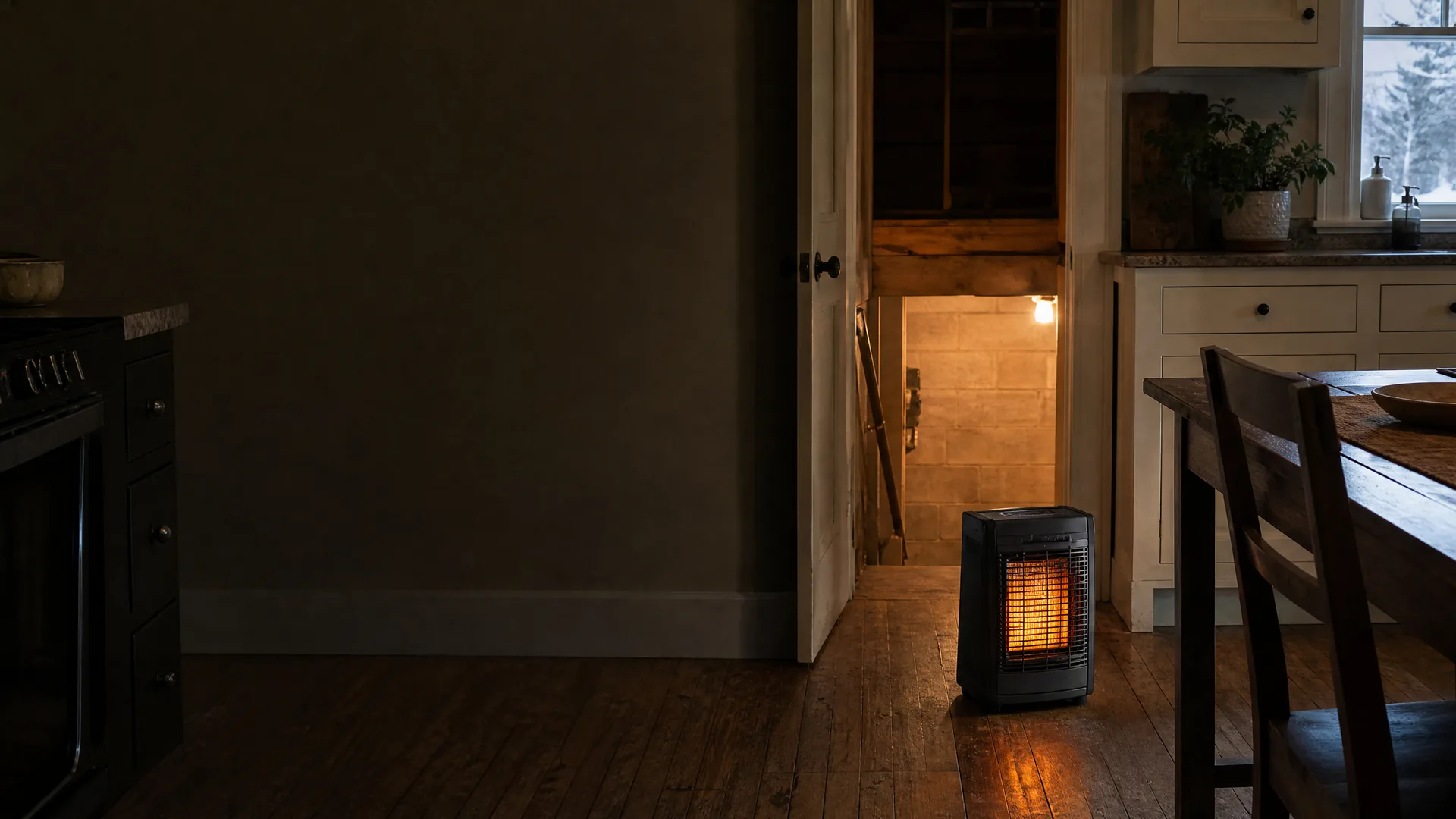
A dimly lit interior with wood plank flooring where a small portable heater with a glowing orange element sits near an open doorway, with a stove at left, kitchen cabinets and a potted plant at right, and a wooden table and chair in the foreground.

You're up before the rest of the house, and the kitchen is cold enough that you can see your breath near the window. The space heater is pulled close to the table, its coil glowing orange, cord running back toward the outlet by the counter. The basement door stands open behind it because you went down twice already to look at the furnace, like checking on it again would change what it's doing. It isn't doing anything. No hum, no click, nothing moving air through the vents. Outside it's still deep winter in Indiana, the kind of cold that doesn't let a house coast on a dead furnace for long. You've got a space heater and a number to call.

A local pro for your furnace installation

Send the form and the search for an installer is over.

Sending the form costs nothing.

How a Furnace Actually Works

  • The heat exchanger is the sealed chamber where gas burns, and it's the one part that can't be patched if it cracks.
  • A furnace draws return air across that chamber and pushes the warmed air out through the same ducts all winter.
  • The igniter has to glow hot enough to light the gas within a second or two, or the control board locks the burners out.
  • A flame sensor the size of a thin rod checks that the burners actually lit, and a dirty one will shut the furnace down as a safety step.
  • The inducer motor clears exhaust out through the flue before the burners fire, so a weak one can delay startup by several seconds.
  • Furnaces installed with a matched blower and properly sized ductwork put less strain on the heat exchanger over the years than a mismatched setup does.

Gas comes into the burners first, and the igniter has to catch it fast. There's no pilot light sitting there waiting anymore on a modern furnace. The igniter heats up, the gas valve opens, and if a flame doesn't show up within a second or two, the control board shuts things down rather than let gas keep flowing unlit. Before any of that happens, the inducer motor has already started pulling exhaust out through the flue, clearing the path so burning gas has somewhere to send its fumes. Once the burners are lit, the flame sensor checks they're actually still burning, not just that the igniter fired. That sensor is a thin metal rod sitting right in the flame, and it reads current through the flame itself. Dust or soot on it is enough to make the furnace think the flame went out, even when it didn't, and shut the burners down as a precaution. All of this happens around the heat exchanger, the sealed metal chamber where the gas actually burns. The blower pulls return air from the house across the outside of that chamber, picks up heat, and pushes it back out through the same ducts that brought the air in. Nothing touches the flame directly except the metal of the exchanger itself, which is why a crack there is the one failure that ends the furnace rather than gets repaired. How well the blower and ductwork were matched to the furnace at installation affects how hard that exchanger works, year over year, to do this.

A woman with long gray hair wrapped in a checked blanket sits on a sofa by a window with yellow autumn foliage outside, with a lamp, framed picture and plant in the background.
An older woman in a cream knit sweater sits on a sofa by a window, looking out at sunlit trees with yellow and orange autumn leaves, with a bookshelf and lamp behind her.
A woman with gray shoulder-length hair in a dark knit sweater sits on a cushioned seat by a window, looking out at yellow autumn foliage, with a living room, armchair, houseplant and framed picture behind her.
An older woman with gray hair in a bun, wearing a cream knit sweater, sits on a sofa with a gray blanket and looks out a large window toward yellow-green autumn trees, with a lit table lamp and dark armchair behind her.

What ends a furnace early

A furnace can hit 20 years if it's kept clean and the heat exchanger stays sound. What cuts that short is usually neglect rather than age by itself. A clogged filter makes the blower work harder to push air through the ducts, and that strain adds up over winters. Skipping annual service means a cracked igniter or a failing flame sensor goes unnoticed until the furnace won't stay lit. Dust and soot buildup inside the cabinet can also stress the heat exchanger faster than normal use would on its own.


What stretches it past 20

Some gas furnaces in Indiana run past 20 years, and it usually comes down to how the system was sized and used from the start. A furnace matched to the house doesn't short cycle or overwork its parts trying to heat space it wasn't built for. Keeping the blower motor and ductwork in good repair matters too, since a strained motor pulls more from the rest of the unit. Homes that replace the filter on schedule and have the burners checked each fall tend to get more years out of the same furnace.

58.6% of homes statewide heat with gas

Most houses around you run on gas heat too, so your furnace is pushing warmed air through the same kind of system neighbors have. Parts and service for it are easy to find here, since so few homes are working with anything else.

ACS 2020-2024 5-year B25040

A gray high-efficiency furnace with two PVC vent pipes stands in an unfinished basement beside sheet-metal ductwork, a framed and plastic-covered wall, and a bare concrete wall with vertical pipes.

Running the way it should

This is a furnace doing its job. The flue pipes and gas line are hooked up clean, the ductwork carries the heat where it needs to go, and nothing around it looks like it's under strain. A setup like this is built to run 15 to 20 years.

A gray furnace cabinet in a basement, connected to galvanized sheet-metal ductwork and white PVC pipes, against a concrete wall with exposed metal piping and insulation overhead.

Set on a pallet, nearing the end

A furnace propped on a pallet with condensate lines running off to the side has usually been in that basement a long while. Once it starts needing more attention than it used to, it's worth asking a contractor to look at what's actually left in it.

A smiling man in a denim shirt and white t-shirt stands in an open dark doorway of a stucco house, facing a woman with long brown hair and a green jacket seen from behind in the foreground.

What it comes down to

A gas furnace in Indiana lasts 15 to 20 years if the heat exchanger stays sound and the filter gets changed. When it fails early, it's usually neglect, not bad luck. When it runs that long, it's usually because someone kept up with it. Either way, the heat exchanger is the part that decides the question, and once it cracks, the furnace is done no matter what else still works.

If yours is getting old or acting up in ways that match what's been laid out here, the next step isn't figuring out which contractor to call or how many estimates to get. Send the details through and a contractor who works on furnaces like yours in Indiana will reach out to you directly. You've done the part that takes thought. The rest is someone else's job now.

A gray upholstered sofa with a matching cushion sits beside a potted plant and a wooden table holding a small green plant in a stone pot, near a curtained window.
Corner of a house with light horizontal lap siding, a white gutter and downspout, and a window, beside a mulched bed with small shrubs, a lawn, wooden fence and trees in the background.
Close-up of a white gutter along an asphalt-shingle roof edge with dry brown leaves collected in it, a downspout and lap siding below, and blurred autumn trees in the background.
Exterior corner of a house with horizontal lap siding above a stone veneer base and a dark-framed window, with ornamental grasses and shrubs in the foreground and trees in low sunlight behind.
A white horizontal-siding house with a steep gray shingled gable roof, fronted by trimmed shrubs, a brick walkway, and a lawn scattered with fallen autumn leaves.
Corner of a house with cream horizontal lap siding, a black-framed window, asphalt shingle roof with dark fascia, white hydrangea blooms and green shrubs below, and a leafy tree and wood fence to the right.

Get the right pro for your furnace

Send the form and stop researching installers for the new furnace.

Request a pro

You're not committing to anything by asking.






