

How long a furnace lasts in Jeffersonville, IN

Send the form and the search for an installer is over.

I'm done searching

A gas furnace in Jeffersonville usually lasts 15 to 20 years. The furnace runs hard here, with cold stretches most winters, and that steady work is what wears it down, not any one bad year. Most homes around Clark County heat with gas, and those furnaces tend to hold up well if they get looked at once a year, but the burners, the heat exchanger and the igniter all age the same way regardless. Past 15 years, a furnace starts needing more repairs, and the ones it needs tend to cost more each time. If yours came with the house or you're not sure how old it is, the warning signs are worth knowing: longer run times, uneven heat between rooms, a burner flame that looks yellow instead of blue. Once a furnace is past that age and showing those signs, replacing it is usually the cheaper path, and it's worth finding out where yours stands before winter decides for you.

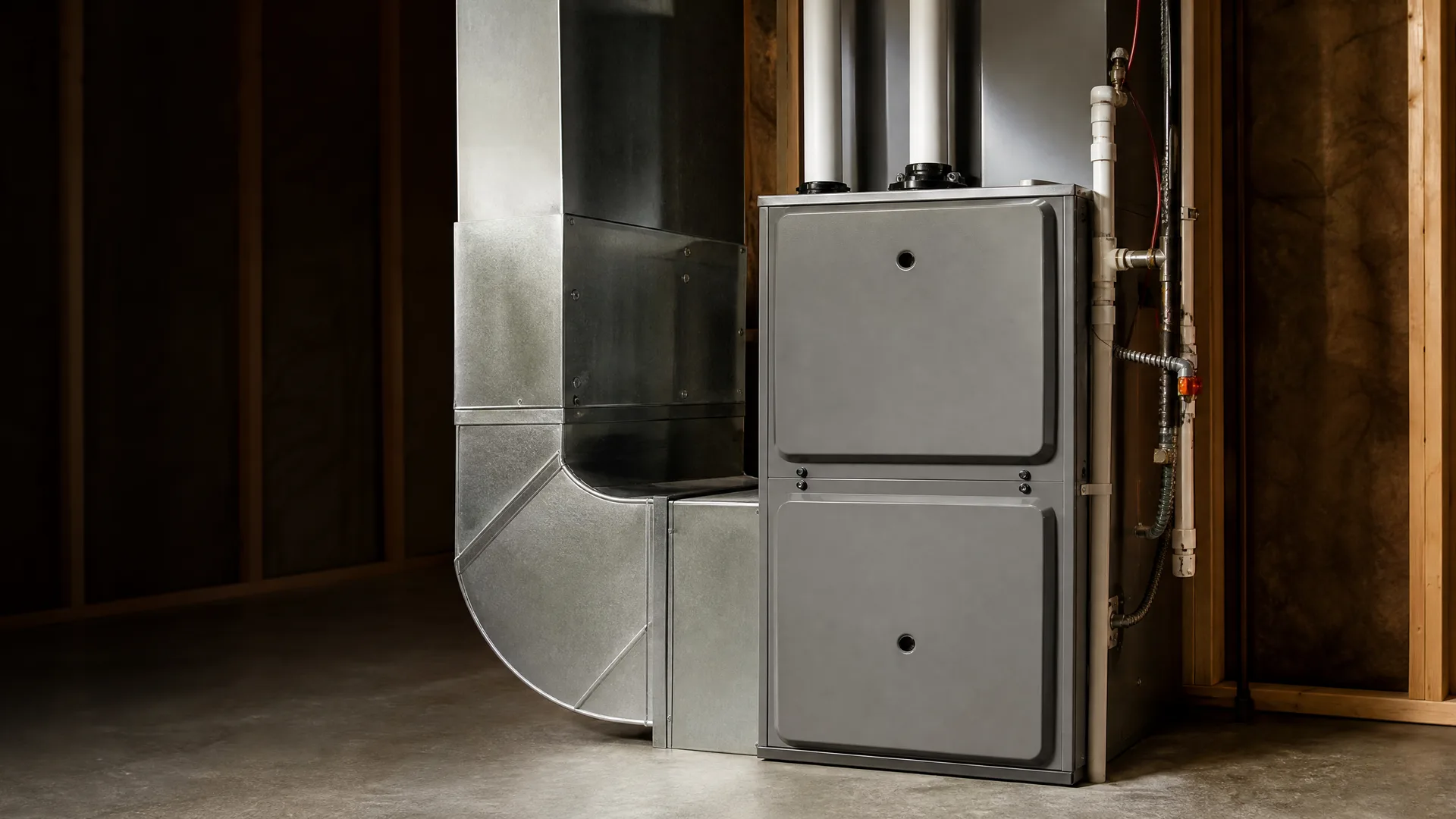
A gray high-efficiency furnace in a basement with sheet-metal ductwork, white PVC vent pipes, metal plumbing lines, a condensate pump on the floor, and a window showing green trees outside.

Running the way it should

A furnace like this heats evenly and shuts off when the thermostat is satisfied. The burners light on the first try, the blower moves air without straining, and the flue and condensate lines stay clear. A furnace in this shape has years of winters left in it.

An older metal furnace with PVC and metal pipes stands on a concrete basement floor beside galvanized ductwork, with wooden stairs and a water tank in the background.

Showing its age

Dust has built up on the cabinet and burners, and the unit is working harder to do the same job. Furnaces in this condition tend to short cycle, run longer to reach temperature, or fail to light on cold mornings. Past 15 years, this is when a replacement is worth planning for.

Fix the Furnace or Replace It

Keep it going

  • A furnace that starts right up, heats evenly, and hasn't needed a repair in the last year or two is worth keeping as is.
  • A part replacement now and then, like an igniter or a flame sensor, costs far less than a new system and resets the clock on that part.
  • If the furnace is under 15 years old and still holding its heat through a cold snap, replacing it early wastes what's left of its working life.
  • Jeffersonville winters push a furnace hard, so a unit that's handling that load without short cycling or strange noises still has work left in it.
  • Keeping the current furnace means no change to the ductwork or thermostat setup, since everything is already matched to what's there.

Replace it

  • Once a furnace is past 15 years, the parts failing are often the expensive ones, like the heat exchanger, not the cheap ones.
  • A furnace that won't hold a steady temperature or runs long cycles trying to catch up is losing efficiency even if it hasn't broken down outright.
  • Repeated repairs in the same winter usually mean the next failure is close behind, and it tends to land on the coldest night.
  • A cracked heat exchanger is a safety issue, not a repair job, and it means the furnace has to go.
  • A new furnace installed before the next cold stretch means not gambling on whether the old one makes it through January.
  • Gas furnaces installed today run more efficiently than ones from 15 or 20 years ago, which matters given how much this furnace runs each winter.
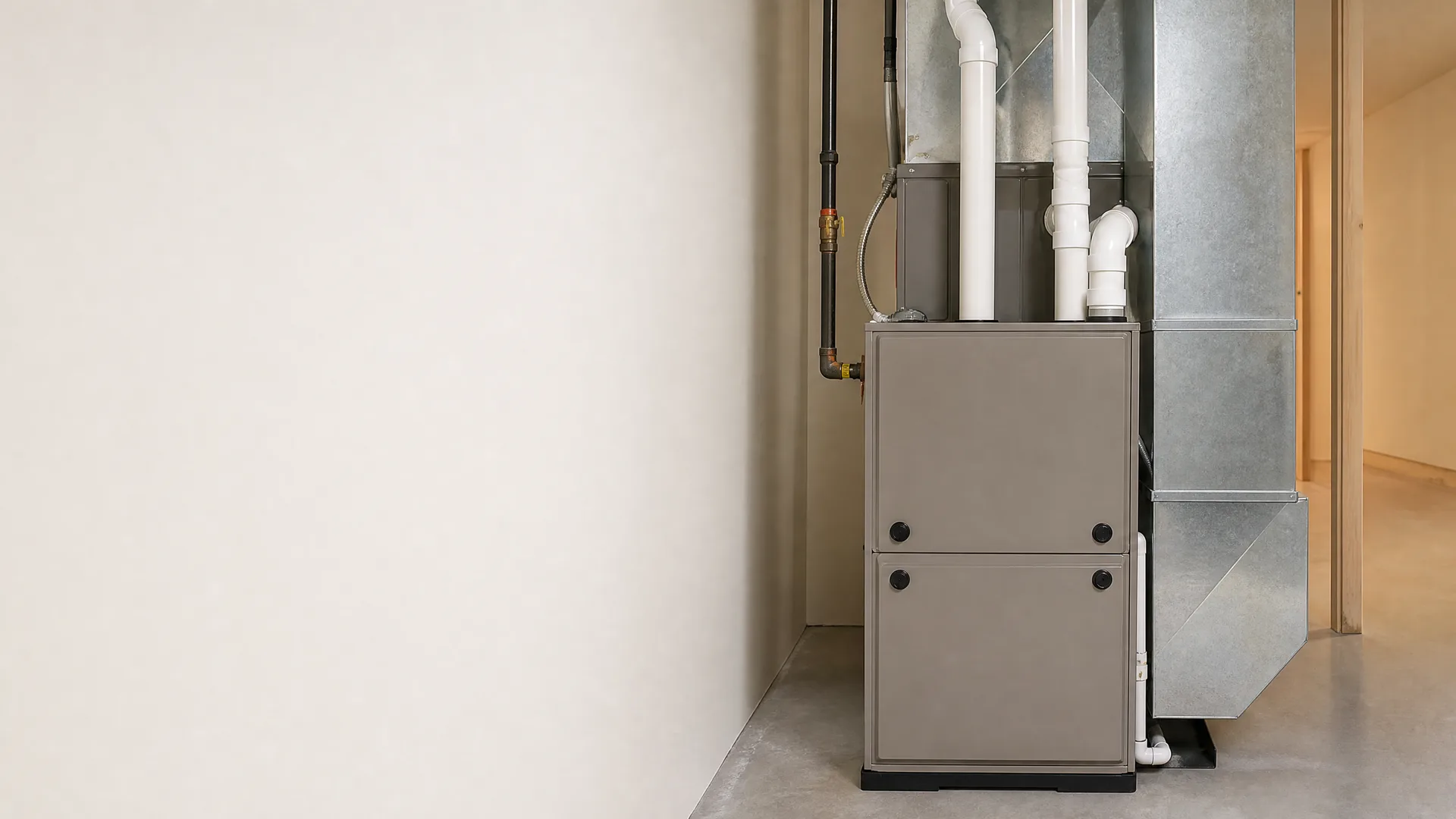
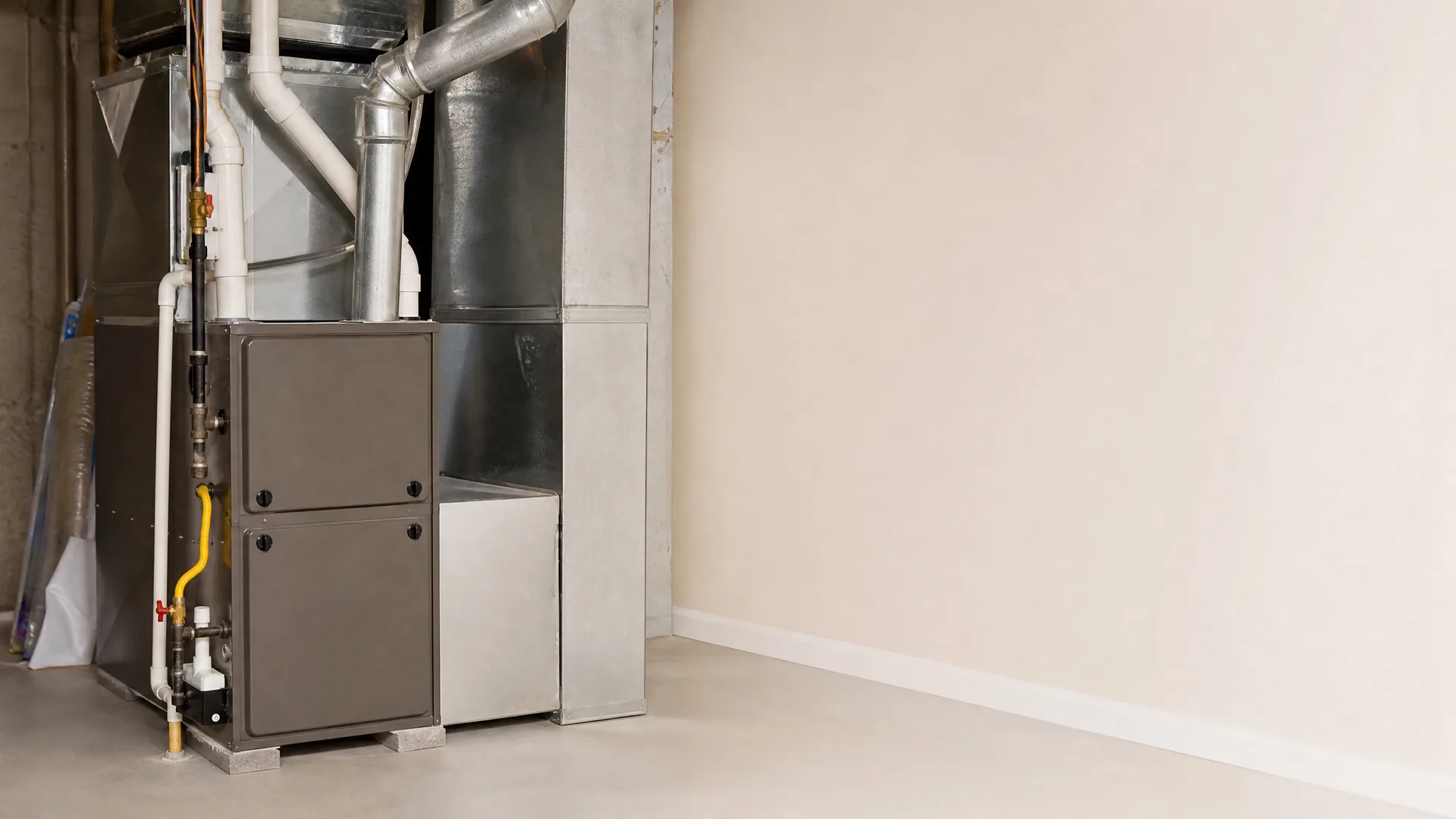
A gas furnace with two gray access panels stands in a basement corner, connected to sheet-metal ductwork and copper, PVC, and yellow gas piping, beside a plain beige wall and concrete floor.

What shortens a furnace's life

A furnace that cycles on and off all day works harder than one that runs in long, steady stretches. Clark County winters bring enough cold mornings that the burners fire often, and each cycle puts wear on the igniter and the heat exchanger. A furnace sized right for the house and set on a steady thermostat schedule tends to reach the far end of that 15 to 20 year range instead of the near end.

A gray furnace with white PVC vent pipes and a galvanized sheet-metal duct stands against an interior wall on a concrete floor, with a large blank wall to the left.

The heat exchanger sets the limit

Most of a furnace's other parts, the igniter, the blower motor, the flame sensor, get replaced over the years without much trouble. The heat exchanger doesn't. It's sealed inside the cabinet and carries the flue gases out of the house, and once it cracks or corrodes, a contractor will call the furnace done rather than repair it. That one part, more than its age in years, usually decides when a furnace gets replaced.

Is your furnace telling you something right now?

A furnace near the end of its life gives you warning before it quits. It might take two or three tries to light on a cold morning, or the burners sound different than they used to. Some rooms stay cooler than others no matter where the thermostat is set. The blower might run longer to reach the same temperature, and that shows up on the gas bill. You may notice a burnt or metallic smell when it first kicks on, or hear a rattle from the cabinet that wasn't there last winter. None of these mean it's done, but ignoring them through a Clark County winter can leave you without heat on the night you need it most, or let a cracked heat exchanger go unnoticed.

A basement utility area with a gray furnace, sheet-metal ductwork, pipes, plastic-covered walls, a concrete floor, and a black shelving unit holding storage bins.

What good shape looks like

The cabinet is clean, the vent pipe and gas line run straight, and the floor underneath shows no streaks of rust or condensate drips. A furnace kept like this has had room to breathe and nothing dripping on it for years.

A gray metal furnace with louvered vent panels stands on a concrete basement floor beside galvanized ductwork, gas and plastic pipes, and foil-faced insulation along the ceiling and wall.

What age looks like

Rust has worked across the cabinet and the louvered panels show their years. The gas line and ductwork around it are older styles you don't see installed anymore. A furnace that looks like this is closer to the end of its 15 to 20 years than the start.

A man in a navy sweater reclines with closed eyes in a beige armchair in a living room, with a lamp, wooden cabinet, bookshelf, potted plant, and a side table holding a newspaper and mug nearby.
A man in a blue henley shirt reclines on a leather chair with his eyes closed, beside a window, a houseplant, a side table with a newspaper and a dark mug.
A man in a gray sweatshirt reclines with his eyes closed in a dark leather chair, with a bookshelf behind him and a side table holding folded newspapers, a mug, and a potted plant by a window.
A man in a blue sweater leans back on a brown leather chair with his eyes closed and a slight smile, in a room with bookshelves, framed pictures, a potted plant by a window, a folded newspaper and a dark mug on a table.

Stop chasing a furnace pro

One installer gets your project, so there's no bidding war over it.

No fee to send it, and nothing to sign.

A furnace that's 10 years old and still runs fine can go another five or more without trouble, as long as nothing about how it runs has changed.

A furnace that's 18 and starting to act up is close enough to the end that most people in Jeffersonville choose to replace it rather than sink more money into it.

A beige furnace with two access panels stands against a concrete basement wall, with galvanized sheet-metal ductwork, a white PVC pipe, flexible conduit and insulated ducting around it.
Before you get your furnace installation
A gray furnace with white PVC vent pipes stands beside sheet-metal ductwork in a basement with a smooth concrete floor, exposed wood framing, and plastic sheeting on the walls.
After you get your furnace installation

Turn the thermostat up and the furnace doesn't just light. The inducer motor kicks on first and pulls air through the heat exchanger to clear it out before anything burns. Only then does the igniter start heating up, and it has to get hot enough before the gas valve will open at all. That's why a furnace with a weak igniter often tries once, fails, and tries again. Once gas is flowing and the burners catch, the flame sensor has one job: confirm there's a real flame within a few seconds, or the control board cuts the gas back off. The blower waits even longer, it doesn't push air into the house until the heat exchanger has had time to warm up, which is why you feel a short delay after you hear the burners. Every step depends on the one before it. A cracked heat exchanger or a blocked flue won't just run poorly, it trips a safety switch and shuts the whole furnace down before anything else has a chance to wear out.

How a gas furnace actually fires

  • A furnace fires in stages: the inducer motor starts first and clears the heat exchanger before the igniter ever glows.
  • The igniter has to reach full heat before the gas valve opens, so a weak igniter shows up as a furnace that tries twice before it lights.
  • Once the burners light, the flame sensor has to detect them within seconds or the control board shuts the gas valve back off.
  • The blower doesn't start moving air until the heat exchanger is already warm, which is why you feel a delay after the burners light.
  • A cracked heat exchanger forces the system to shut down on its own safety switches long before the rest of the furnace is worn out.
  • The flue and condensate lines carry off the byproducts of burning gas, and anything blocking them will stop the furnace from running at all.
A dark high-efficiency furnace on a concrete pad in a basement, connected to galvanized ductwork, white PVC vent pipes, and copper and black gas piping, with concrete walls and wood framing nearby.
A cabinet like this runs quiet, with clean copper gas lines and clear PVC venting carrying exhaust straight outside.
A gas furnace with a louvered upper panel stands on a concrete pad in a basement, flanked by sheet-metal ductwork, white PVC and metal pipes, and insulated columns.
Open conduit and a condensate line draining onto the floor like this mean parts are working against each other, not with.
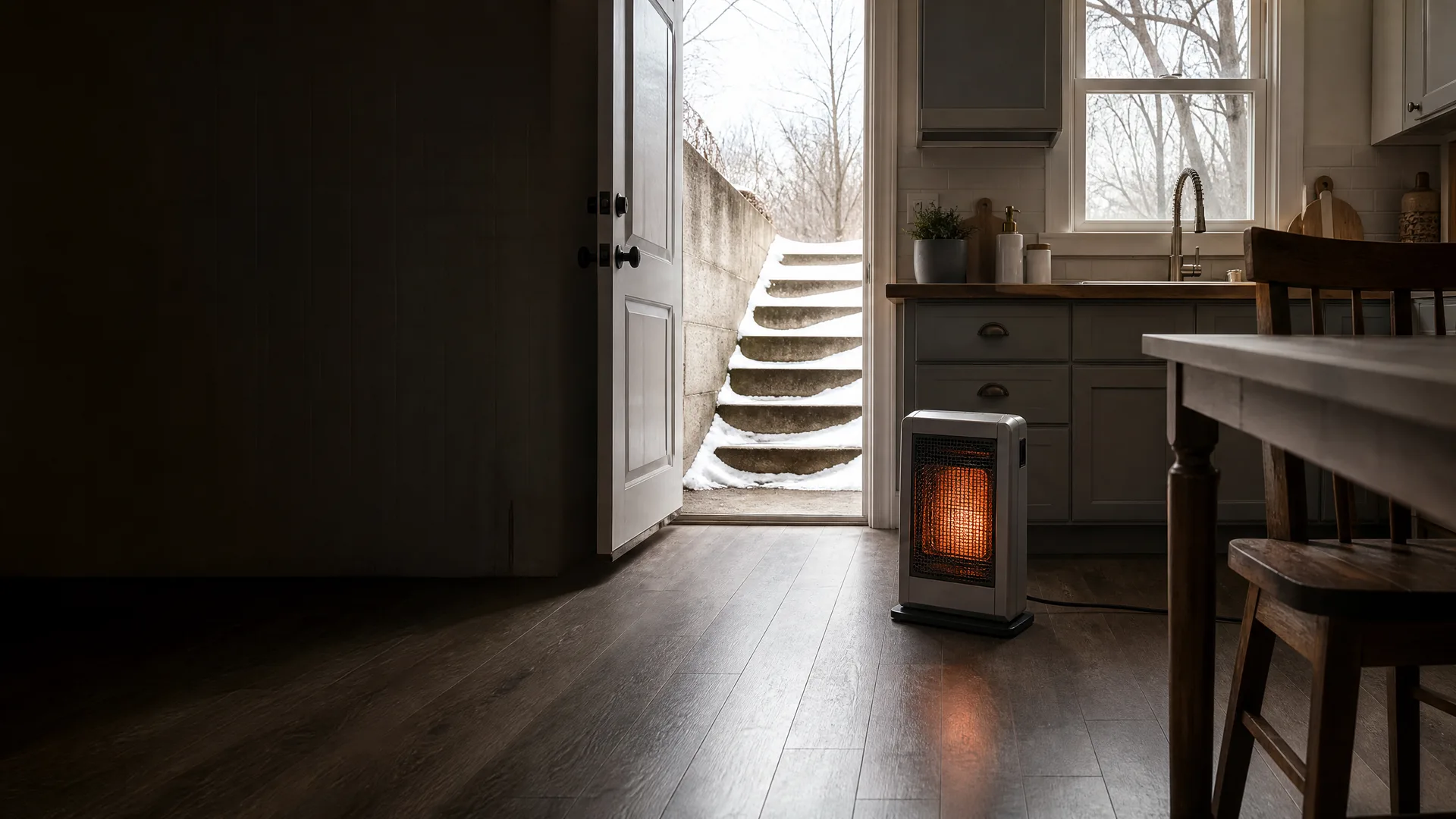
A portable electric space heater with glowing orange elements sits on a dark wood floor near an open exterior door that reveals snow-dusted concrete steps, with a kitchen counter, sink, window and wooden table to the right.

It's just past six and still dark outside the kitchen window. The space heater sits on the floor by the table, its coil glowing orange, because the furnace hasn't kept the house above sixty since Tuesday. The basement door stands open behind it, the cold air from down there settling into the kitchen along with the smell of the pilot trying to catch. You've got a coat on over your pajamas and coffee going, waiting to see if the burners fire this time or if it's another morning of layering up and keeping the kids near the stove. Clark County mornings like this one, cold enough to see your breath near the back door, are when a furnace that's been slow to light all winter finally stops lighting at all.

Winter nights average 26°F

A 26°F average overnight low means your furnace is holding a 40-plus degree gap between outside and your thermostat most nights, December through February. That's the load it's built for, and why a weak igniter or a cracked heat exchanger tends to show itself on the coldest nights, not the mild ones.

NOAA nClimDiv 1991-2020

  1. Inducer motor starts and clears the heat exchanger of leftover gas

  2. Igniter heats up and glows until it reaches full temperature

  3. Gas valve opens once the igniter is hot enough to light it

  4. Flame sensor confirms the burners lit and keeps the gas valve open

Why does a Jeffersonville furnace work as hard as it does?

  • Winter nights average 26°F

    Winter nights here average 26°F, so your furnace is fighting a 40-plus degree gap against the thermostat most nights from December through February.

  • Heat runs October through April

    That cold isn't a short stretch. Heat runs October through April in Clark County, about seven months of cycling on and off.

  • 49.9% of homes heat with gas

    Almost half of homes in Clark County heat with gas, 49.9% by the county's own count, so a gas furnace here is doing what most of your neighbors' furnaces are doing too.

NOAA nClimDiv 1991-2020 · ACS 2020-2024

An older man with gray hair and a navy knit sweater sits in an armchair with his eyes closed, near a bright window with potted green plants.
A woman in a cream knit sweater sits with closed eyes in an armchair beside a window showing orange autumn foliage, with a framed picture, plants, and a white mug on a wooden table nearby.

Where That Leaves You

  • A gas furnace in Jeffersonville typically runs 15 to 20 years given the steady cold-weather workload Clark County puts on it.
  • A furnace already showing trouble, like repeat ignition attempts or uneven heat, has usually moved past the point repairs make sense.
  • A furnace running clean and even with no recent repairs can keep going as is, especially earlier in that 15 to 20 year range.
  • When the time comes, a licensed local contractor who services this equipment every winter around Jeffersonville knows which parts tend to fail first.
  • Working with one contractor instead of several means one point of contact instead of a round of competing calls.
  • Where your furnace lands in that range comes down to how it's been running, not just how many winters it's logged.

Fifteen to twenty years is the range, but the number that matters is how your furnace is running right now. A furnace lighting on the first try, heating evenly, with no repair calls in the past year or two has earned the benefit of the doubt, even if it's been through a dozen Clark County winters already. One that's started hesitating on cold mornings or leaving some rooms cooler than others is telling you something, and that message matters more than its age on paper.

If you're at the point of deciding, you're not deciding alone. A contractor who installs and services furnaces around Jeffersonville every winter has seen how this county's cold stretches wear on an aging heat exchanger or a tired igniter, and knows which parts on which models tend to go first. That's the kind of read on a furnace that comes from doing this work locally, season after season, not from a one-time visit.

Submitting a request here puts you in touch with one contractor, not a handful competing for the job. That means a single conversation about your furnace and your house, from someone who already knows what's common in homes around here, instead of fielding calls from several companies trying to win the work. Whether your furnace has a few years left or it's time to plan the replacement, that's the conversation worth having next.

A gray high-efficiency furnace with two white PVC vent pipes stands in an unfinished basement beside galvanized sheet-metal ductwork, with insulated wood-framed walls and piping behind it.

Send one request and you're done looking

New system or replacementFurnace or heatingClark County, IN
Step 1 of 2

What ZIP code is the job in?