






A nighttime street view of several illuminated two-story red brick homes with front porches, flanked by a large tree.

Heat Pump Repair in Evansville, IN

Tell us about the job

Takes about a minute. No obligation.

RepairHeat PumpVanderburgh County, IN
Step 1 of 2

What ZIP code is the job in?

Damaging wind has hit Vanderburgh County 103 times between 2015 and 2024. That sounds like a lot, but spread over those years it's roughly one event a month, not a sign your heat pump sits somewhere harsh. Outdoor units lose a cycle when the power blinks, then come back on their own once it's restored. If yours didn't, the more likely cause is a tripped breaker, a stuck contactor, or a capacitor that was already weak before the outage gave it one more reason to quit. Worth having someone check the unit itself rather than assuming the weather did lasting damage.

7 months
October through April, your system heats
5 months
May through September, it cools
27°F
the average winter night it heats against
87°F
the average summer afternoon it cools against
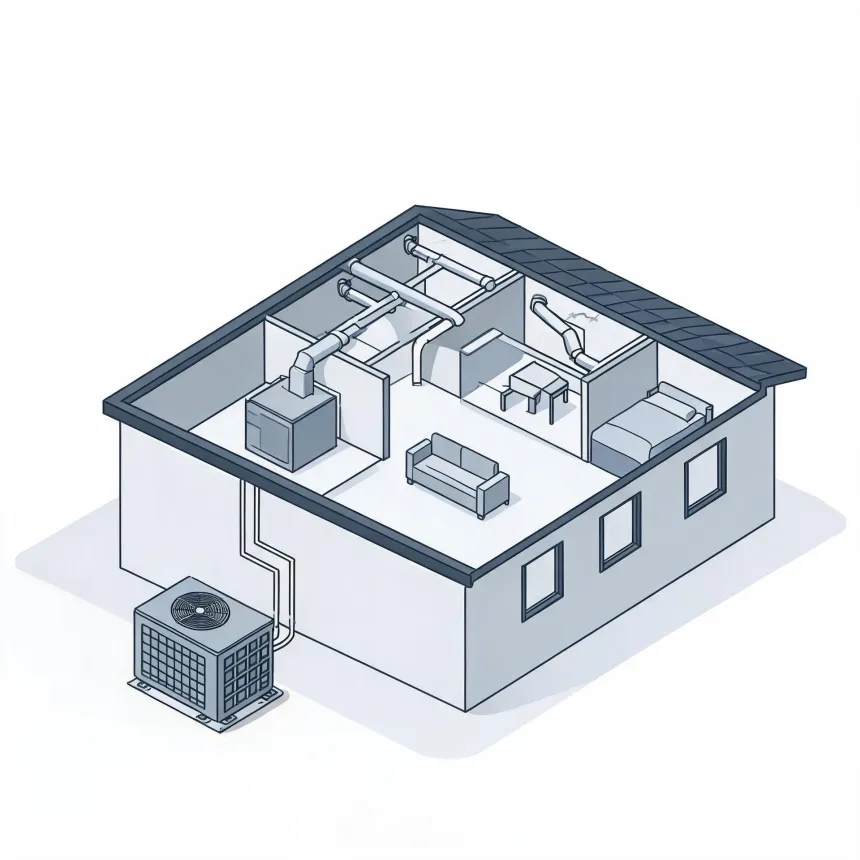
Isometric line illustration of a cutaway single-story house showing interior rooms with ducted air distribution, an indoor air handler, furniture, and an outdoor condenser unit connected by lines outside the wall.
Your system heats October through April and cools May through September.

NOAA nClimDiv, 1991–2020 normals

Heat here runs October through April, about seven months of the year.

September is when a weak part finally gives out, so a heat pump acting up now is right on schedule.

Evansville doesn't push a heat pump any harder than normal. Most problems here are routine ones

Power costs 14.77 cents a kWh statewide
103 damaging wind events from 2015 to 2024
Climate zone 4A
Evansville homes are olderHalf the homes in Vanderburgh County were built in 1970 or earlier

A heat pump that's struggling still tends to keep running, and that's the problem. If the outdoor coil is icing over, the system doesn't shut itself down, it just keeps pulling heat through the ice while the compressor takes the strain. If refrigerant is low, the compressor runs hotter than it was built to run, and that heat wears on it every hour it keeps going. A failing capacitor makes the motor labor to start each cycle instead of kicking on clean, and that kind of strain adds up fast once it starts. None of these problems fix themselves by running longer. The part that's struggling now is the part that fails outright later, usually without warning.

Know your system's age before you repair it

If your heat pump came with an older house, find out its age before paying for a big repair. A unit near the end of its life may be worth replacing instead of fixing again.

Find a contractor
A man in a cap, navy T-shirt and brown work pants walks up concrete steps toward a blue front door, carrying a worn canvas tool bag with a hammer inside, beside a potted shrub in a blue planter.
A gray outdoor HVAC unit mounted on a concrete pad beside a house with gray lap siding and a stone foundation.

What actually happens when someone comes to look at it

A diagnostic call starts outside at the unit itself, not with a gauge. A tech checks the breaker, the disconnect, the contactor, and looks for anything obvious before opening a panel. Refrigerant pressure gets checked next, with gauges on the lines, because that reading points toward several different problems depending on what it shows. Electrical components get tested under load, not just looked at. A capacitor can measure fine sitting still and still fail the moment the compressor asks something of it. The reversing valve gets checked by watching whether the system actually switches between heating and cooling when it's told to, since a valve that's stuck partway can make a system blow warm air on the cooling side or cold air on the heating side without throwing any obvious fault. None of this is guesswork. Each reading rules something out until what's left is the actual problem.

What you can check yourself

Look at the outdoor unit and clear away anything stacked against it, leaves, mulch, a grill cover, anything blocking airflow through the coil. Check the thermostat has power and is set to call for heat or cooling. Go to the breaker panel and look for one that's tripped, both the inside air handler and the outdoor unit usually have their own. Check the air filter and swap it if it's gray or clogged. These take a few minutes and rule out the simplest causes.
What to leave alone

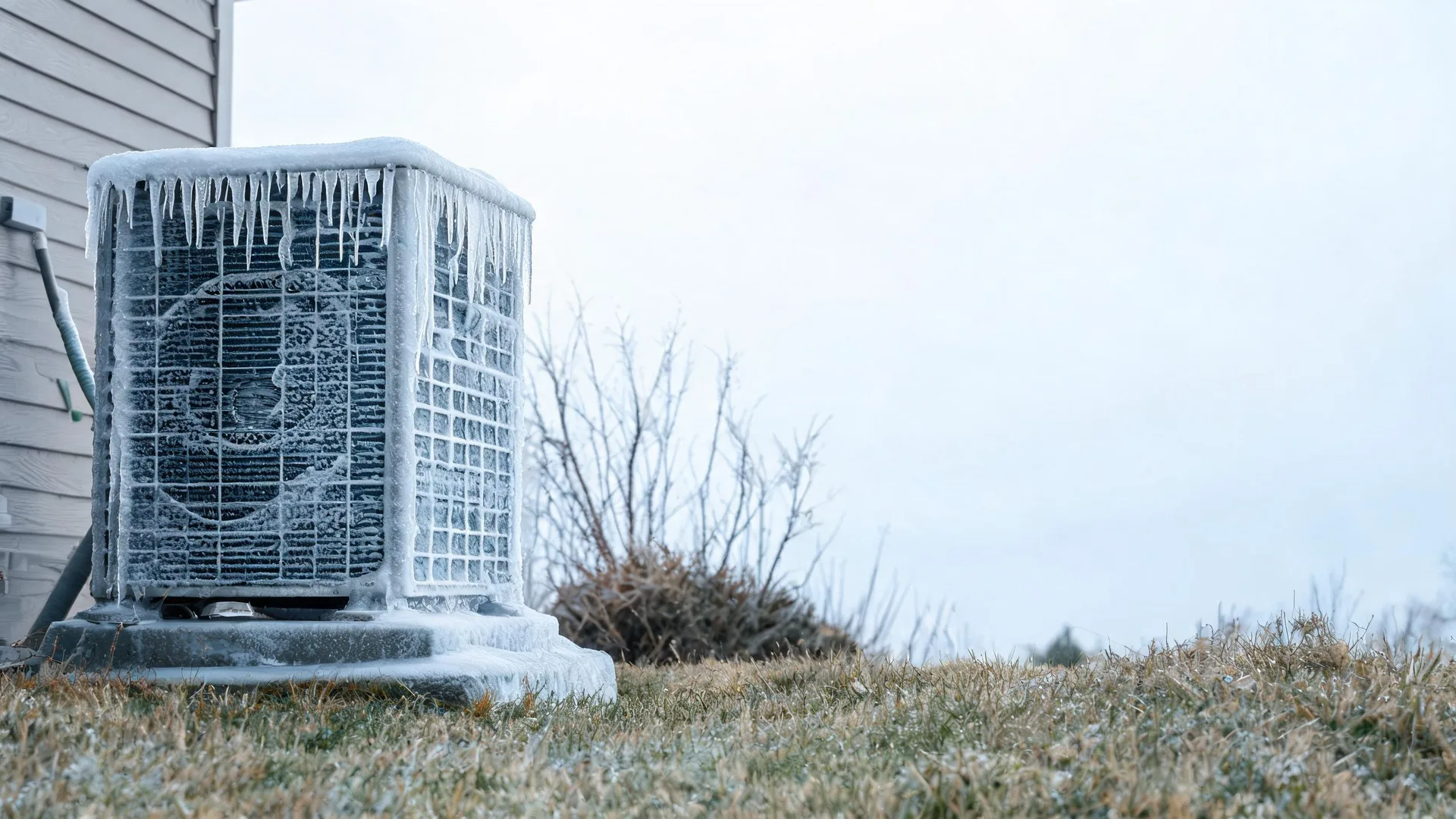
Don't take the panels off the outdoor unit or touch anything inside it. If the coil is iced over, don't chip at the ice or pour hot water on it, that's a sign of a refrigerant or airflow problem that needs diagnosing, not a frozen pipe to thaw. If the system is making a new noise or tripping the breaker repeatedly, turn it off at the thermostat and leave it off until someone looks at it, running it that way just adds wear to whatever's already failing.

Most people notice a heat pump problem through comfort, not sound. The air coming out of the vents feels cool when it should feel warm, because a heat pump moves heat rather than burning fuel for it, and warm air from a vent is never as hot as a furnace's. That can be normal, or it can mean the system is low on refrigerant and struggling to move any heat at all. Ice on the outdoor unit is worth watching too. A little frost in cold weather is normal and clears itself in the defrost cycle. A heavy coat of ice that doesn't go away means the defrost cycle isn't working or airflow is blocked. Short cycling, where the system kicks on and off every few minutes instead of running a long steady stretch, is another sign worth acting on rather than waiting out.

A repair is worth it when the part that failed is the only thing wrong. A capacitor, a contactor, a defrost board, these fail on their own, and once replaced, the rest of the system is no different than it was the day before. Replacement starts to make more sense when the compressor itself is the problem. It's the most expensive part to replace and the labor to get to it isn't cheap either, so a shop will often price that job close to a new system and let you decide. Age plays into it, but so does pattern. One failure after years of running fine is a repair. Another callback not long after the last one means the system is wearing out faster than it's being fixed, and at that point you're paying to patch something that's going to keep finding new ways to fail.