Weather here takes a toll
Allen County logged 241 severe weather events between 2015 and 2024, including 166 damaging wind events, 56 hail events, and 5 tornadoes. That is a lot of chances for debris and ice to reach a furnace or its vents.
Takes about a minute. No obligation.
Allen County logged 241 severe weather events between 2015 and 2024, including 166 damaging wind events, 56 hail events, and 5 tornadoes. That is a lot of chances for debris and ice to reach a furnace or its vents.
Statewide, 17% of Indiana households lost power for 24 hours or longer in 2024. A furnace that won't fire without electricity leaves a house with no heat until the lines are back.
A tune-up that only swaps the filter and checks the thermostat skips the parts that actually fail.
A thorough one pulls the burners, checks flame sensor and igniter, and tests the pressure switch and limit controls before winter asks them to work.


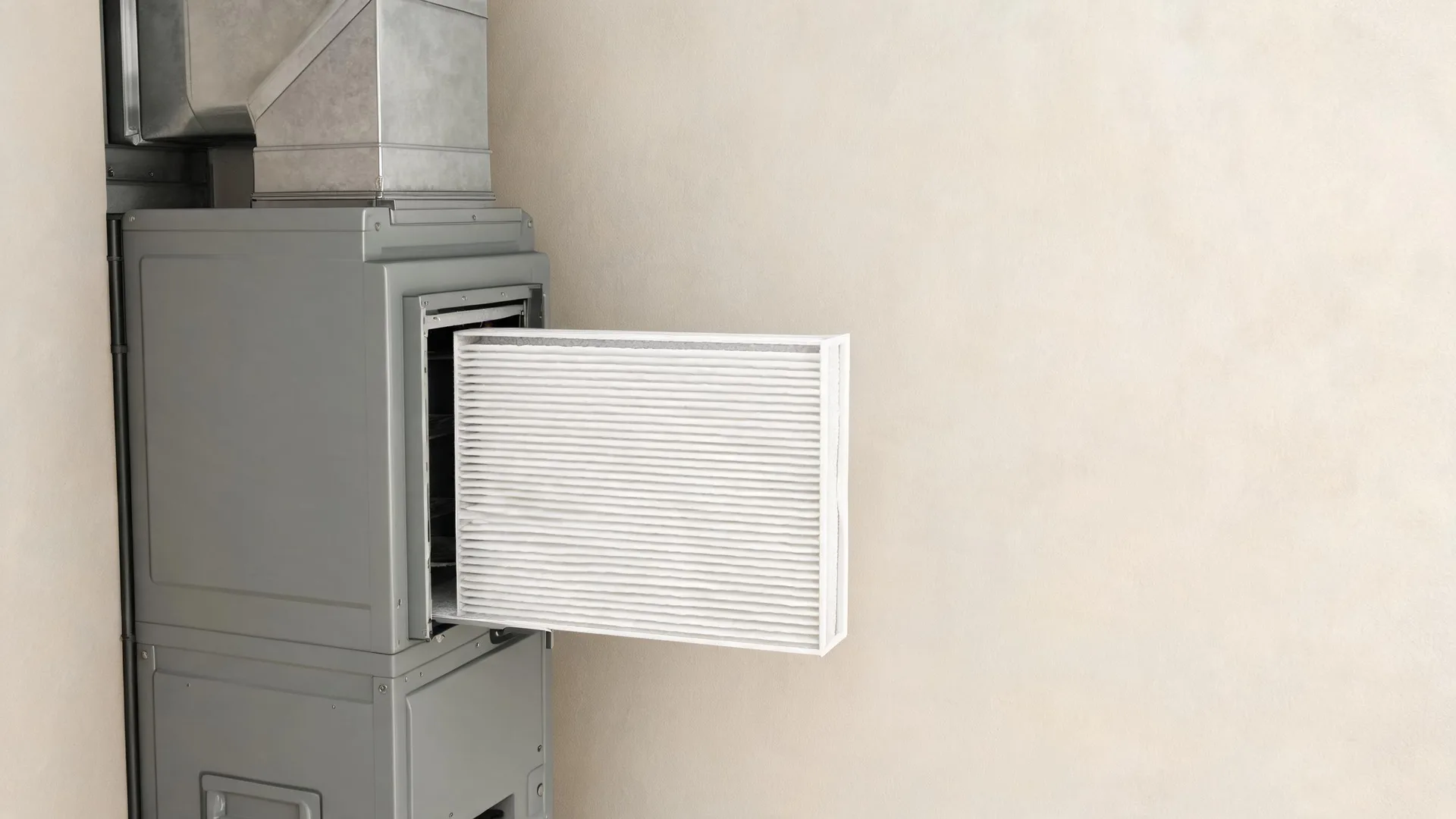
A dirty filter is the start of most furnace trouble. Airflow drops, the heat exchanger runs hotter than it should, and the limit switch starts tripping to protect it. That shows up as a furnace that short cycles, running a minute or two before shutting off, never quite warming the house. Furnaces don't have coils or a condensate drain the way a cooling system does, unless it's a high efficiency model that condenses exhaust gas into water. On those, the drain line carries that water out, and if it clogs or freezes, the furnace locks out rather than risk flooding the heat exchanger. Checking the filter and, where there is one, the drain line and trap, is a small job that heads off a much bigger one.
Hail and wind reach the cabinet outside and whatever sits near the vents. A tune-up before winter is the chance to clear debris and check the outdoor unit over while a contractor is already there.
Find a contractorMost of what wears out in a furnace doesn't show up as a smell or a sound. A flame sensor coated with a thin layer of oxidation still lights the burners, right up until the morning it doesn't. A cracked heat exchanger can run for a season making heat the whole time, with nothing to see from the front of the cabinet. A pressure switch that's gone stiff will hold the furnace in lockout and give no sign why. None of that waits for the furnace to break down first, and none of it comes up on its own. It takes pulling the burner assembly, reading flame sensor microamps against what they should be, checking the heat exchanger with a camera or a combustion analyzer, and watching how the pressure switch respond when the inducer motor spins up. A furnace can run every day for years with a fault like this sitting in it the whole time.
A furnace that never gets opened up keeps running on dust and wear nobody's looking at. The burners carbon up a little more each season. The blower motor bearings dry out. None of it stops the furnace from firing, so there's no reason to call anyone, until the day something that was failing slowly fails all the way.
Furnaces don't wait for a convenient moment to quit. A furnace that's been skipped tends to go out on the coldest night of the year, because that's when it's working hardest and whatever was marginal finally gives out. A furnace that gets checked every year fails less often, and when it does, there's usually some warning first.
Between visits, the filter is the one thing worth checking yourself. Pull it out, hold it up to the light, and if you can't see through it, swap it. A furnace pulling air through a clogged filter works harder than it should and can start short cycling. While you're at the furnace, take a look around the base for anything stacked too close, boxes, paint cans, anything flammable, since that airflow matters too. Outside, keep the vent pipe clear of leaves or anything that could block it. Past that, leave it alone. Don't pull the burner assembly or take a cover off anything sealed. Flame sensors, pressure switches, and heat exchangers need to be checked with tools and training most homeowners don't have, and the wrong hands on a gas connection turn a tune-up item into a real hazard.
A proper tune-up starts with the gas itself. A technician checks the manifold pressure and makes sure the burners are getting the right mix of gas and air, because a flame that burns yellow instead of blue is putting off carbon monoxide instead of heat. The igniter gets tested under load, not just looked at, since a hot surface igniter can glow and still fail to hold a flame long enough to satisfy the control board. Belts and bearings get checked on the blower motor, and the wheel itself gets cleared of the dust that builds up on the blades and throws it out of balance. The whole cabinet gets a combustion and draft check, confirming the flue is actually pulling exhaust out of the house rather than letting it spill back. None of this shows up by looking at the furnace from across the room. It shows up when someone opens it up and tests it while it runs.