


What cold does to a heat pump here
Allen County winters are long and they're cold enough to matter. Heat runs about eight months a year here, October through May, and the overnight low averages 21°F across December, January and February. That number is the whole issue with a heat pump. A standard central heat pump starts losing heat output once it's below 40°F outside, and below about 35°F it often needs backup heat to keep up. Allen County's average winter low sits below both marks. This isn't a rare cold snap tripping it up. It's most winter nights.
About 130 nights a year here drop to freezing or below, over half the nights across the eight months the heat runs. On each of those nights a standard heat pump is working below the point where it puts out its full rated heat. Only about 7 nights a year reach 0°F or below, so the deep cold is rare, but ordinary freezing nights are not, and that's where a standard heat pump already struggles.
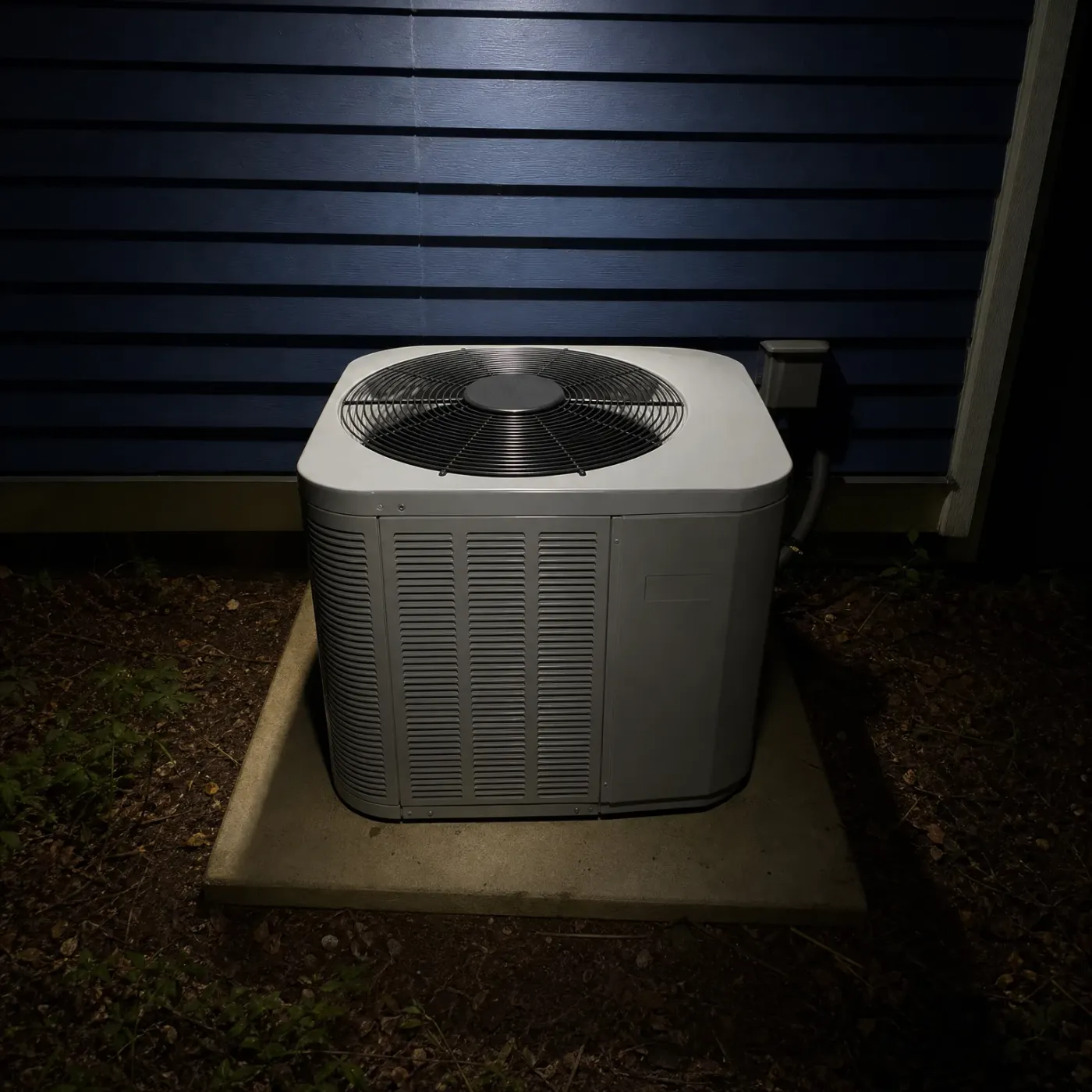
A cold-climate heat pump is built for this. To earn the ENERGY STAR Cold Climate label, it has to keep making heat efficiently and hold onto most of its capacity at 5°F, tested by someone other than the manufacturer. Field tests of these units in occupied homes found backup heat carried only a small share of the load between 0°F and 35°F, and running on backup alone was rare even above 0°F. So the cold itself isn't disqualifying. A heat pump built and rated for it can handle an Allen County winter. A standard one, the kind the running-cost numbers above assume, will lean on backup heat through most of that eight-month stretch.