



A gas furnace and sheet-metal air handler unit installed in an unfinished concrete basement.

Furnace Repair in Fort Wayne, IN

Tell us about the job

Takes about a minute. No obligation.

RepairFurnace or heatingAllen County, IN
Step 1 of 2

What ZIP code is the job in?

A few things are worth checking before you pick up the phone. First, look at the thermostat. Make sure it's set to heat and the setpoint is actually above room temperature, and if it runs on batteries, swap them. Next, go to your breaker panel and check the breaker for the furnace hasn't tripped. Then check the filter. A filter clogged with dust can choke off airflow so badly the furnace shuts itself down before it overheats the heat exchanger. If you have a standing pilot, see if the flame is lit, and if your furnace has a reset button on the blower compartment, you can try pressing it once. Last, check that the vent pipe outside isn't blocked by anything. If you've done all that and it still won't run, the problem is inside the cabinet and it's time to call someone.

8 months
October through May, your furnace is on duty
21°F
the average winter night it heats against
70%
of homes here heat with gas, so most furnaces here burn gas
8 winter storms
in ten years, the nights a failure hurts most
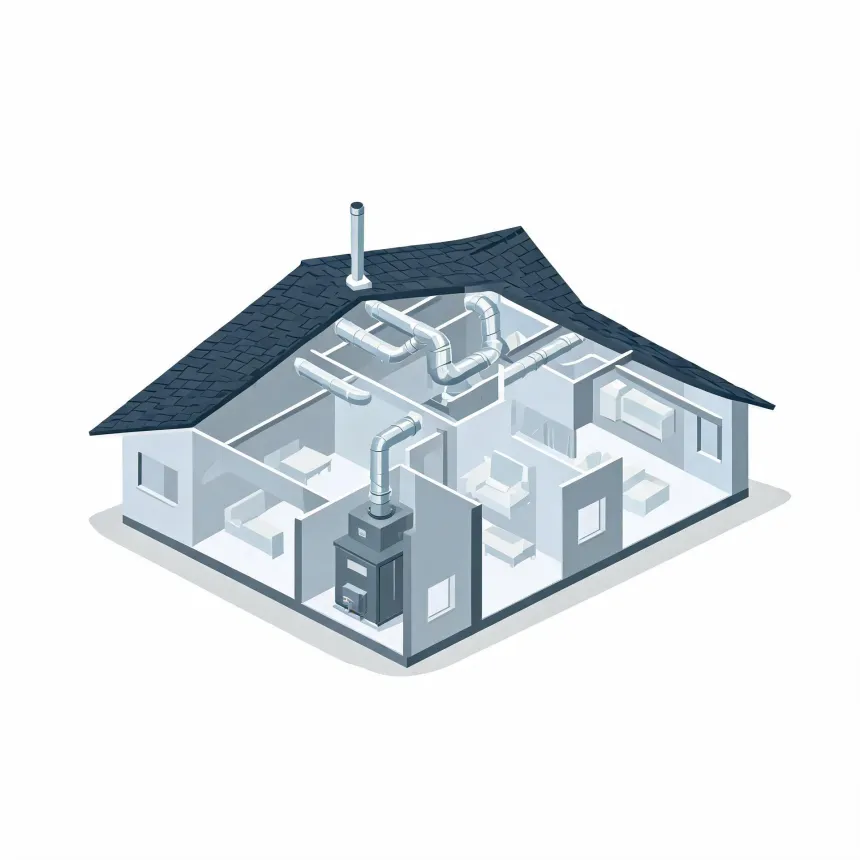
Isometric cutaway illustration of a single-story house showing interior rooms with furniture, a metal ductwork network, and a furnace unit connected to a vertical flue through the dark shingled roof.
Your furnace works hardest from November through March.

NOAA nClimDiv, 1991–2020 normals

A furnace that short cycles is wearing out its own ignition system one start at a time.

Every short burst followed by a shutdown is a cycle the igniter or flame sensor has to survive, and neither lasts forever.

This county sees weather that knocks out furnaces and the power they run on

241 severe weather events from 2015 to 2024
17% of homes statewide lost power a day or more in 2024
166 damaging wind events from 2015 to 2024
Built for an eight-month winterFurnaces here start running in October and don't stop until May.

The igniter is usually the first thing to go. It's a thin strip that heats up to light the gas, and it cycles on and off every time the furnace runs, so it's only a matter of time before it cracks. A flame sensor fails differently: it doesn't break so much as coat over with a thin layer of oxidation, until it can't tell the control board a flame is there, and the furnace shuts off gas it can't confirm is burning. Blower motors wear out from years of spinning, and the bearings inside them finally give out. Hot surface sensors, draft inducer motors, and the small electronic boards that run the ignition sequence all fail the same basic way: they do their job a few thousand times too many and one day they don't. Dirty filters don't fail on their own, but they shorten the life of everything downstream by forcing the blower and heat exchanger to work harder than they're built for.

Get it looked at early

Problems tend to show up in the first weeks of the season, when the load hits a part that was already weak.

Find a contractor
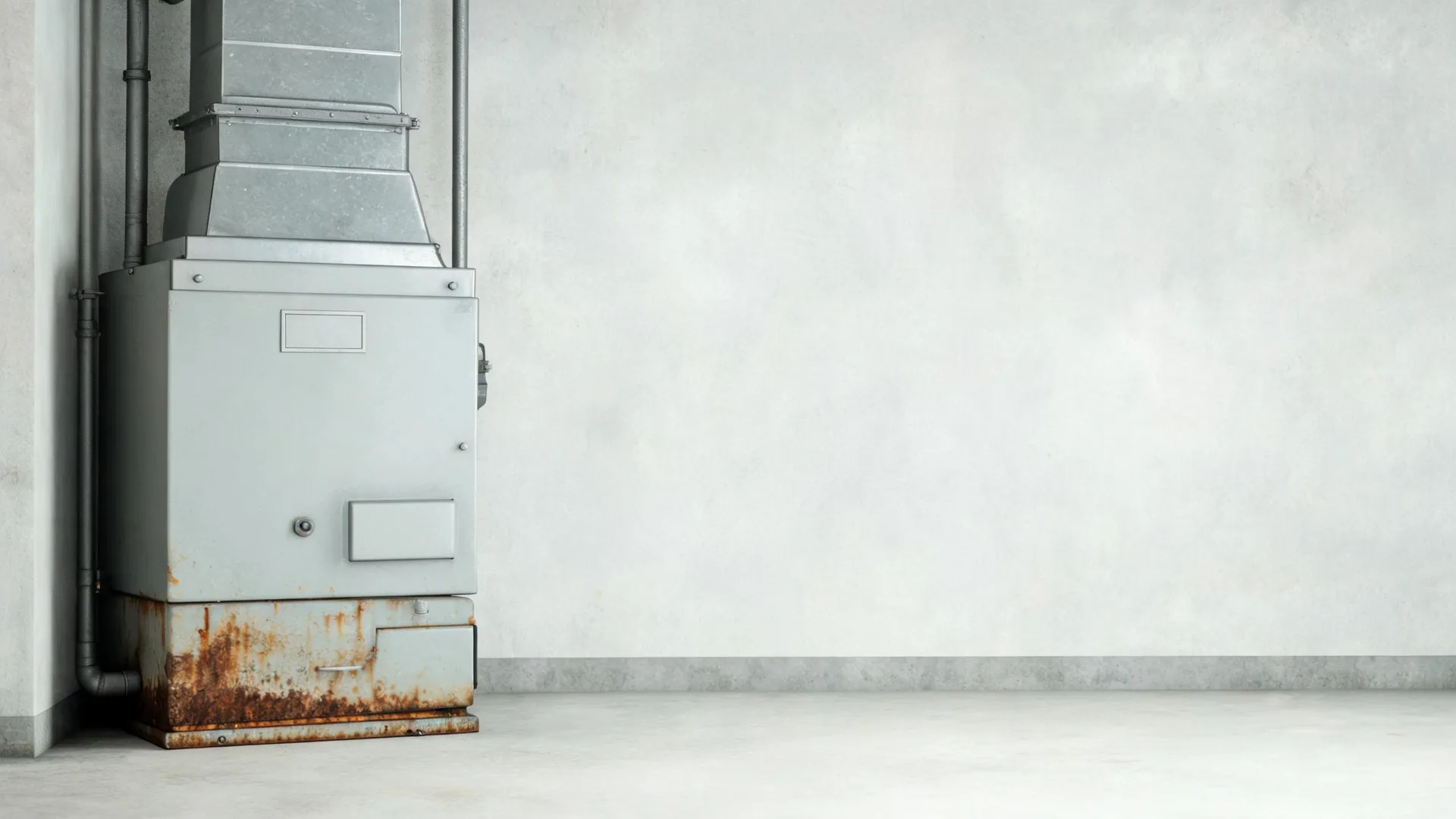
A gray residential gas furnace installed in an unfinished basement, connected to sheet-metal ductwork and PVC pipes.

Why running it longer makes it worse

A furnace that's struggling doesn't fix itself by staying on. A cracked heat exchanger gets worse under heat, not better, because the metal keeps expanding and contracting around the break every time the burners fire. A blower motor with bad bearings heats up as it strains, and that heat breaks down the windings faster than the wear alone would. Even a clogged filter left in place keeps forcing the blower to pull harder than it was built for, and that strain lands on the motor and the heat exchanger both. None of these get better with another cycle. They get further along.

What the repair history tells you

A furnace that's needed a few small repairs over the years, each one a different part, is just getting old the normal way. One that keeps coming back for the same problem, the same sensor or the same board, has something else going on that a quick fix isn't reaching. That pattern matters more than any single repair bill.

What the cabinet can't fix

A heat exchanger that's cracked isn't a repair, because there's no patching a part that has to hold a flame on one side and your air on the other. Once it's compromised the whole cabinet is done, no matter how sound the blower or the board still are. Everything else in a furnace can be swapped out on its own.

An unfinished basement featuring a forced-air furnace, exposed wooden ceiling joists, bare concrete walls, and miscellaneous items including cardboard boxes and coiled cables on the floor.

A new furnace would cut about $110 a year off heating for a typical Allen County home.

  • A new high-efficiency furnace$460 a year
  • An older furnace$570 a year

Estimates for a typical Allen County home, compared with an older unit built to the previous federal minimum, from EIA household energy data, Indiana fuel prices and NOAA climate normals. Your home will differ.

Repair makes sense when one part has failed and the heat exchanger is sound.

Replacement makes sense when the heat exchanger is cracked or the furnace keeps needing parts.

A diagnostic visit starts before the panels come off. A tech will ask what the furnace was doing right before it quit, since a bang, a smell, or a string of short cycles all point in different directions. Next comes a look at the control board, because most boards store a fault code even after the furnace shuts itself down, and that code narrows the search fast. From there it's a process of checking things in order: power to the unit, the flame sensor's signal, the pressure switch, the igniter's resistance. Each test either clears a part or points at it. The furnace usually gets run through a full cycle at the end, start to shutdown, so the tech sees the failure happen rather than just hearing about it secondhand.