






A quiet suburban street at twilight featuring two-story brick homes with illuminated windows and large trees lining the sidewalk.

Heat Pump Installation in Fort Wayne, IN

Tell us about the job

Takes about a minute. No obligation.

New system or replacementHeat PumpAllen County, IN
Step 1 of 2

What ZIP code is the job in?

Electricity here runs 16.78 cents per kilowatt-hour on average, higher than most of the country pays. A heat pump moves heat instead of burning gas to make it, which is what makes it efficient. But it still runs on electricity, and every kilowatt-hour it uses gets billed at that rate. A unit that squeezes more heating and cooling out of each kilowatt-hour costs less to live with here than it would somewhere power is cheap. The efficiency rating on the system you install matters more in Allen County than it would in most places, because the price per kilowatt-hour has nowhere to hide.

8 months
October through May, your system heats
3 months
June through August, it cools
21°F
the average winter night it heats against
82°F
the average summer afternoon it cools against
Isometric line illustration of a cutaway single-story building showing interior rooms, ceiling ductwork, an indoor air handler, and an outdoor condenser unit connected by refrigerant lines.
Your system heats October through May and cools June through August.

NOAA nClimDiv, 1991–2020 normals

A heat pump in Allen County works both ends of the year, a humid summer with dew points averaging 62°F and a winter heating load the state rates as the bigger job.

Size it for both, because a unit picked to handle winter alone will struggle to keep up on a sticky July afternoon.

Eight months of heat, three months of cooling, and a install date that should be your choice

Cooling runs June through August
Heat runs October through May
Climate zone 5A
The fuel next door is gas, but this job is electricGas heats 69.5% of homes in Allen County. A heat pump runs on electricity alone, which changes what the installer has to plan for.

Allen County logged 241 severe weather events between 2015 and 2024, and 166 of those were damaging wind. Where the outdoor unit goes matters here. A spot tucked against the house, away from the open yard, gives it some cover from wind-thrown branches and debris. Hail hits this county too, 56 times in that same stretch, and a coil can take a dent that hurts airflow. Power goes out with these storms, and statewide, 17% of Indiana households lost power for a day or more in 2024. A heat pump needs electricity to do anything, heating or cooling, so an outage means no heat and no hot water until the power is back unless the home has another way to cover either.

Pick the efficiency rating before you pick anything else

The efficiency rating on the unit you pick decides what every bill after installation looks like. That's the one part of this job worth getting right before anything else is settled.

Find a contractor
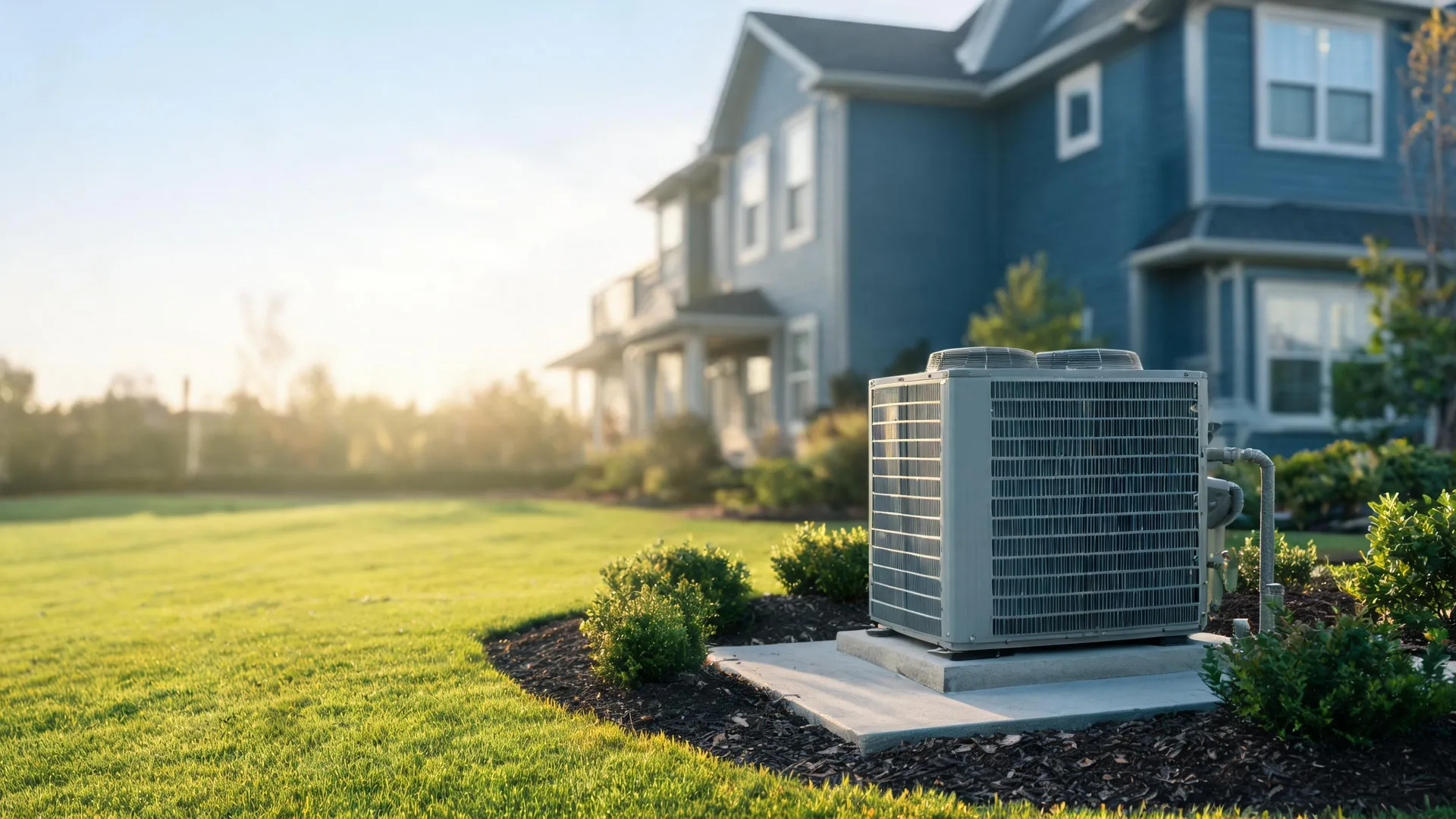
A gray heat pump outdoor unit mounted on a concrete pad next to the stone-accented exterior wall of a house.

Sizing comes from a calculation, not a guess

A heat pump has to be sized to the house, not picked by rule of thumb. The number that matters is the load calculation, a room by room look at how much heat the house loses in winter and gains in summer, based on the walls, the windows, the insulation, how the place is laid out. That's different from going by the square footage or matching whatever the old system was rated for. Old equipment gets replaced with the wrong size often enough that its nameplate isn't a safe starting point. Too big and the unit short cycles, running in quick bursts that cool or heat the air fast but shut off before it's pulled the moisture out, so the house feels clammy even at the right temperature. Too small and it runs constantly, struggling to keep up on the hardest days, and that constant strain wears parts out sooner. The right size runs in longer, steadier stretches, holds the temperature without big swings, and keeps humidity in check as a byproduct of doing its job properly.

The old system doesn't just unplug

If the home is heating with a furnace, taking that out means dealing with the gas line it was hooked to. A line that's not getting reused gets capped off properly, not just left loose. If there's a chimney or flue that only existed to vent that furnace, it may end up with no job left to do, and that's worth asking about.
The old equipment has to go somewhere

An outdoor condenser holds refrigerant, and that gets recovered before the unit is cut loose and hauled off, not vented into the air. Copper lines, the old coil, the compressor itself, all of it gets scrapped. None of that is the homeowner's job to sort out, but it's worth knowing it happens before the new system goes in, not after.

Two systems can carry the same efficiency rating and still perform differently, so ask what the rating is measured against. Ask about the sound rating too, since a unit mounted near a window or a patio runs for hours at a stretch and you'll hear it if it's loud. Ask what the warranty covers on the compressor versus the rest of the parts, because those terms aren't always the same length. Ask how the installer is sizing the system for the house, not just picking a number off the old equipment's nameplate. A unit sized by a proper load calculation fits the house it's going into. One sized by guesswork either runs too long trying to keep up or shuts off before it's pulled enough moisture out of the air.

Allen County falls under zone 5A, a cool, humid climate where the energy code treats heating as the bigger job. Any split-system heat pump installed new has to clear federal minimums set for that kind of climate: at least 14.3 Btu of heat moved per watt-hour over the summer, and at least 7.5 Btu per watt-hour over the winter. Those numbers set the floor, not the ceiling, so units above them exist and cost less to run. A federal tax credit is available on qualifying equipment, worth asking about when you're comparing what each option actually costs to own.