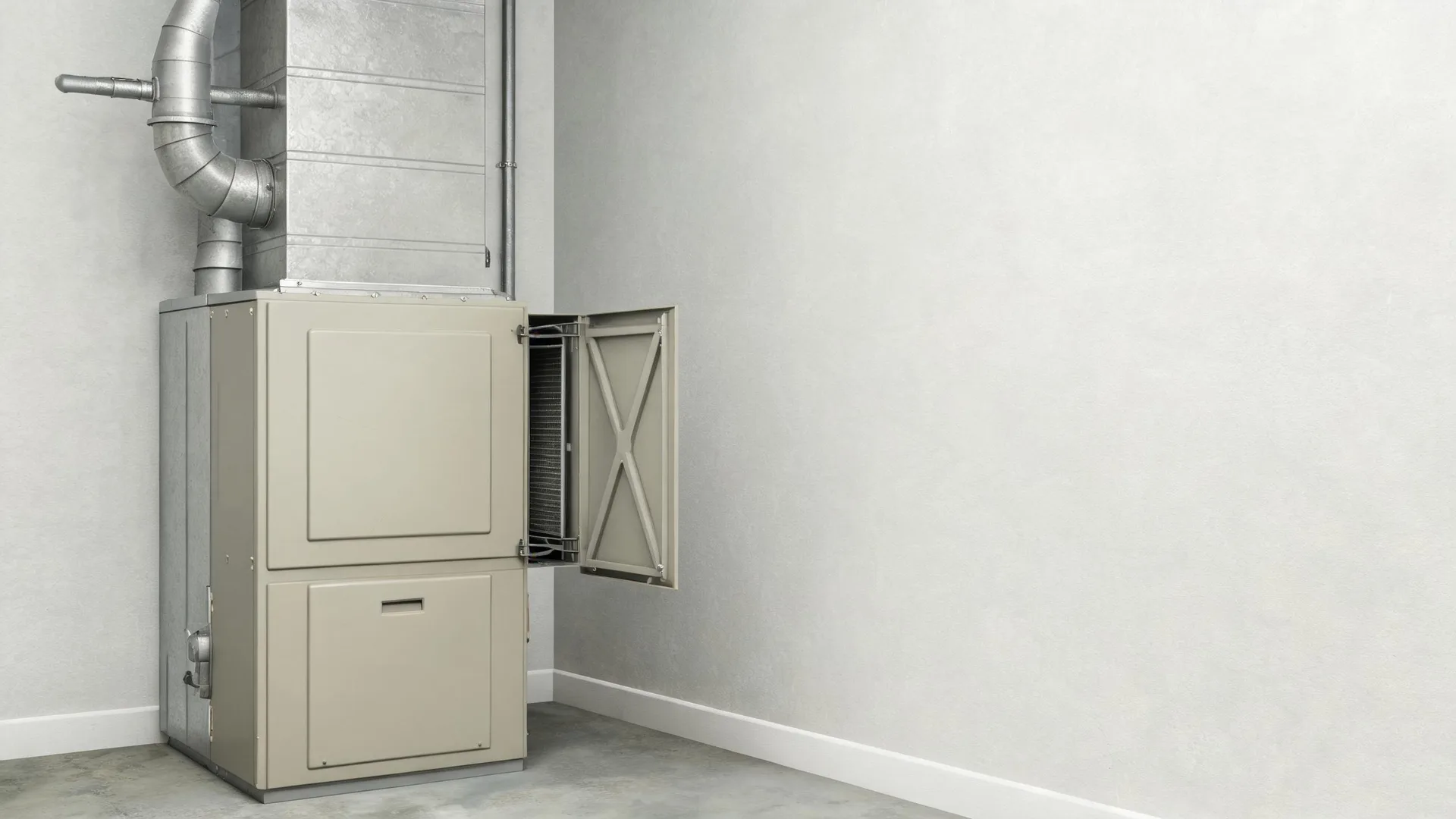
Eight months of work ahead
Furnaces here run from October through May. One visit before that stretch starts is enough to catch a weak igniter or a dirty flame sensor before it leaves you without heat in January.
Takes about a minute. No obligation.
Furnaces here run from October through May. One visit before that stretch starts is enough to catch a weak igniter or a dirty flame sensor before it leaves you without heat in January.
Overnight lows average 23°F through December, January and February. That's when a furnace runs longest and hardest, and when a part that was already failing finally gives out.
Furnace season starts in October here.
Have it checked in September, before it has to work.


A furnace built with the house in 1993 or later still has plenty of working life in it, and a yearly check is what gets it there. Clean the burners, check the igniter, and a furnace tends to keep running the way it did when it was new. Skip that for a few years and small problems sit there and get worse, the kind that end in a breakdown instead of a tune-up. If your furnace came with the house, find out what year that was. It tells you whether this is a system worth protecting with a yearly check, or one already past the point where that check does much good.

The filter is the one thing worth checking yourself. Pull it out once a month while the furnace is running steady. If you can't see light through it, swap it. A clogged filter starves the burner of air and makes the blower work harder to push air through the ducts, and that strain adds up over a long run. Beyond the filter, leave it alone. Don't pull the furnace cover to look at the burners or the igniter. That's a job for someone who can tell a good flame from a bad one.
An igniter glows every time the furnace starts, and that cycling wears it down whether anyone's watching or not. Caught early, a tech sees one that's cracked or reading weak and swaps it on the spot. Missed, it fails mid-cycle, and the furnace won't light at all until someone replaces it.
The flame sensor tells the control board the burner actually lit. Soot builds up on it slowly, with no warning, until it can't sense the flame anymore and shuts the burner off for safety. From the thermostat that looks exactly like a dead furnace, but it's a sensor that needed wiping clean.
A furnace rarely quits without warning. It tells you first, and the signs show up away from the burner, where anyone can notice them. A burner flame that used to burn steady blue now flickers yellow at the tips, or the furnace hesitates before it catches instead of lighting clean. Short cycling is another one, where it fires up, runs a short while, and shuts off before the house warms at all. A burning smell that lingers past the first run of the season isn't normal either, and neither is a furnace that runs long stretches but never quite gets the house to temperature. Any one of these is worth a call before the part behind it fails outright.
A tune-up starts with the burners. A tech pulls the burner assembly, cleans off the rust and scale that build up over a season, and checks that the flame burns steady and blue across every burner, not yellow or uneven at the tips. From there it's the heat exchanger, checked for cracks, because a cracked exchanger can let exhaust mix into the air the blower pushes through the house. The inducer motor and venting get checked too, since that's what pulls exhaust out and a blocked vent backs it up instead. The igniter gets tested under load, not just looked at, because a weak one can glow fine sitting still and still fail the moment it's asked to start a cold furnace. Last is the control board and the safety switches, confirming the furnace shuts itself down the way it's supposed to if something downstream goes wrong.