Marion County sees its share of storms
Marion County logged 227 severe weather events between 2015 and 2024. That includes 140 damaging wind events, 67 hail events and 4 tornadoes. Ice and heavy snow added 12 more.
Takes about a minute. No obligation.
Marion County logged 227 severe weather events between 2015 and 2024. That includes 140 damaging wind events, 67 hail events and 4 tornadoes. Ice and heavy snow added 12 more.
Hail and wind reach whatever sits outside, and a furnace depends on a working system around it to run when it's needed. Statewide, 17% of households went at least a day without power in 2024. A furnace that hasn't been looked at is a bigger gamble when the weather turns on you.
Gas heats 55.6% of homes in Marion County, more than any other fuel.
That burner needs a yearly check of the flame, the vent and the safety controls, not just a clean filter.



Half the homes in Marion County were built in 1973 or earlier. A furnace that old has likely been swapped out at least once, but the ductwork, the gas line and the venting running through the house are often original. Metal fatigues, connections loosen, and a vent pipe that was sized right decades ago can be marginal for the furnace running through it now. None of that shows up by looking at the thermostat. A yearly check is when a contractor gets eyes on the parts that don't announce themselves until they fail.
A furnace that hasn't been looked at is a bigger gamble once the wind, hail or ice gets going. A yearly check now means one less thing to worry about when the weather turns and the power goes with it.
Find a contractor
Put the yearly check on the calendar and keep it there, especially if the ductwork or venting in the house goes back to when it was built. A contractor looking at the furnace each year is also looking at what carries the exhaust out and the air through the house, and that's how a loose connection or a marginal vent gets caught before it causes trouble. Skip a year or two and those same parts keep aging without anyone checking on them.
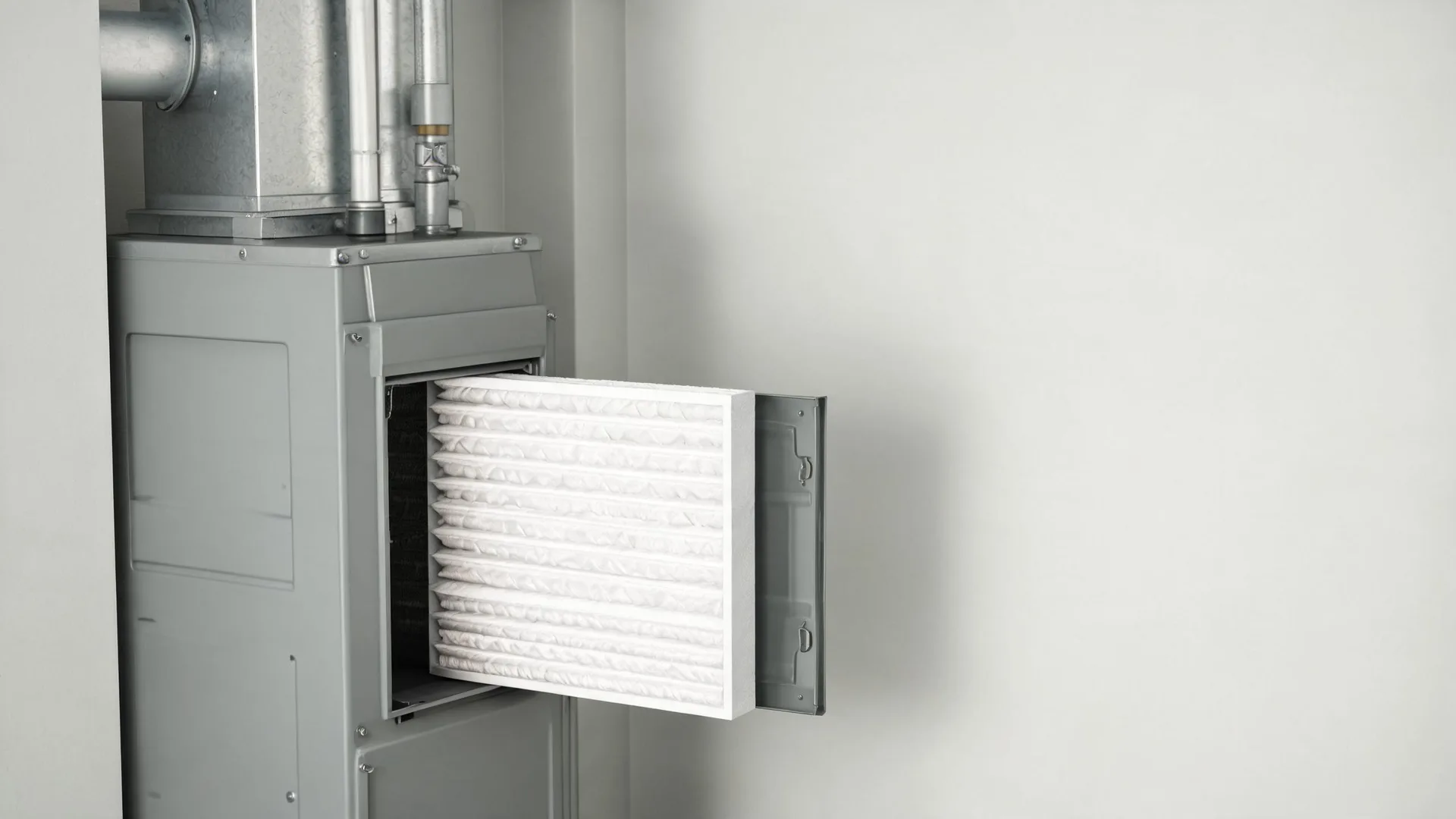
Air has to pass through the filter before it reaches the heat exchanger. When that filter loads up with dust, the blower strains to pull air through it, and the heat exchanger runs hotter than it should. That extra heat stresses the metal over time and can trip the limit switch, which shuts the furnace down as a safety measure.
A furnace with a secondary heat exchanger produces condensation, and that water needs a clear drain line to get out. If the line clogs, the furnace can lock out on a float switch rather than risk water backing up into the cabinet. The coil in the air handler stays in the airflow path year round too, and a coil caked with dust blocks airflow the same way a dirty filter does.
Skip the yearly check long enough and the signs show up slowly, not all at once. Dust builds on the burners and the flame changes shape, burning yellow and sooty instead of a clean blue. A furnace running that way puts more carbon monoxide into the exchanger than it was designed for. The flame sensor collects a film from normal combustion, and once that film gets thick enough, the sensor can't tell the control board the flame is still lit, so the furnace shuts off mid-cycle. Bearings in the blower motor wear without anyone noticing until they start squealing, or seize. None of this happens because a part is defective. It happens because nobody was there to catch it early, and a furnace left to run on its own wears out the parts that keep it safe faster than the parts that keep it running.
A tune-up starts with the burners and the flame. A technician pulls them, cleans off the rust and dust, and sets the flame back to a steady blue. From there it's the ignition system, checking that the igniter or pilot lights the gas reliably and that the flame sensor is clean enough to prove it's lit. The heat exchanger gets inspected for cracks, because a cracked exchanger can let combustion gas mix into the air moving through the house. The gas pressure gets checked against what the furnace is rated for, too low and the flame struggles, too high and it overfires. Belts and bearings get checked where the furnace has them, and the blower wheel gets cleaned if dust has built up on the blades. Last, the control board runs through its safety switches, the limit switch and the pressure switch, to confirm the furnace shuts itself down the way it's supposed to if something goes wrong.