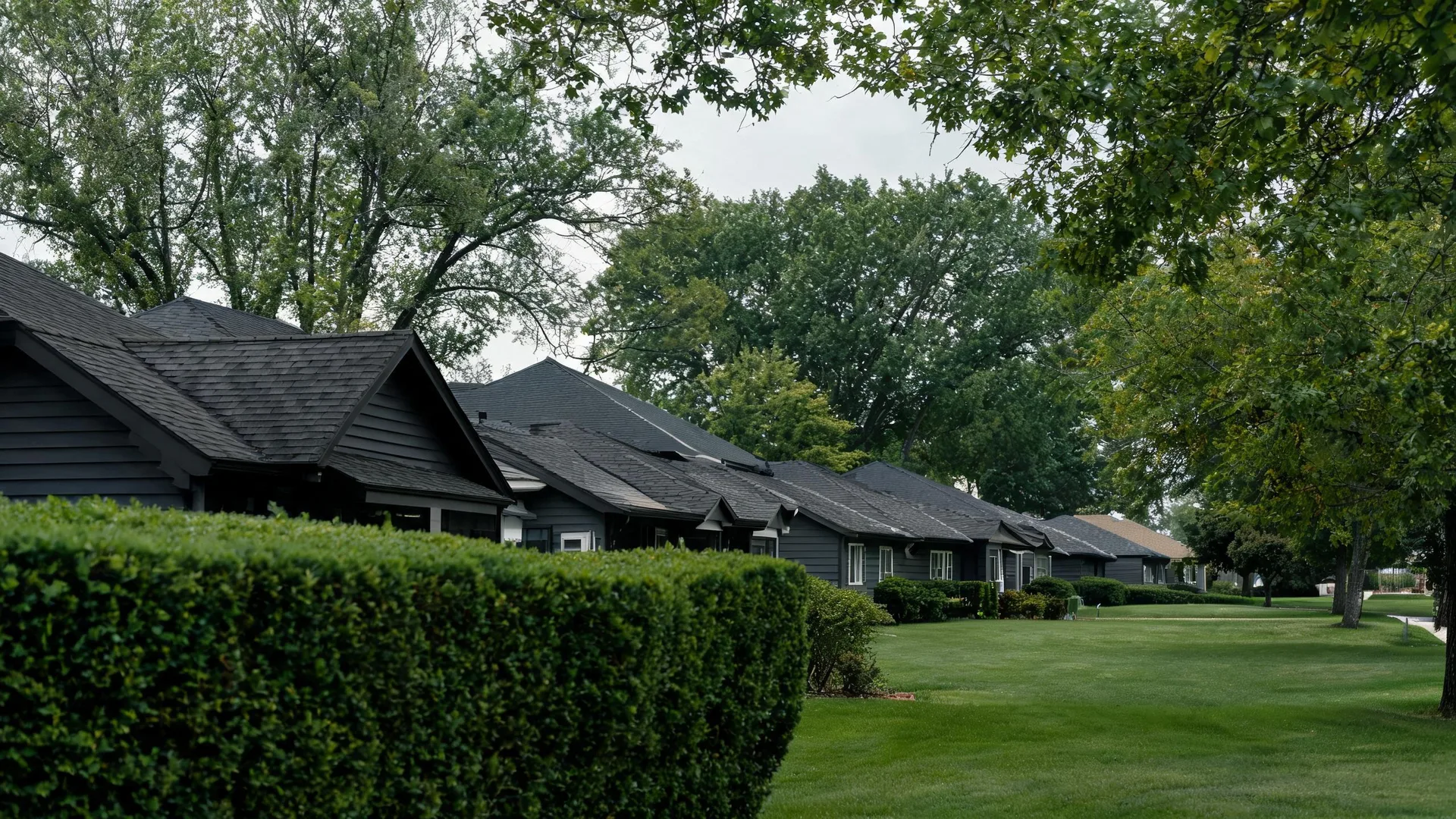
A row of dark-sided single-story houses with gray shingled roofs behind a trimmed hedge, with mown lawn and large deciduous trees under an overcast sky.

Furnace Maintenance in Kokomo, IN

Tell us about the job

Takes about a minute. No obligation.

Tune-up, service, or cleaningFurnace or heatingHoward County, IN
Step 1 of 2

What ZIP code is the job in?

Eight months of work a year

Furnaces in Howard County run from October through May. That's most of the calendar, and overnight lows averaging 21°F in December, January and February mean the furnace is working hard, not just idling, through the coldest stretch.

One visit, timed right

A check before October catches a weak igniter or a cracked heat exchanger while it's still easy to fix, not after the first cold snap when the furnace is already running every night.

October is when furnaces in Howard County start working for real.

September is when a furnace here still has the time to get checked before that.

Half these furnaces are older too, and age is what a yearly check is for

Half the homes here were built by 1969
Heat runs October through May
Winter nights average 21°F

Most homes in Howard County heat with utility gas, 68.6 percent, and that's the furnace a yearly check is really for. A gas furnace has a burner and a flue, and both need to be looked at, not just the filter. The burner has to light clean and burn clean. The flue has to vent the exhaust out of the house instead of back into it. Electricity heats another 26.6 percent of homes here, and those systems have their own service needs, but it's the gas furnace that depends on a technician checking the flame and the vent each year, not just swapping a filter.

A furnace this old is worth checking every year

Half the homes in Howard County went up in 1969 or earlier. A furnace that has been in a house that long has had a long time to develop a weak igniter or a cracked heat exchanger. A yearly check is how a contractor finds that before it becomes a bigger repair.

Find a contractor
A man in a dark long-sleeved shirt and tan work pants, seen from behind, carries a canvas tool bag up porch steps toward a blue paneled front door of a house with light lap siding and a potted flowering plant.
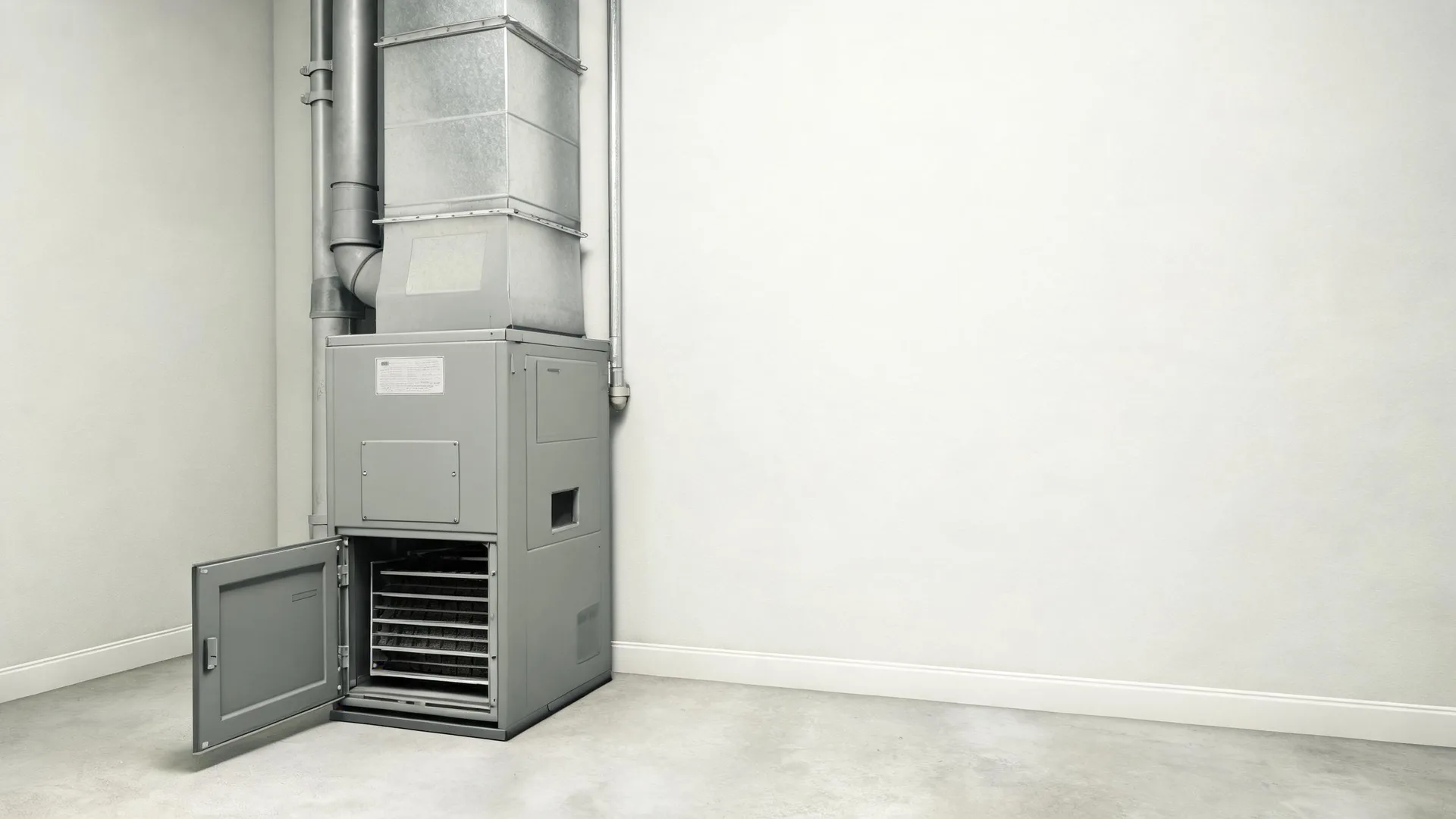
A gray high-efficiency gas furnace installed in an unfinished basement, surrounded by gas lines, a condensate drain, and sheet-metal ductwork.

What a tune-up catches before you'd ever notice it

A tune-up is the one time a year someone actually looks inside the cabinet instead of just at the thermostat. A technician pulls the burner cover and checks the flame itself. A clean burner flame is blue and steady. One that's lifting, yellow, or flickering means the gas isn't burning all the way, and that's not something you'd notice from the living room. They'll check the flue connection too, making sure the exhaust pipe is still sealed tight and sloped the right way, because that's what keeps combustion gas going outside instead of settling back into the house. Inside, they're checking the heat exchanger for hairline cracks, which you can't see without pulling the furnace apart, and testing the igniter to see if it's still heating up strong and fast or starting to go weak. They'll check the flame sensor too, the small rod that tells the furnace a flame is actually present, because a dirty one makes the furnace shut itself off a few seconds after starting, over and over. None of this shows up as a problem you'd notice walking by. The furnace still turns on, still blows warm air, right up until the part that was failing finally quits.

A filter swap is not a tune-up

Some visits start and end with a new filter and a glance at the thermostat. That takes a few minutes and catches nothing inside the cabinet. The burner never gets pulled, the flue connection never gets checked, the heat exchanger never gets inspected. A furnace can pass that kind of visit and still have a cracked heat exchanger or a weak igniter that fails the next cold week.

What a full visit leaves you with

A thorough tune-up ends with the technician telling you what the flame looked like, whether the flue was sealed and sloped right, and whether the igniter and flame sensor are still working the way they should. If all they did was check the filter, you won't get any of that, because there's nothing to report. Ask what they checked before they leave.

A furnace that needs a check doesn't usually announce it. It still fires up, still blows warm air, right up until the morning it doesn't. What you can catch early, before a technician ever opens the cabinet, are the smaller tells. A burner that used to come on quiet now makes a bang or a thump when it lights. The blower runs longer than it used to for the same room to feel warm. The air coming out smells faintly off when the furnace first kicks on, not all the time, just at startup. Short cycling is another one, where the furnace fires, runs a few seconds, and shuts off, then tries again. Any of those is the furnace telling you something's wearing out before it quits outright. None of them are a reason to wait for the yearly visit if you're already hearing or smelling them now.

A tune-up also covers the parts that move air, not just the parts that burn gas. The blower motor and its wheel get checked for dust buildup, because a dirty blower wheel can't push the same volume of air and makes the whole system work harder to heat the same rooms. The technician checks the belt or motor bearings for wear if the furnace has them, and looks at the electrical connections inside the cabinet, since a loose wire can cause the same kind of intermittent shutdown people blame on the thermostat. They'll also check the furnace's safety switches, the ones that are supposed to shut the system down if the blower fails or the cabinet overheats. Those switches can fail quietly, sitting there doing nothing until the one day they're needed. A full visit checks that they still work, not just that the furnace runs.