




A gray forced-air furnace with metal ductwork stands in an unfinished basement with exposed wooden joists, concrete walls, and a single hanging light bulb.

Furnace Maintenance in Logansport, IN

Tell us about the job

Takes about a minute. No obligation.

Tune-up, service, or cleaningFurnace or heatingCass County, IN
Step 1 of 2

What ZIP code is the job in?

Furnace season in Cass County starts in October and runs through May. That's eight months the furnace carries the full load of the house. September is the month to get it checked, before it has to run hard on a cold morning. A furnace that sat idle since spring needs someone to look at the igniter, check the burner flame, and make sure it's drawing air the way it should. Catching a weak part in September means it gets fixed before the furnace has to lean on it.

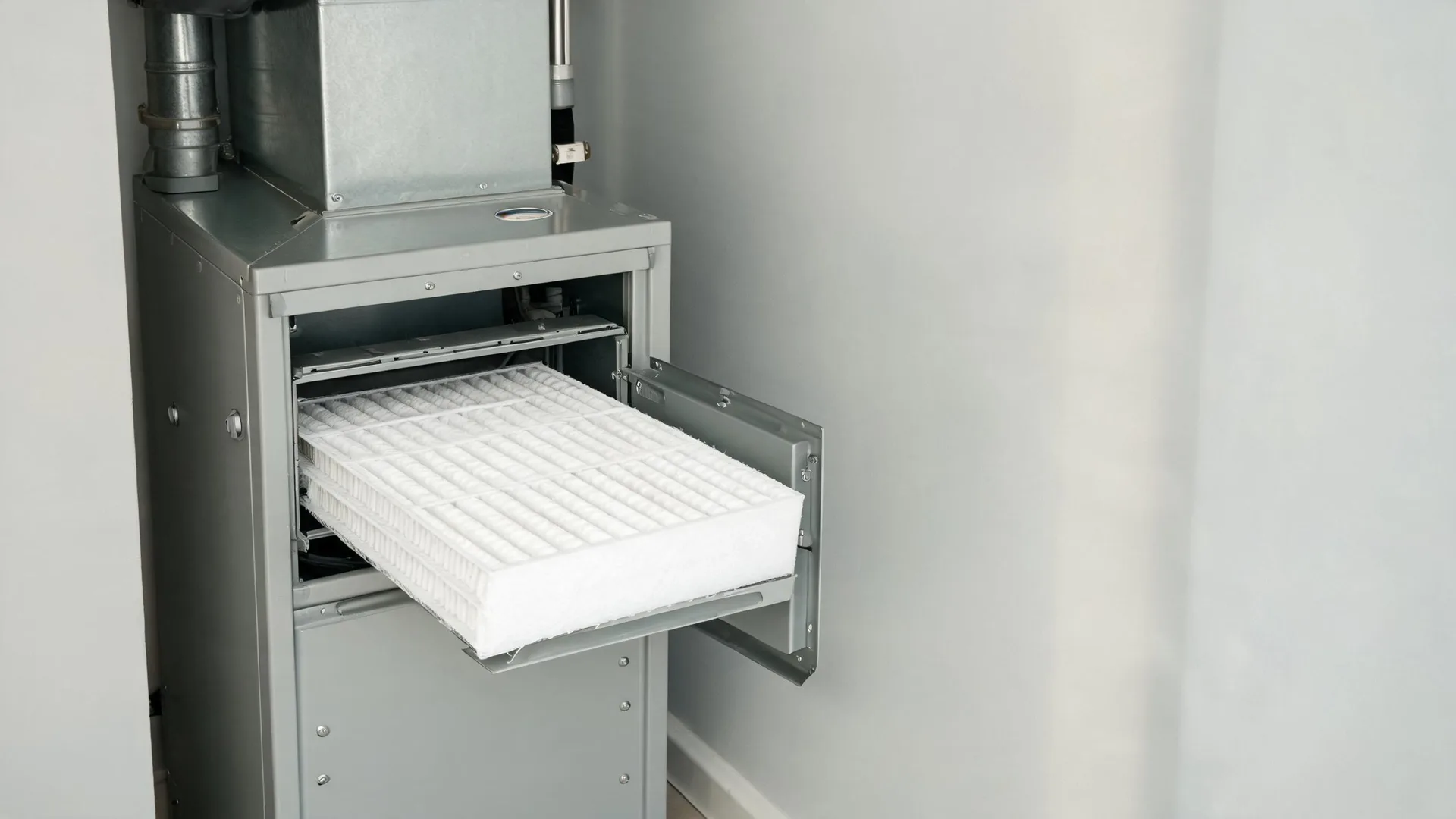
A dirty filter chokes the airflow a furnace needs to run safely.

Swap it and the burner can breathe, the heat exchanger stays at the temperature it was built for.

Half the furnaces in Cass County are working in a house built by 1956

Half the homes here were built by 1956
Climate zone 5A
Heat runs October through May

Gas heats 63.9% of the homes in Cass County, more than anything else. That means a burner, a flame sensor and a flue venting exhaust out of the house. A maintenance check on a gas furnace isn't just the filter and the fan. It's the burner flame, the flue connection, and the gas pressure, because a furnace that isn't burning clean can put carbon monoxide into the house instead of out of it. The homes heating with electricity don't carry that risk, but for most houses here running on gas, the venting and safety controls are the part worth paying someone to check.

Get the furnace checked before it has to prove itself

A furnace installed when one of these houses was new is long gone, but plenty of these homes are on their second or third one, and nobody's handed you a maintenance log with it. A yearly check is how you find out what you've got before it fails on a cold morning instead of after.

Find a contractor
A gas furnace with attached ductwork, gas piping, and condensate lines installed in a concrete-block basement.

What you can watch between checks

Change the filter yourself. A furnace pulls air through it every time the blower runs, and a filter clogged with dust makes the burner work harder to push heat through the house. Hold it up to a light. If light doesn't come through, put in a new one. Keep the space around the furnace clear too. Nothing stacked against the cabinet, nothing blocking the return air grille. The burner needs room to pull air in. Listen for anything new. A rattle on startup, a bang from the ductwork, a burner that clicks several times before it catches. Mention those to whoever checks it next, even if the furnace still seems to be heating fine. A furnace running rough will often keep putting out heat right up until the part that's struggling finally gives out.

A quick check stops at the filter

Swap the filter, glance at the flame through the sight glass, and call it done. That tells you almost nothing about whether the furnace is safe to run all winter. A flame that looks fine to a glance can still mean a burner that's not getting the air mixture it needs.
A thorough one takes the burner apart

A real tune-up means pulling the burner assembly out, not just looking at it in place. The tech checks the flame sensor for corrosion, tests the igniter under load instead of just eyeing it, and measures gas pressure at the manifold rather than guessing from flame color. That's the only way to catch a burner that's about to fail instead of one that already has.

Open the cabinet and most of what matters is hidden from a glance. The flame sensor sits in the burner path, and a thin film of oxidation on it is enough to make the furnace shut off a few seconds after it starts, even though the metal looks fine to the eye. The heat exchanger is worse. A crack in it can run the whole season without smoke or smell, nothing a homeowner would ever notice, and the only way to find one is to pull the burners and look with a light built for it. Blower wheels load up with dust on the inside of the blades, where you'd never see it, and that buildup throws the wheel off balance long before it makes a sound you'd catch. None of this shows up by listening at the vent or watching the flame through the sight glass. It shows up when someone takes the furnace apart and looks at the parts that don't get looked at any other time of year.

A tune-up has a sequence to it, and skipping steps defeats the point. It starts with power to the unit off, then the burner compartment opens so the tech can see the flame itself, not just hear the furnace running. The flame should be steady and blue, not yellow or lifting off the burner. From there it's the igniter, tested for resistance rather than just glanced at, because an igniter can glow and still be too weak to hold a flame on a cold start. The inducer motor gets checked for noise and for the vacuum it pulls, since a furnace won't fire at all if that switch doesn't see enough draft. Last comes the blower, pulled and inspected for dust on the wheel, because a dirty wheel moves less air no matter how strong the motor is. Each step catches something the one before it can't.