






A nighttime street view of several illuminated two-story red brick homes with front porches, flanked by a large tree.

Furnace Maintenance in Michigan City, IN

Tell us about the job

Takes about a minute. No obligation.

Tune-up, service, or cleaningFurnace or heatingLaPorte County, IN
Step 1 of 2

What ZIP code is the job in?

Furnaces in Michigan City run from October through May, close to eight months of the year. Overnight lows in December, January and February average 20°F across LaPorte County, so the burner and blower are working hard most nights, not just during a cold snap. That kind of stretch wears on an igniter or a blower motor faster than a shorter season would. Problems that start small, a cracked igniter or a motor bearing going dry, tend to show up early here instead of waiting until spring.

Furnaces in Michigan City start their season in October, not idle in the shoulder months.

Book the maintenance check in September, before that first cold month puts the system to work.

Half the homes here were built by 1969, furnace and all

Half the homes here were built by 1969
Heat runs October through May
Winter nights average 20°F
Built for gas heatGas heats 83.2% of homes in LaPorte County, so the burner and venting matter as much as the filter

A check before October catches a cracked igniter or a dry motor bearing before the season puts weight on it. Once the furnace starts running most nights through May, a weak part does not get a break to fail quietly. Have it looked at while the system is still idle, not after it is already working.

If your furnace is as old as the house, get it checked every year

If your furnace came with a house built in 1969 or earlier, it's old enough that small wear turns into a breakdown without much warning. A yearly check catches a cracked igniter or a dry bearing while the furnace is still off, not after it's running every night.

Find a contractor
A man in a cap, dark long-sleeved shirt and brown work pants, seen from behind, carries a worn leather tool bag up porch steps toward a blue front door beside a blue planter with a shrub.
A gray residential gas furnace installed in an unfinished basement, surrounded by ductwork, a metal flue pipe, and a gas supply line.

What to check yourself before the next visit

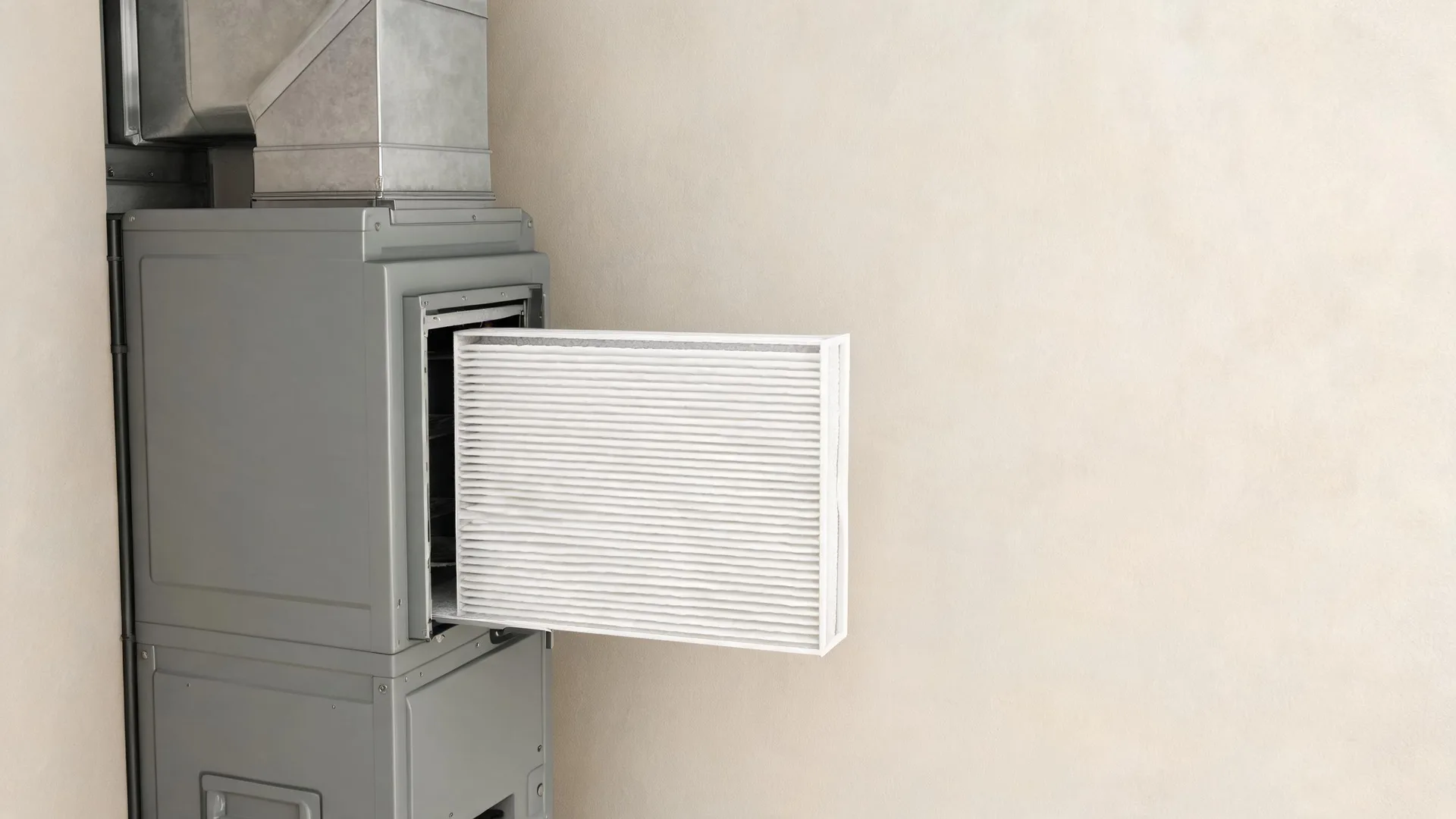
Between visits, the filter is the one thing worth checking yourself. A dirty filter chokes airflow, and a furnace starved for air runs its heat exchanger hotter than it should. Look at it every month the system is running, and hold it up to a light. If light barely gets through, swap it. Keep the area around the furnace clear, nothing stacked against the cabinet or blocking the return grille. Outside, if the vent pipe or intake pipe runs through a wall nearby, check that it isn't blocked by anything that collects there. If you ever smell something like rotten eggs, or hear a scrape or rattle that wasn't there before, shut the furnace off and have it looked at rather than waiting. None of this replaces a yearly check, but it keeps the system breathing right between them.

What combustion testing shows

A flame that looks fine to the eye can still be burning wrong. A combustion analyzer reads the exhaust and tells you if the mix of gas and air is off, which shows up as a cracked heat exchanger or a flue that isn't drafting the way it should before either one is visible or smelled.
What gets found inside the cabinet

Flame sensors coated with residue, a blower wheel caked with dust, connections that have loosened from months of the furnace cycling on and off. None of it stops the furnace from running, but each one makes the system work harder and fail sooner than it would otherwise.

A furnace that never gets looked at doesn't fail all at once. It drifts. The igniter takes a little longer to glow each time, the blower motor runs a little hotter, the burner flame goes a little more yellow instead of blue, and none of it trips an alarm because none of it is sudden. A tech checks the flame sensor before it's coated enough to cause trouble, catches a blower wheel packed with dust before it strains the motor, finds a crack in the heat exchanger while it's still small. Skip enough seasons and the furnace is still running fine right up until the week it isn't, usually a cold one, since that's when it's working hardest. The parts don't wear out faster without maintenance. They just fail without anyone having had the chance to see it coming.

A tune-up starts with the burner, not the filter. The tech pulls it and cleans the flame sensor, since a coated sensor makes the furnace shut off early or short cycle even when nothing else is wrong. The igniter gets checked for cracks, because a hairline crack there means it fails cold some morning without warning. The blower wheel gets inspected for dust buildup, which makes the motor work harder than it should and shortens its life. Gas pressure gets tested and set to spec, since too much or too little changes how clean the flame burns. The heat exchanger gets inspected for cracks or rust-through, and the venting gets checked to make sure exhaust is actually leaving the house instead of backing up. Electrical connections get tightened, since a loose one is what usually causes a furnace to quit mid-cycle rather than at startup.