One request and it's handed off
Is a high-efficiency furnace worth it in Michigan City, IN
A high-efficiency furnace costs more upfront, and in LaPorte County winters that cost has to earn its keep against your gas bill over years, not months. This page walks through what the higher efficiency actually changes for a house here, and what to weigh before you decide. Once you have an answer, finding an installer to size it right is one form away.
Hand off the searchFor most homes in Michigan City, yes. A high-efficiency furnace runs 95 to 98 percent efficient, against 80 percent for a standard model, which means less of the gas you pay for goes out the flue as exhaust. That gap matters more here than in a mild climate because LaPorte County winters push a furnace hard for months at a time. The longer and harder your furnace runs, the more that extra efficiency adds up on the gas bill, winter after winter. There's a second thing a high-efficiency furnace changes: it vents through PVC pipe out the side of the house instead of a metal flue, because the exhaust runs cool enough not to need one. That can matter if your current venting is old or shared with a water heater. Whether the upfront cost pays for itself on your timeline depends on your current furnace, your house, and how long you plan to stay. A contractor who looks at your setup can tell you what that math looks like for you.
Where the extra heat actually comes from
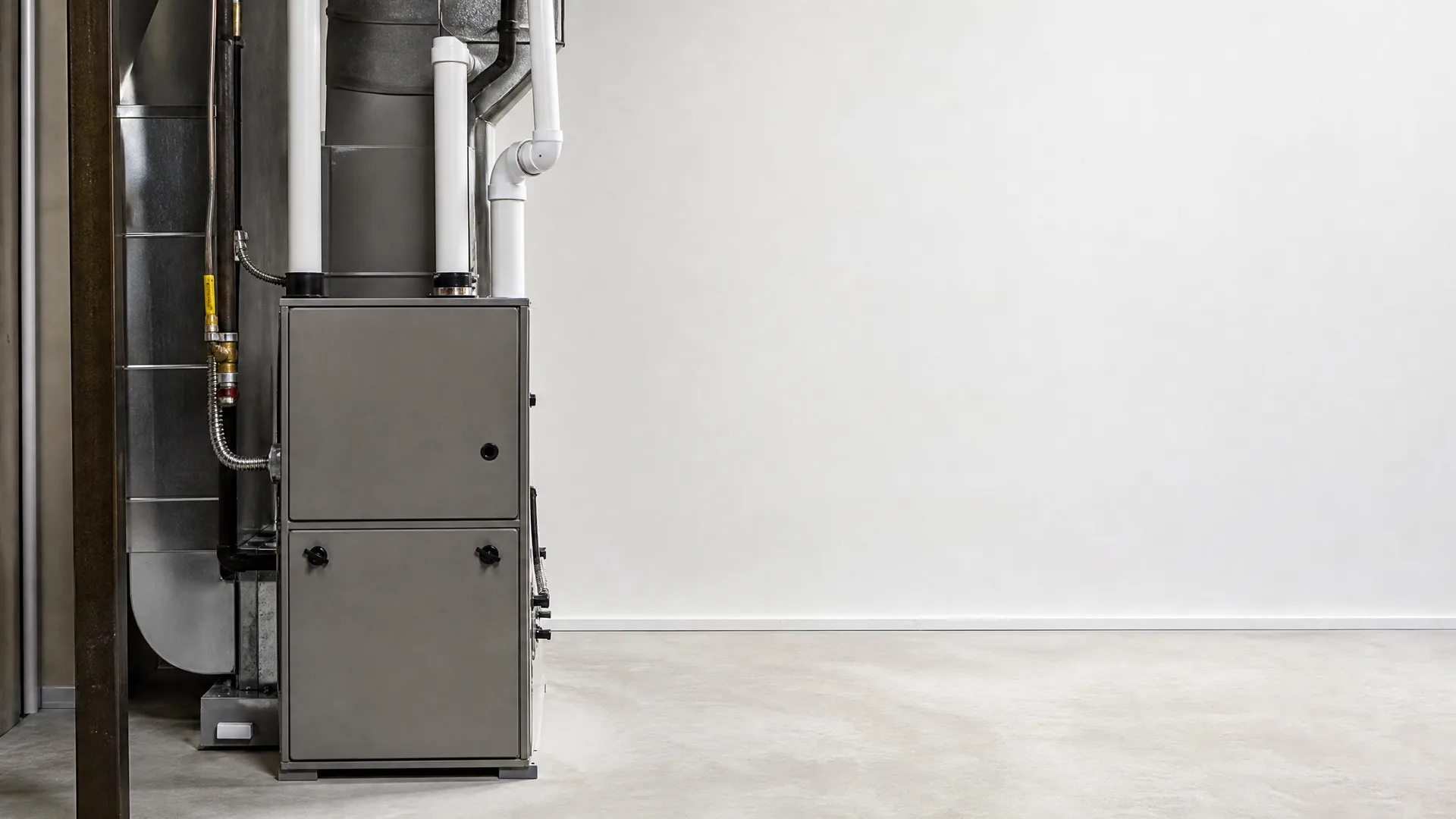
A standard furnace vents hot exhaust straight out through the roof. A high-efficiency furnace cools that exhaust first and pulls a second round of heat out of it before it leaves through a plastic pipe out the side of the house. That second pass is where the 95 to 98 percent comes from. It's a design difference, not a tune-up or a bigger flame, and it's why the two types vent differently to begin with.
What that pipe tells you outside
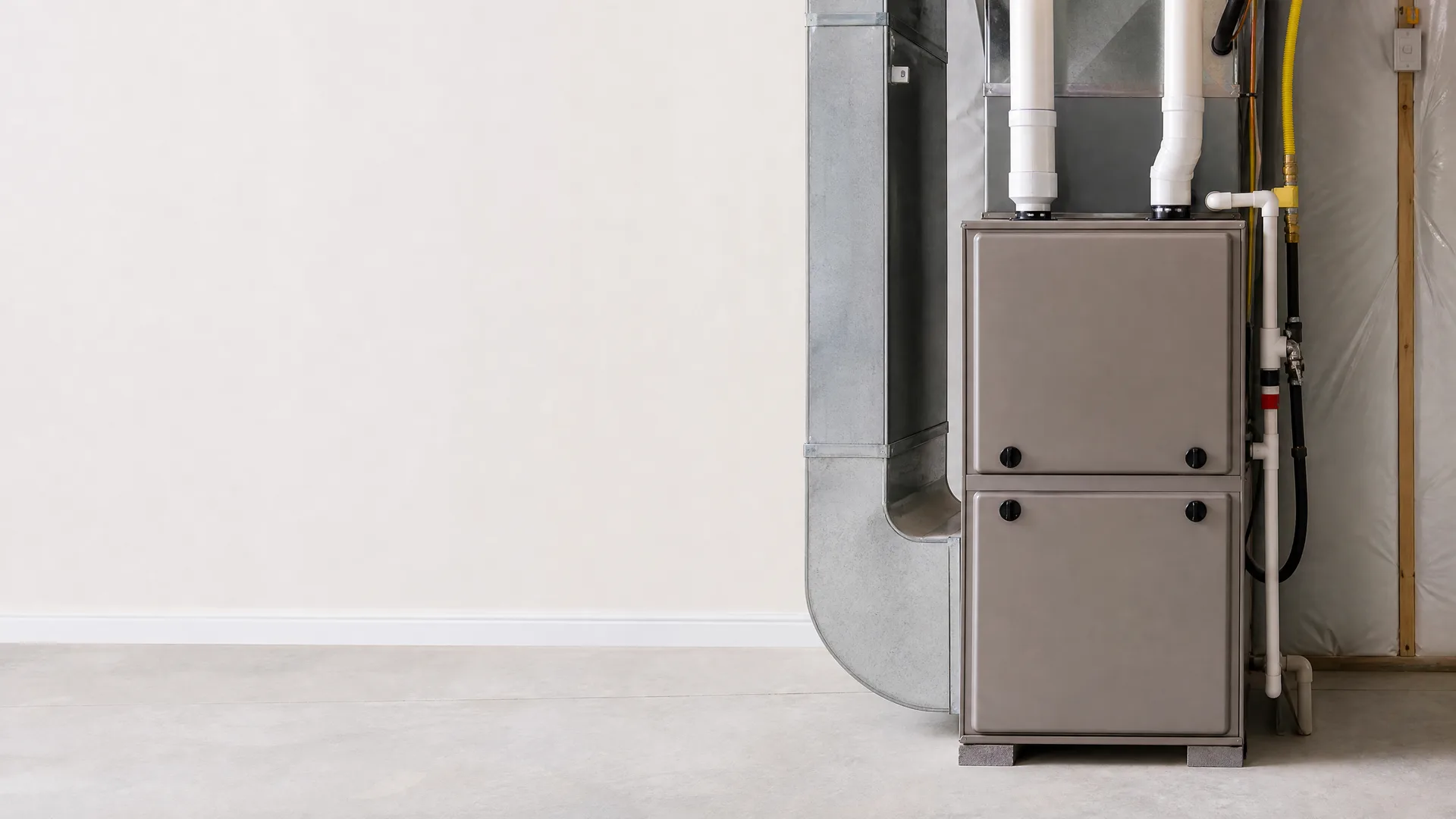
You can tell which kind of furnace a house has without going inside. A standard 80 percent furnace vents through a metal flue up through the roof, next to the water heater's vent most of the time. A high-efficiency furnace vents through PVC pipe low on an exterior wall, often with a second pipe next to it pulling in outside air for combustion. If your house has the wall vent, it already has a high-efficiency furnace.
Standard Furnace or High-Efficiency
Standard Furnace
- Costs less to install, since the equipment and venting are simpler.
- Vents exhaust straight out through the roof, which means a shorter, more familiar install for a house already set up that way.
- Burns gas at around 80 percent efficiency, so roughly a fifth of what you pay for leaves through the flue as exhaust.
- Works with existing metal flue venting, so there's no new pipe run to the outside wall.
- Simpler parts mean fewer things that can go wrong, which can matter if you want a straightforward repair down the road.
- Keeps your gas bill higher through a LaPorte County winter than a high-efficiency model would.
High-Efficiency Furnace
- Runs 95 to 98 percent efficient, so almost all the gas you buy turns into heat for the house.
- Requires a new PVC vent pipe out the side wall instead of the old roof flue, which adds to the install.
- Pulls a second round of heat from the exhaust before it leaves the house, which is where the extra efficiency comes from.
- Produces condensate that has to drain somewhere, so the install includes a drain line the standard furnace doesn't need.
- Costs more upfront than a standard furnace, a cost that has more winters here to work against before it pays off.
- Lowers the gas bill every month the furnace runs, which in Michigan City is most of the year.
Burner ignites and heats air moving through the primary heat exchanger
Flue gas leaves the primary exchanger still hot enough to use
A second heat exchanger pulls more heat out of that exhaust
Cooled exhaust condenses into water the furnace drains away




Done looking for a furnace pro
A furnace swap is not a job to piece together yourself. You need someone who will size the unit right for your house, run the PVC venting correctly, and set up the condensate drain so it doesn't freeze and back up on you come January. Finding that person usually means calling around LaPorte County, explaining your furnace and your house to each one, then sitting with a stack of quotes trying to tell a fair price from a rushed one. That takes evenings you don't have, especially if your old furnace is already struggling and you're deciding this in the cold. Send the request instead, and that search is off your plate. One contractor who installs high-efficiency furnaces in this area gets your information and reaches out, and from there it's a conversation about your house, not a hunt for who to even call.
Every winter you run a standard furnace here, roughly a fifth of what you pay for gas leaves through the roof as exhaust, unburned value you paid for and never got to feel.
A high-efficiency furnace pulls almost all of that back into your house as heat instead of letting it vent away, and over a LaPorte County winter that difference shows up on your gas bill, month after month.
Winter nights average 20°F
At 20°F, a furnace is running most of the night just to hold the house steady, not cycling on and off a few times like it would in milder weather. That's more hours of gas burned, and more hours where a 95 percent furnace keeps heat a standard one would send up the flue.
NOAA nClimDiv 1991-2020

So is it worth it
For a house in Michigan City that burns gas all winter, a high-efficiency furnace earns back what a standard one loses out the roof. The colder it gets outside, the more that gap works in your favor, and LaPorte County gets plenty cold. What it costs to install is the real question left, and that depends on your house, your ductwork, and the venting a contractor would need to run.
That's not something to work out alone. It means getting a few contractors out to look at the house, asking each one the same questions, and sitting with quotes that don't line up because nobody sized the job the same way. Send the form and that part is handled. You'll hear from someone who installs these in houses like yours, and you can ask what it would take in yours.


Furnace Installation
It's off your list after this
- Your new furnace project goes to an installer who works in LaPorte County.
- Get in touch with a local installer about a new furnace.

- One request ends the search for a furnace installer.
- Once you send the form, finding a pro is off your list.
- Skip the round of in-home estimates for a new furnace.
- Skip searching for a furnace pro and answer a few questions instead.
- One installer gets your project, so there's no bidding war over it.
- A licensed installer who works in LaPorte County gets your project.