Eight months of work a year
Furnaces in Marshall County run from October through May. That's most of the year asking the igniter, the blower motor and the heat exchanger to cycle on and off, night after night.
Takes about a minute. No obligation.
Furnaces in Marshall County run from October through May. That's most of the year asking the igniter, the blower motor and the heat exchanger to cycle on and off, night after night.
Overnight lows average 20°F through December, January and February. On those nights your furnace runs longer each cycle to hold the temperature, and that extra strain is where a weak part tends to give out first.
Half the homes in Marshall County were built in 1973 or earlier.
A furnace in a house that age has likely been replaced at least once, and a yearly check catches what the last one might have missed.



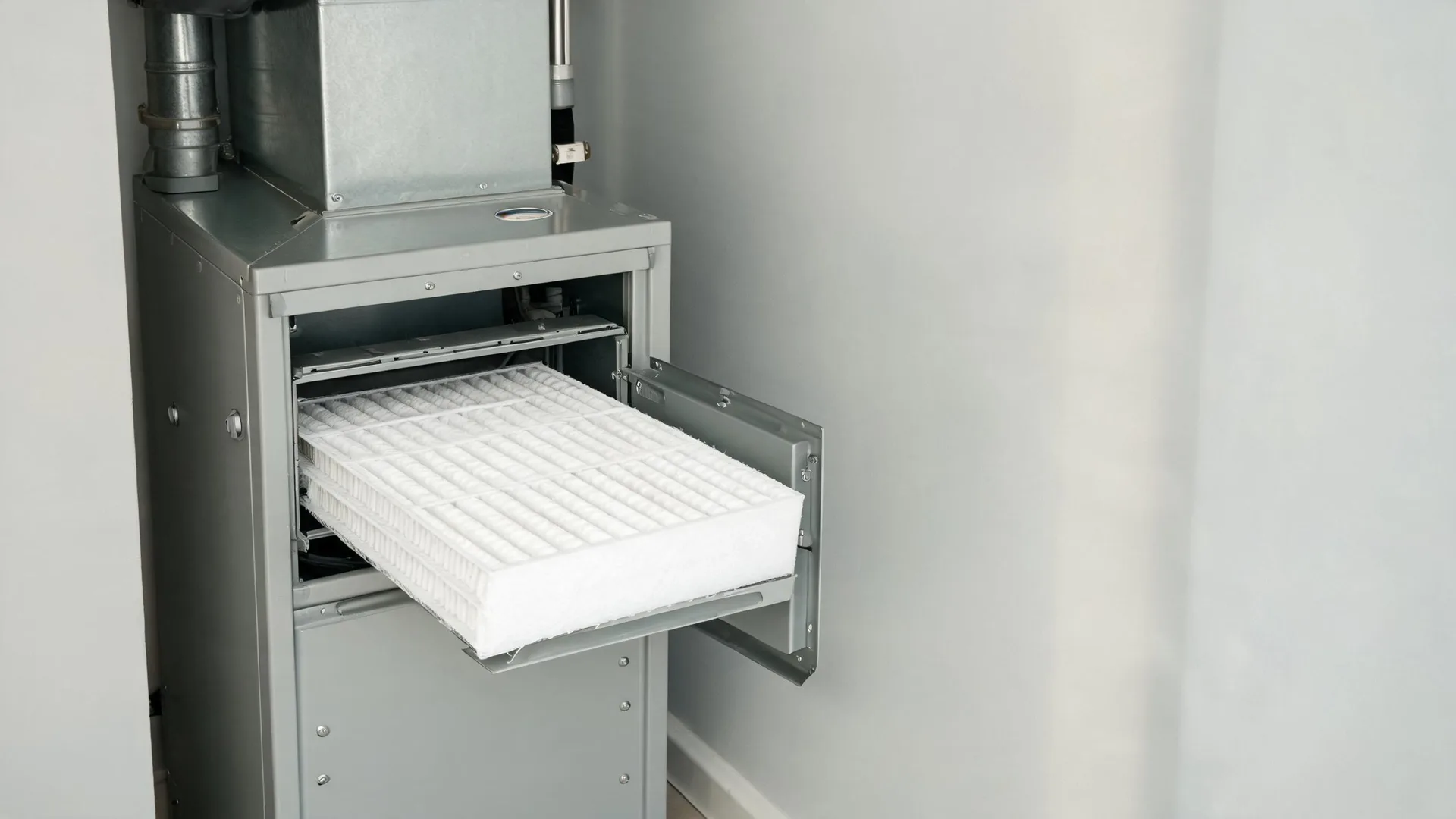
A furnace doesn't have coils or a drain, that's the cooling side of the cabinet. What it has is a filter, sitting right in the path of air going back to the blower. When it loads up with dust, the blower has to pull harder to move the same amount of air, and that extra pull works its way into the motor bearings over time. A clogged filter also starves the heat exchanger of airflow, and a heat exchanger that doesn't get enough air across it runs hotter than it should. That's the one part in the cabinet you don't want overheating. A cracked heat exchanger isn't a small problem, it can let combustion gas mix into the air moving through your house. Swapping the filter on a regular schedule keeps air moving the way the furnace was built to handle it.
October through May is eight months of run time ahead. Have your furnace checked now, while a weak igniter or blower motor can still be caught on a bench instead of on a cold night.
Find a contractor
If a furnace in your house has already been replaced once, nobody wrote down what the installer skipped or left tight. A yearly check puts a tech in front of the burner and the heat exchanger before winter asks anything of them, not after.
A flame sensor coated in residue starts by making the burner shut off a few seconds early. Left alone, it gets worse until the furnace won't hold a flame at all. Most of what fails in a furnace gives some warning first, and a yearly check is what catches that warning while it's still just a warning.
A motor working against a dirty filter or a dirty blower wheel just keeps pulling harder, cycle after cycle, until a bearing gives out or the motor burns up. It won't ease off to protect itself. Without someone checking the airflow and the motor itself, the first sign of trouble is the furnace not running at all.
A furnace usually tells you before it quits. The burner flame is one sign worth knowing, a steady flame stays blue, and one that turns yellow or starts flickering means the burner isn't getting clean combustion. A furnace that short cycles, turning on and off in quick bursts instead of running a full cycle, is often struggling with airflow or a failing sensor. Listen for the start too. A long pause before the burner ignites, or a knock and rattle on startup, usually means the igniter or the blower is wearing out. Odd smells belong on this list as well. A musty smell is often just dust burning off a hot surface, but a sharp or sulfur smell is not and shouldn't wait. None of these mean the furnace is done, but they mean it's asking for a look before it decides for you.
A tune-up starts with the burner itself, pulled and cleaned so the flame burns steady and blue instead of yellow or lazy. The flame sensor gets cleaned too, since a coated sensor is what makes a furnace shut off early or refuse to stay lit. A tech checks the igniter for cracks or weak spots, because that part fails more from age than from anything you did wrong. The heat exchanger gets inspected for cracks or corrosion, which matters more than almost anything else in the cabinet since that's what keeps combustion gas on its own side of the system. The blower wheel gets checked for dust buildup, and the motor gets checked for the kind of strain that shows up as a bearing wearing down before it seizes. Venting gets looked at too, making sure nothing is blocked or pulling air the wrong way. None of it takes long when the furnace is healthy. It takes a lot longer when nobody's looked in a while.