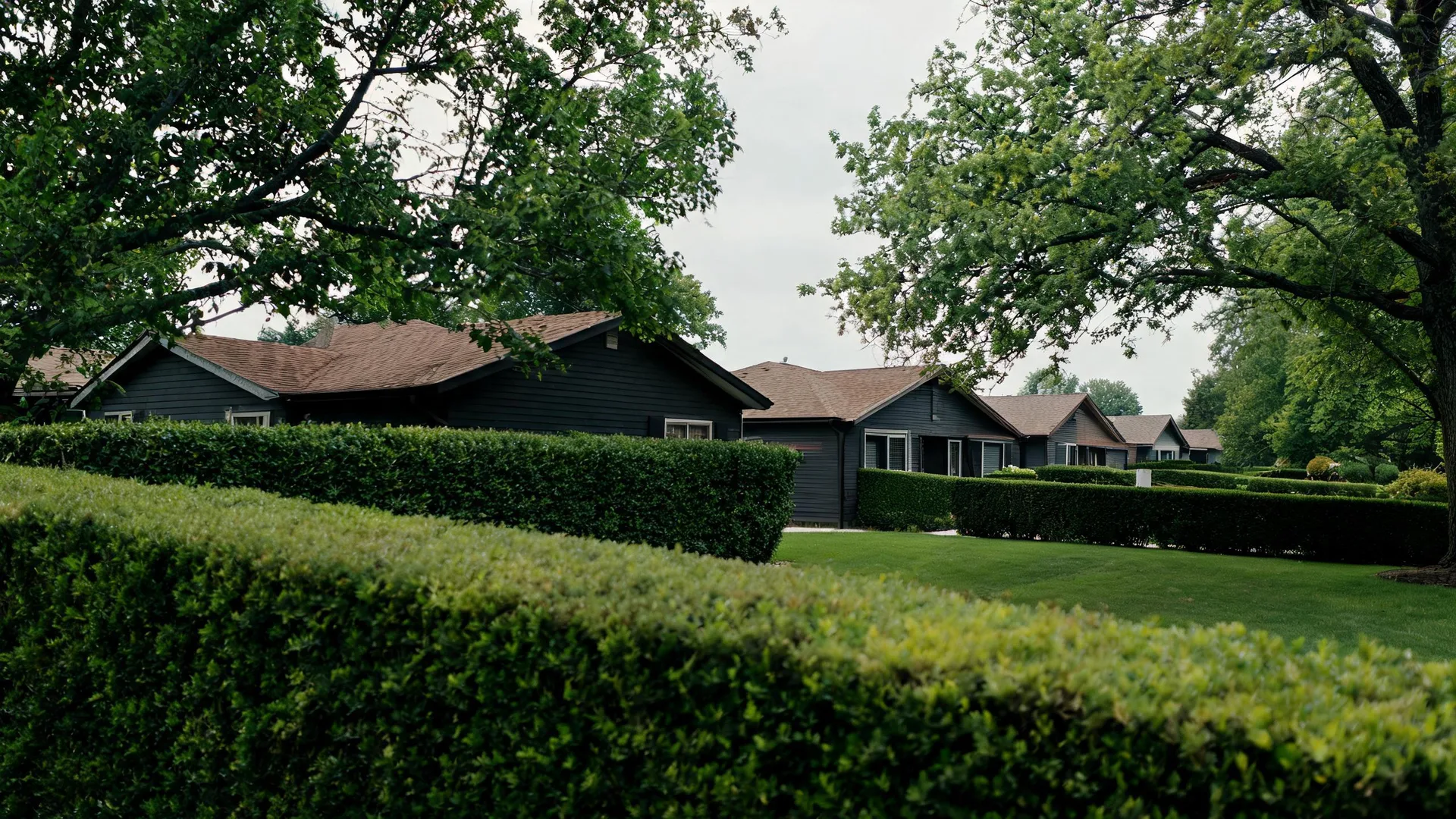
A row of dark-sided single-story houses with shingled roofs behind trimmed hedges and mown lawn, framed by large leafy trees under an overcast sky.

Furnace Maintenance in Richmond, IN

Tell us about the job

Takes about a minute. No obligation.

Tune-up, service, or cleaningFurnace or heatingWayne County, IN
Step 1 of 2

What ZIP code is the job in?

October starts the real work

Furnaces in Richmond run from October through May, about eight months straight. October is also when the first cold snap hits, so the furnace goes from sitting idle to running hard with no easy stretch to warm up into it.


September is the window

A furnace sitting unused since spring won't show a bad igniter or a weak flame sensor until it's asked to run. Getting it checked in September catches that before October's cold puts the system to work.

Furnaces in Richmond run eight months straight, October through May.

One visit before October is what a furnace here needs, not checkups scattered through the winter.

Half the homes in Richmond were built by 1960, and a furnace that old needs eyes on it every year

Half the homes here were built by 1960
Heat runs October through May
Winter nights average 22°F
Gas heats most of Wayne County51.4% of homes here run on utility gas, and that means a burner and vent system worth checking every year.

If your furnace is original to the house, nobody's inspected it recently just because nothing's gone wrong yet. A yearly check means a technician sees the burner and the heat exchanger before the season's first cold snap, not after something fails in the middle of it. That's how a cracked heat exchanger or a corroded burner gets caught while it's still a repair instead of a replacement. None of that depends on how old your particular furnace is. It only matters that someone looks.

Book it before the season

It starts running hard in the first month of the season here. Book the check the month before.

Find a contractor
A man in a cap, work jacket and tan trousers carries a canvas tool bag up wooden porch steps toward a blue front door of a house with lap siding.
A gray gas furnace with attached ductwork and piping installed in an unfinished concrete basement.

What a furnace tells you before it fails

A furnace doesn't give much warning. It runs fine on a mild day, then gets asked to carry real heat the next morning. Watch for a burner flame that burns yellow or orange instead of steady blue. Listen for a blower that rattles or squeals on startup. A furnace that short cycles, shutting off before the house warms up, is already struggling to keep up. So is one that runs long past where the thermostat is set, which usually points to a sensor or control board rather than the thermostat itself. A gas smell near the unit that wasn't there before is never something to wait on. None of these mean the furnace is about to quit. They mean it's already working harder than it should to do the same job.

The filter is doing more than cleaning air

A clogged filter chokes off airflow across the heat exchanger. The burner still fires the same amount of heat, but less air is moving past it to carry that heat away. The exchanger runs hotter than it should, and that heat has nowhere to go but back into the furnace itself. A filter changed on schedule is one of the few things that protects the exchanger directly.

The drain only matters on certain furnaces

A high-efficiency furnace produces condensation as it runs and needs a clear drain line to get rid of it. If that line clogs, the furnace can shut itself down rather than let water back up into the cabinet. An older standard-efficiency furnace doesn't have this drain at all, so this is worth checking only if the furnace venting runs through PVC pipe rather than metal.

A tune-up gets inside parts of the furnace a homeowner never sees without taking it apart. The burner comes out so the technician can look at the flame pattern up close, not just glance at it through a viewing window. The heat exchanger gets checked for hairline cracks that don't show until the metal's hot and expanding, which is why a furnace can look fine sitting cold and still have a problem once it's running. Flue connections get checked too, making sure exhaust is actually leaving the house instead of finding its way back in. The flame sensor gets cleaned of the thin film that builds up on it over a season, the kind of buildup that makes a furnace shut off a few seconds after it starts. None of this shows up by looking at the furnace from across the room. It shows up when someone opens it up and checks.

A tune-up also covers the parts that don't fail dramatically, they just drift. The gas pressure gets checked against what the furnace is built to run at, because too high or too low changes how clean the burner fires. The blower motor gets inspected for a bearing that's starting to wear, something you'd hear as a hum before you ever heard a squeal. Electrical connections get tightened, since a loose wire at the control board causes the same short cycling a bad sensor does, and the only way to tell them apart is to check both. The igniter gets looked over for hairline cracks, because it can glow and still be close to failing. A technician also checks that the furnace is pulling the right amount of return air, which matters as much as the supply side but almost never gets a second thought.