



Heat pump vs furnace in Wayne County, Indiana

Price Both Options

Quotes from pros near you

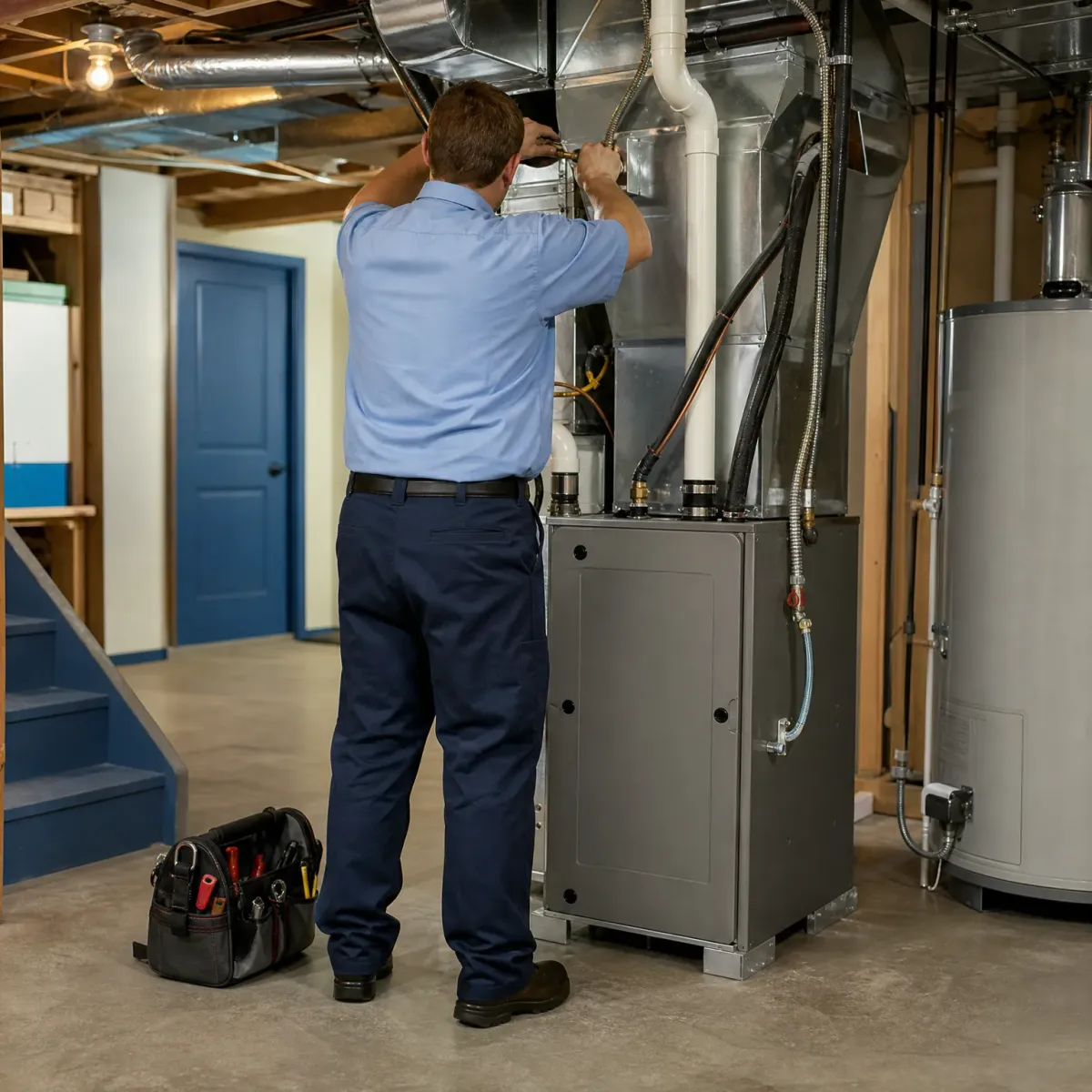
A man in a light blue shirt and dark trousers works on overhead ductwork above a furnace in a basement, with a tool bag on the floor and a water heater to the right.

Tell us about the job

Takes about a minute. No obligation.

New system or replacementWayne County, IN
Step 1 of 3

What kind of equipment?

Which costs less to run in Wayne County?

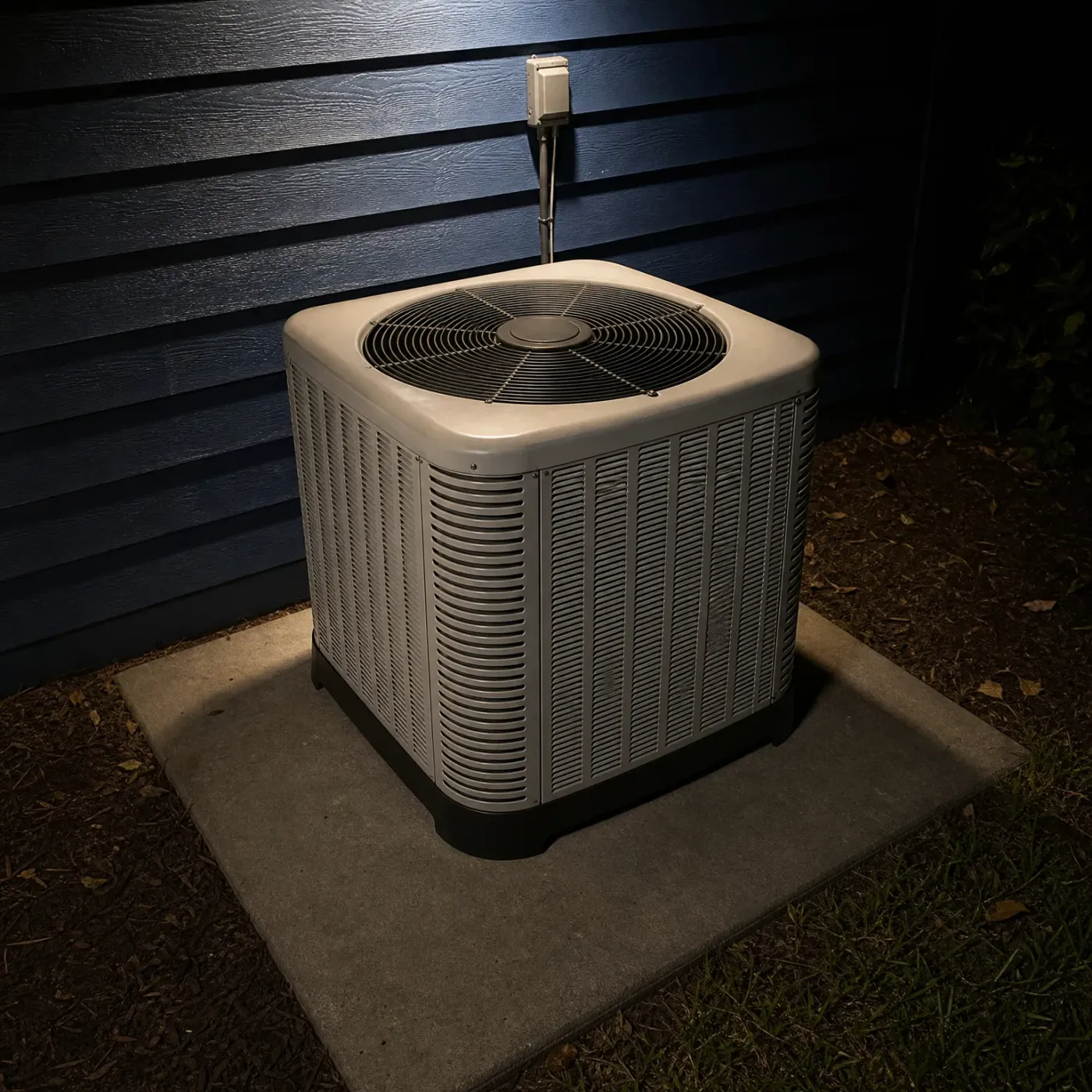
An outdoor air conditioning condenser unit on a concrete pad beside a dark horizontal-lap sided wall at night, with an electrical disconnect box and conduit on the wall above it.

Heat pump

To heat your home here$1.97per 100,000 Btu

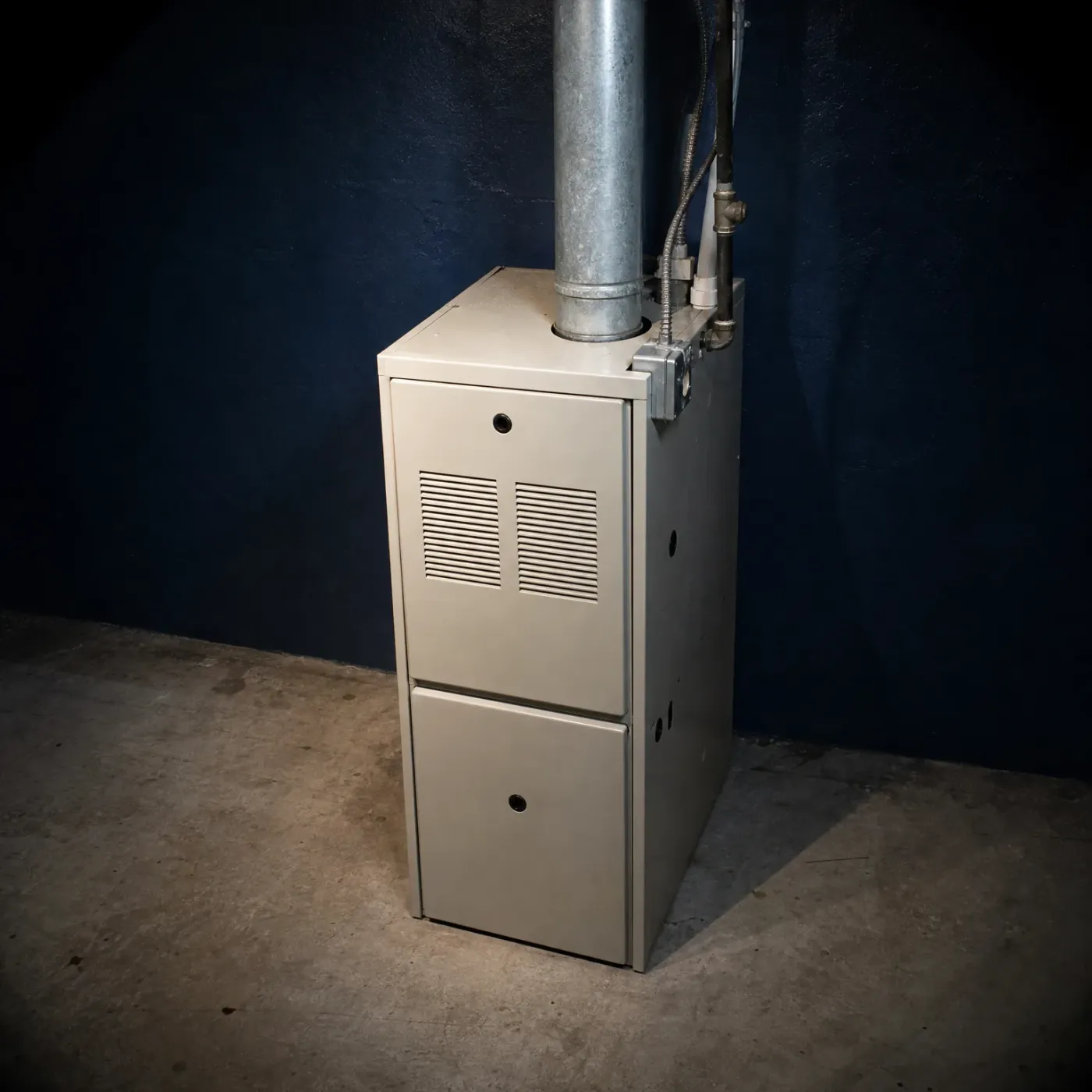
A beige residential furnace with louvered vent panels stands on a concrete floor against a dark blue wall, with a metal flue pipe and conduit running up from its top.

Furnace

To heat your home here$1.12per 100,000 Btu

At Indiana's gas and electricity prices, a gas furnace makes the same heat as a heat pump for at least 42% less.

Btu stands for British thermal unit, the standard measure of heat energy.

Where does a heat pump shine?

  • Steady, even comfort

    Instead of short bursts of heat, it keeps a gentle, steady output going. The house stays at one comfortable temperature.

    A golden retriever sleeps on a woven rug in a living room with a navy armchair holding an open book and gray throw, a lit fireplace, a wooden sideboard with a lamp, and a window showing snow outside.
  • No gas line, nothing burning in the house

    It moves heat instead of making it from fire. That means no combustion, no flue and no gas bill for heat.

    A kitchen island with a white marble-look countertop holding a black glass cooktop, a dark kettle, a blue mug and a striped towel, with navy cabinets, a marble backsplash, a wood shelf of dishes, and a window showing evergreen trees.
  • Heats and cools in one system

    One machine handles the heat in winter and the cooling in summer. There's no second system to buy or keep up.

    A living room with blue interior shutters framing a window overlooking a green garden, a cream sofa with blue cushions and a blue knitted throw, a wicker trunk, and a wooden coffee table holding a vase of white flowers, a blue mug, and stacked books.

Where does a furnace shine?

  • Runs on the gas most homes here already use

    Just over half the homes in Wayne County already heat with gas, so a gas furnace means using a line that likely runs to your house already. That cuts out the extra wiring or setup a different fuel source would need.

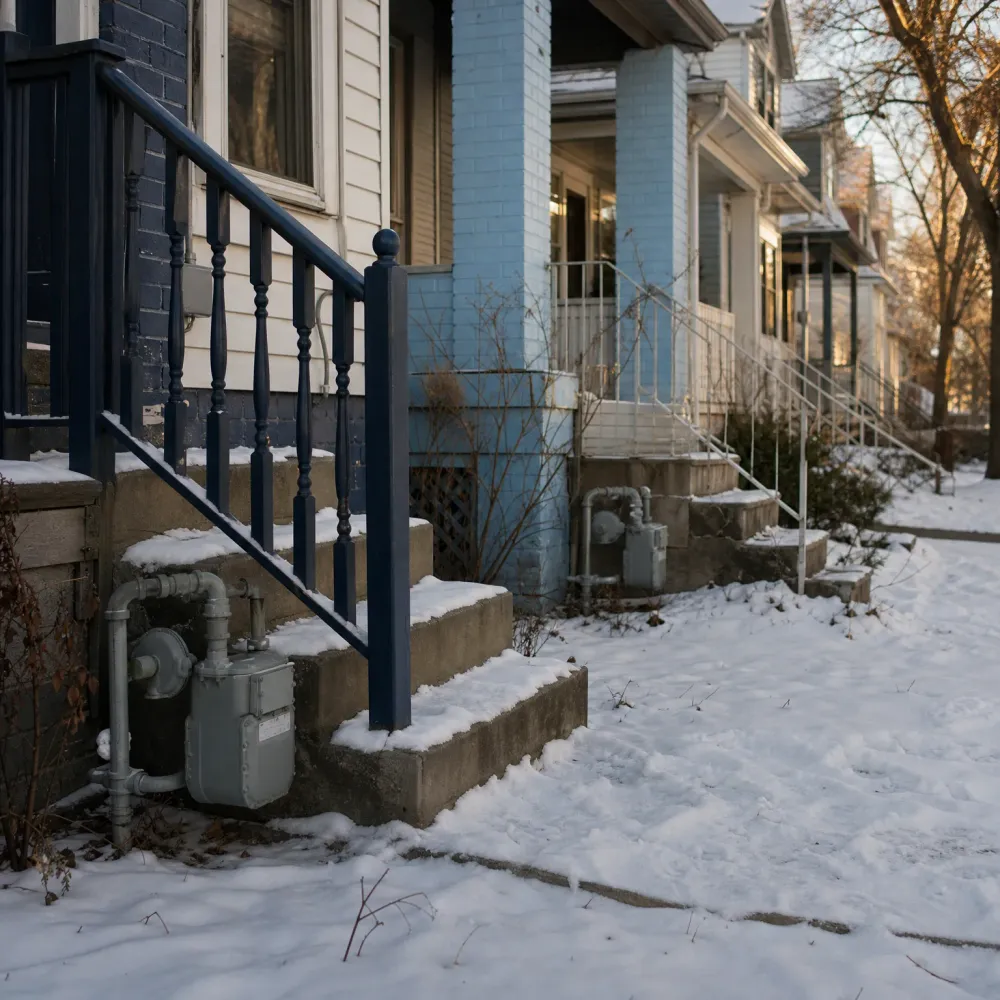
    Snow-covered front yards and concrete steps of adjacent houses, with a dark blue metal handrail in the foreground and exterior gas meters mounted beside the foundations.
  • Proven, simple, easy to get serviced

    Gas furnaces have heated homes for generations. Almost every HVAC tech knows them inside and out.

    A gloved hand holds a pleated air filter in front of a furnace and ductwork, next to blue shelving with baskets, a bin, and a small potted plant.
  • Pairs with any central AC

    The ductwork that delivers heat in winter delivers cool air in summer once an AC coil is added.

    A metal floor vent set in oak flooring beside a sheer white curtain and a dark blue cabinet, with sunlight casting shadows across the floor.

What winter here does to a heat pump

Winter is the long season in Wayne County, not the short one. Heat runs about eight months a year, October through May, against three months of cooling. Whatever you install is mostly a heating system that also cools, so judge it first on how it heats.

A standard heat pump starts losing ground before it gets truly cold. Below 40°F it puts out less heat than its rating says. Below about 35°F it often needs backup heat to make up the difference. The average overnight low here in December, January and February is 22°F, under both marks. About 125 nights a year here drop to freezing or below, roughly half the nights across the whole heating season, and every one of those nights is below both marks too.

That does not mean the house goes cold. A two-winter field test of cold-climate heat pumps in occupied homes found backup heat carried only a small share of the load between 0°F and 35°F, and the heat pump running on backup alone was rare even above 0°F. Wayne County sees 0°F or below about 6 nights a year, a small slice of the 125 freezing nights. The hard cold is rare here. The in-between cold, the freezing and just-below-freezing nights, is most of the winter, and that is the exact range where a standard heat pump's output and efficiency start to slip.

If you go with a heat pump here, the ENERGY STAR Cold Climate mark is the one to check for. To earn it a heat pump has to hold at least 1.75 units of heat per unit of electricity at 5°F and keep at least 70 percent of its 47°F capacity at that same temperature, verified by outside testing. A standard heat pump is not built to do either.
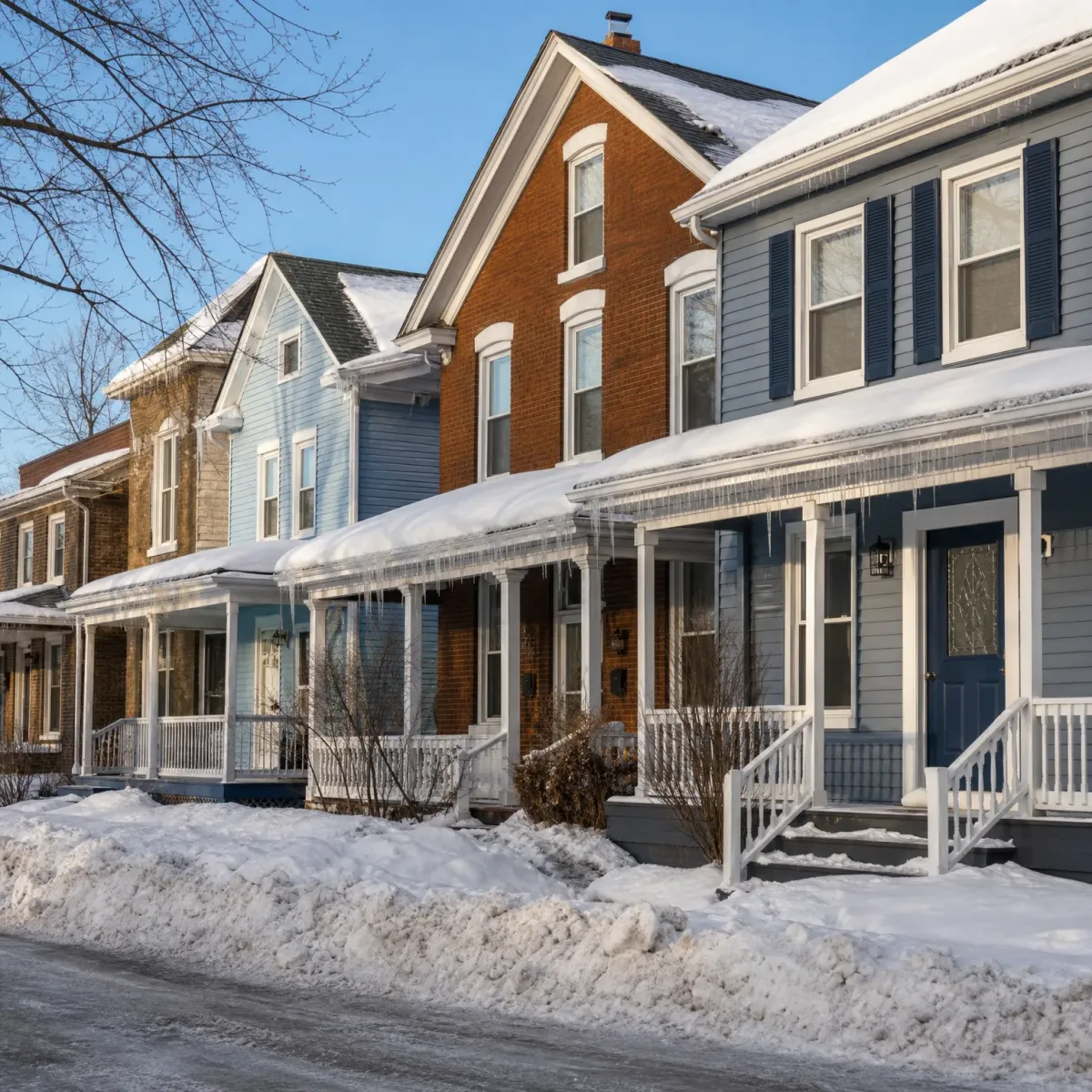
A row of two-story houses with covered front porches, one red brick and others with pale blue and gray siding, under snow-covered roofs with icicles, behind a plowed snowbank beside a bare road.

What it costs to run, and what's already in the walls

A gas furnace is cheaper to run here. At Indiana's prices, a federal-minimum heat pump makes 100,000 Btu of heat for $1.97 and a federal-minimum furnace makes the same heat for $1.12. That gap is the electricity rate against the gas rate, not a flaw in either machine.

That gap matters more here than in a lot of places, because the heating season is long. Eight months of heat means eight months of paying that difference every time the system runs, not three or four.

Gas is also what most homes in Wayne County already run on. Utility gas heats 51.4 percent of homes here, better than one in two. Electric heat is a little under one in three, propane heats about one in ten, and fuel oil heats fewer than one in ten. If your house already has a gas line sized for a furnace, that is most of the work a furnace install needs. A heat pump runs on electricity alone, no gas line required, which matters most if your house does not already heat with gas.

A furnace only heats. It has nothing to do for the three months a year you run cooling, so it has to be paired with a separate air conditioner. A heat pump heats and cools from the same system. That is one less piece of equipment to install and maintain, though it is still worth asking what central air a furnace would pair with before weighing the two on cost alone.

Sources: NOAA nClimDiv · NOAA 1991–2020 seasonal normals · Census ACS 2020–2024 · PNNL Building America guide · PNNL-37127 field study · ENERGY STAR product criteria · EIA SEDS 2024 · 10 CFR 430.32

Snow-covered wooden steps and white railing leading to a dark blue front door of a blue clapboard house, with a black snow shovel leaning against the wall.

Common questions about heat pumps and furnaces

  • Can a heat pump heat a house through an Indiana winter?

    It can, but not alone in most Wayne County homes. A standard heat pump loses capacity below 40°F and often needs backup heat below about 35°F, and the overnight low here averages 22°F through December, January and February. Cold-climate heat pumps hold up better in that range, but they still need a backup source for the coldest nights, and Wayne County sees about 6 nights a year at 0°F or below.

  • Do I need backup heat with a heat pump here?

    Most homes here need it. A standard heat pump's efficiency drops below about 35°F and its heat output falls short of its rating below 40°F. The overnight low in Wayne County averages 22°F across winter, and about 125 nights a year here hit freezing or below, so a heat pump is running under both marks most of the heating season.

  • Can I keep my furnace and add a heat pump?

    Yes, and in Wayne County it's a common setup. The heat pump carries the mild months, and the furnace takes over once it gets cold enough that the heat pump's output and efficiency fall off. Overnight lows here sit at 22°F on average through December, January and February, well past the point where a heat pump alone struggles.

  • Is a heat pump cheaper to run than a furnace in Wayne County?

    No, a furnace is cheaper to run here. A gas furnace costs $1.12 to make 100,000 Btu of heat in Wayne County, against $1.97 for a heat pump, both at Indiana's average fuel prices. Gas also heats more homes here than any other fuel, 51.4 percent, against 29.2 percent on electricity.