Gas is the default here
Just over half the homes in Wayne County heat with utility gas. If your house already has a gas line run to it, a new gas furnace is usually the straightforward replacement.
Takes about a minute. No obligation.
Just over half the homes in Wayne County heat with utility gas. If your house already has a gas line run to it, a new gas furnace is usually the straightforward replacement.
Electricity and propane each heat a smaller share of homes in the county. The fuel your furnace runs on has to match what's actually piped or wired to your house, so that's worth confirming before you settle on a system.

NOAA nClimDiv, 1991–2020 normals
Natural gas in Indiana ran $8.99 per million Btu in 2024.
A high-efficiency furnace costs more up front and takes longer to earn that back here, so pick for the fuel line and the fit, not just the efficiency rating.




Half the homes in Wayne County were built in 1960 or earlier. A house from that era wasn't built around the furnace sitting in it now. Additions get built, rooms get closed off, and the ductwork gets stretched or rerouted to match, so the layout on paper and the layout in the walls can be two different things. Whoever sizes the new furnace has to work from what's actually there. If your house came with its ducts already in place, it's worth finding out when they were last changed before you settle on a system.
Wayne County falls in climate zone 5A, a cool zone where the furnace carries most of the load. Any furnace installed has to meet the federal minimum of 80 percent AFUE. That floor holds until December 2028, when new furnaces will have to reach 95 percent AFUE. A system installed now still has to meet whatever the rules are at the time it's made, not the rules from years ago.
Find a contractorA load calculation, not the nameplate on the old furnace, should decide what size goes in. Pull the old unit out and the wrong number goes with it. If the ducts were rerouted somewhere along the way, a contractor who measures the rooms and the runs will land on a different size than one who just matches what's already sitting there.
The percentage on the label is how much of the fuel burned turns into heat, with the rest going out the flue. It says nothing about the ductwork carrying that heat around the house or how much the house loses once the air gets there. A high AFUE furnace paired with leaky ducts or an undersized return can still heat a house poorly.
AFUE is tested new and doesn't drift much with age the way a tune-up or a dirty filter might suggest. A furnace rated at a certain efficiency will burn gas at roughly that rate for as long as it runs clean, with the burner firing properly and the heat exchanger intact. What changes over the years is more about upkeep than the number stamped on the label.
Estimates for a typical Wayne County home, from EIA household energy data, Indiana fuel prices and NOAA climate normals. Your home will differ.
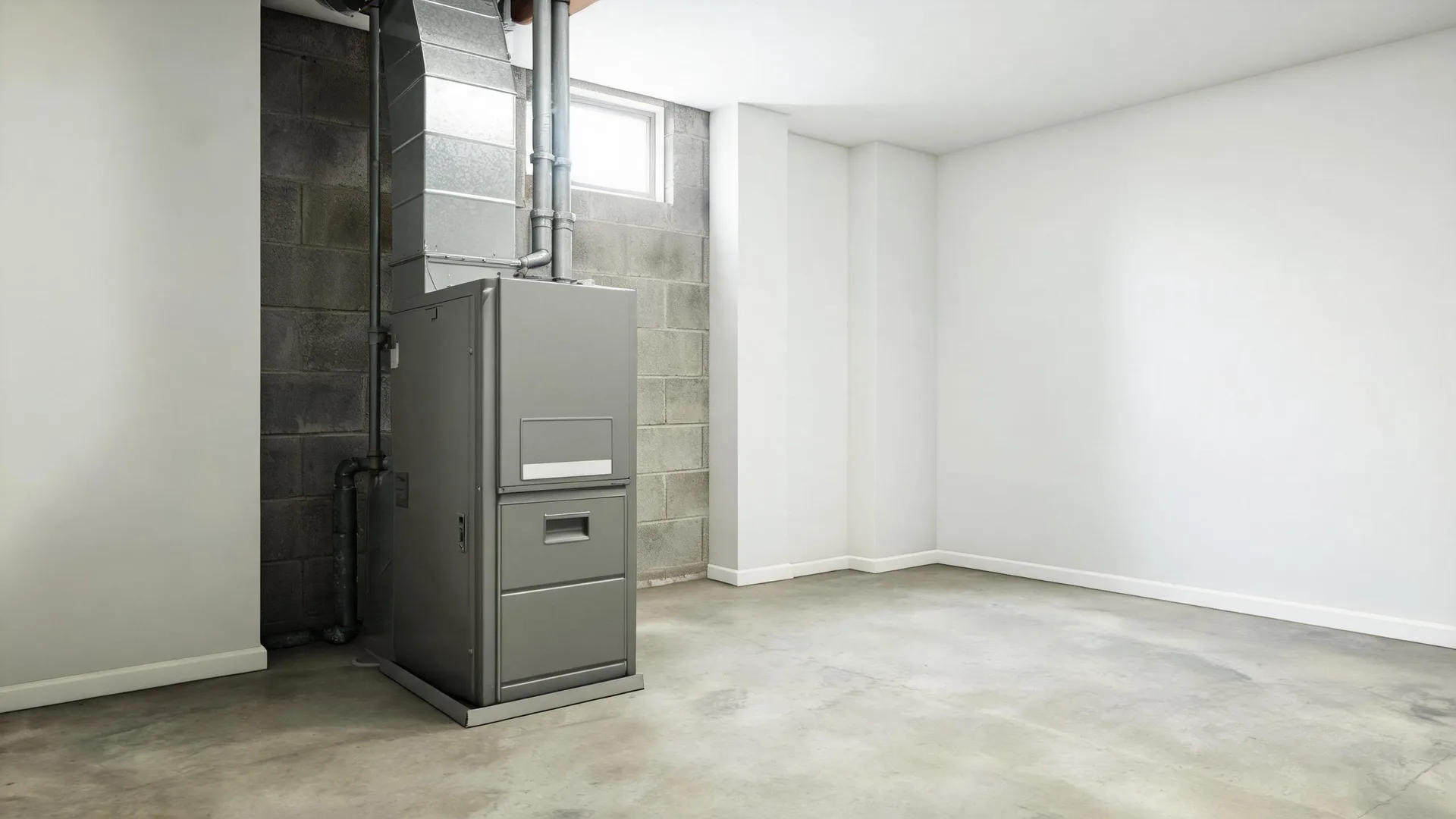
Installation day starts with the old furnace coming out, along with the flue pipe and whatever gas and electrical connections fed it. The new unit gets set, leveled, and connected to the ductwork, the gas line, the vent, and the electrical. Every joint in the gas line gets tested for leaks before anything is fired up. The vent pipe matters as much as the furnace itself. It has to be sized and sloped correctly so combustion gases actually leave the house instead of backing up. Once it's running, a tech checks the gas pressure, the temperature rise across the heat exchanger, and the airflow, and adjusts until each one falls in range. That last round of checks is what separates a furnace that's merely hooked up from one that's actually set to run the way it was designed to.