




A nighttime street view of several illuminated two-story red brick homes with front porches, flanked by a large tree.

Furnace Repair in Richmond, IN

Tell us about the job

Takes about a minute. No obligation.

RepairFurnace or heatingWayne County, IN
Step 1 of 2

What ZIP code is the job in?

September is a good month to get a furnace looked at here. Heat comes on in October and runs clear through May, eight months of work for one machine. The first cold snap is when a weak igniter or a worn blower motor finally gives out, because that's the first time all year the system runs long and hard. If yours struggled at the end of last season, that same part is still waiting to fail again, right when you need it most.

8 months
October through May, your furnace is on duty
22°F
the average winter night it heats against
51%
of homes here heat with gas, so most furnaces here burn gas
6 winter storms
in ten years, the nights a failure hurts most
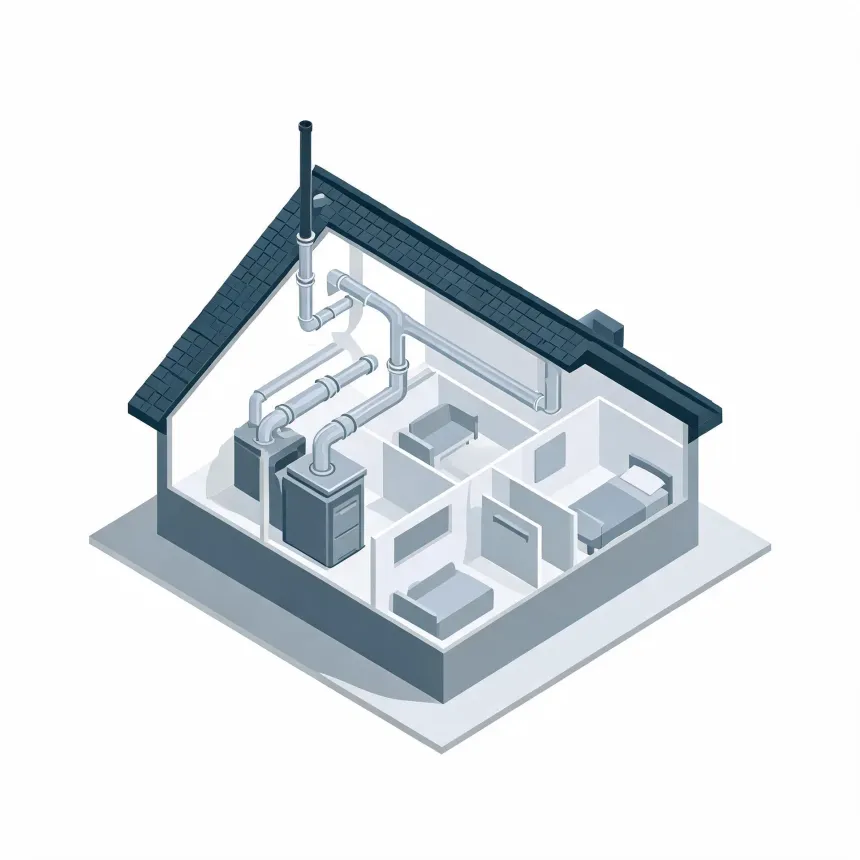
Isometric illustration of a cutaway house showing a furnace unit with ductwork and a flue pipe running through the interior rooms, which contain simple furniture.
Your furnace works hardest from November through March.

NOAA nClimDiv, 1991–2020 normals

Most furnace failures trace back to the igniter, the flame sensor, or the blower motor.

Replacing one worn part is a repair. Waiting until it takes the heat exchanger with it is not.

Half the furnaces in Wayne County are older than the homes' owners think

Half the homes here were built by 1960
Heat runs October through May
Winter nights average 22°F

A furnace that's struggling doesn't fail quietly. An igniter that's cracking still tries to light every cycle, and each attempt stresses it a little more until it stops working at all. A blower motor with worn bearings keeps turning, but the heat building up around it shortens whatever life it had left. Airflow problems are the same story. A restricted filter or blocked vent makes the heat exchanger run hotter than it's built for, and metal that's stressed that way over and over is how a crack starts. None of these get better by running the system again. The part that's already weak is the one doing the extra work.

Get it looked at early

Problems tend to show up in the first weeks of the season, when the load hits a part that was already weak.

Find a contractor
A gray high-efficiency gas furnace installed in an unfinished basement, surrounded by gas lines, a condensate drain, and sheet-metal ductwork.

What to check before you pick up the phone

Before you call, check the thermostat is set to heat and the setting is a few degrees above room temperature. Go to the furnace and look at the switch on the unit itself, and the one on the wall nearby that looks like a light switch. Either one left off will stop the whole system cold. Check the filter. If you can't see light through it, it's choking off airflow, and that alone will shut a furnace down or make it run in short bursts. Check your breaker panel for a tripped breaker. If the furnace has a standing pilot, see if it's lit. If it uses an igniter instead, look for a small window or opening where you can see it glow when the system calls for heat. No glow, no flame. Last thing, listen for what it's doing. A furnace that clicks but won't light is a different problem than one that runs but blows cold air. Tell the contractor which one you've got.

Short cycling wears out the part that's already weak

A furnace that fires up, runs briefly, then shuts off and starts again is losing a fight against something. It could be a cracked heat exchanger tripping a safety switch, a flame sensor too coated to hold a signal, or airflow choked somewhere in the system. It will keep doing this and get worse, not better, because each short cycle stresses the same weak part again.

A smell or a sound means stop and call, not wait and see

A burning dust smell at a cold start clears on its own. A smell that lingers, or smells like metal or gas rather than dust, does not. Sound works the same way. A soft whoosh when the burners light is normal. A bang or boom is not, and it usually means gas built up before it caught. Either one is worth shutting the system off and calling a contractor instead of running it again to see what happens.

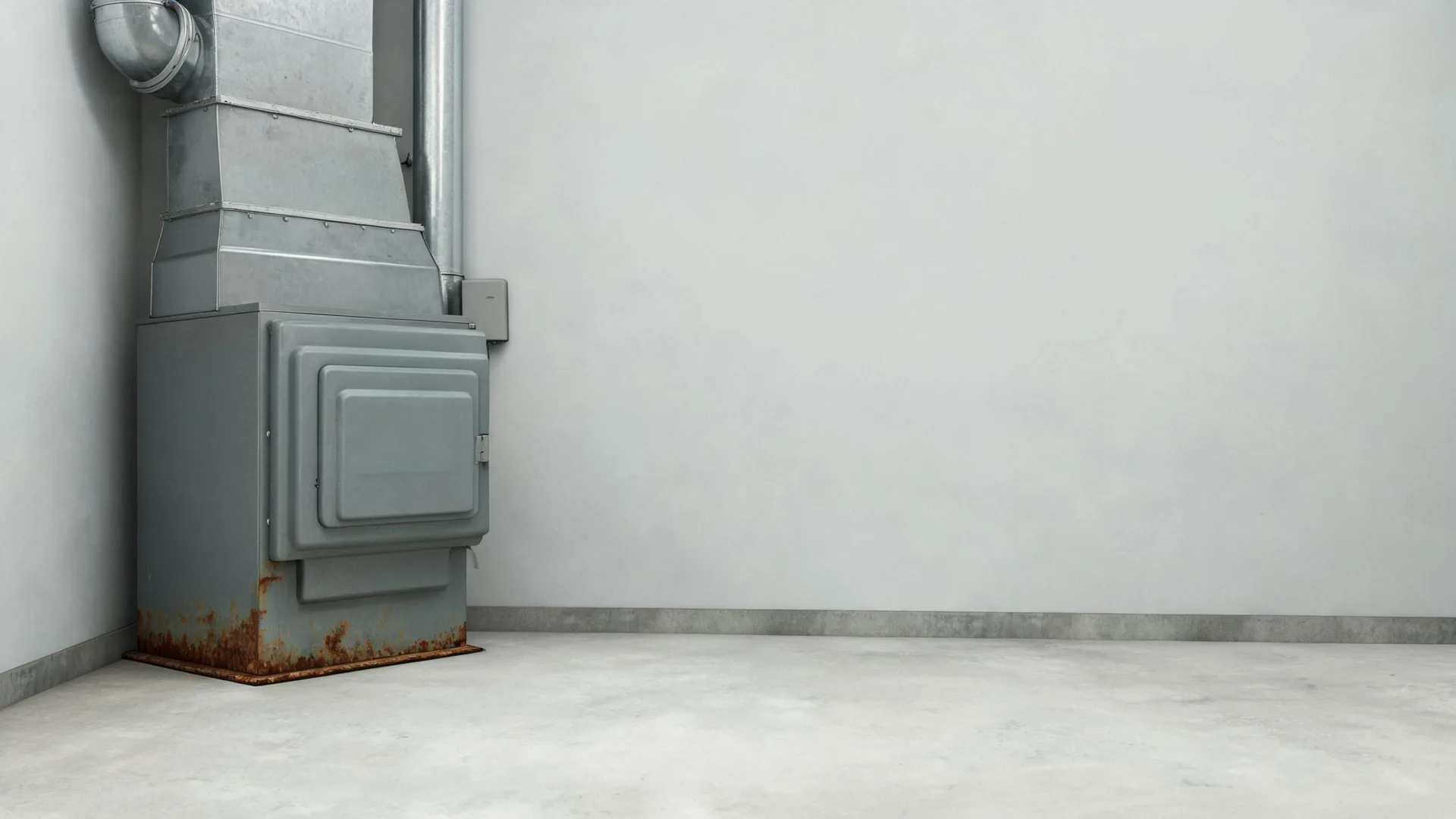
A gray forced-air furnace with sheet-metal ductwork stands in an unfinished basement with exposed wooden joists, concrete walls, and a hanging incandescent bulb.

A new furnace would cut about $110 a year off heating for a typical Wayne County home.

  • A new high-efficiency furnace$430 a year
  • An older furnace$540 a year

Estimates for a typical Wayne County home, compared with an older unit built to the previous federal minimum, from EIA household energy data, Indiana fuel prices and NOAA climate normals. Your home will differ.

Repair makes sense when one part has failed and the heat exchanger is sound.

Replacement makes sense when the heat exchanger is cracked or the furnace keeps needing parts.

A diagnostic visit starts before any panel comes off. The contractor asks what you heard, what you smelled, and when it happens. That narrows down where to look before a single tool comes out. Then the furnace comes apart enough to see the igniter, the flame sensor, and the blower, and each one gets tested rather than eyeballed. An igniter can look fine and still fail to heat up to temperature. A flame sensor can look clean and still not hold a signal once it's coated at the microscopic level. Gas pressure and airflow get checked too, because a part can test fine on its own and still fail from a system that's choking it or starving it. What ends the visit is a straight answer. Which part failed, why, and whether the rest of the system is sound enough to be worth fixing.