






A quiet residential street at dusk lined with illuminated two-story brick houses and mature trees.

Heat Pump Repair in Richmond, IN

Tell us about the job

Takes about a minute. No obligation.

RepairHeat PumpWayne County, IN
Step 1 of 2

What ZIP code is the job in?

Winter here is the real work for a heat pump. Zone 5A means heating is the bigger job most of the year, and overnight lows average 22°F through December, January and February. That's steady, moderate cold, not the deep freezes that push a system past what it's built for. A heat pump running in Richmond is doing the job it was designed to do, not fighting conditions beyond it. So when one starts short cycling or blowing cool air, the cause is usually something specific wearing out or failing, not the system reaching the end of what it can handle. That's the kind of problem a repair fixes.

8 months
October through May, your system heats
3 months
June through August, it cools
22°F
the average winter night it heats against
83°F
the average summer afternoon it cools against
Isometric cutaway illustration of a gray house showing interior rooms, a central air handler with ducts in the attic, and refrigerant lines running to an outdoor condenser unit beside the building.
Your system heats October through May and cools June through August.

NOAA nClimDiv, 1991–2020 normals

Heat in Richmond starts up in October, after the system sat idle since May.

A part that was already failing often gives out in the first cold weeks of October, when the heat pump has to work again.

Half the homes in Wayne County were built by 1960. The heat pump inside is probably much newer

Half the homes here were built by 1960
68 damaging wind events from 2015 to 2024
14 hail events from 2015 to 2024

Electricity in Indiana ran 14.77 cents per kilowatthour in 2024, and a heat pump leans on electricity more than a furnace does since it's the whole system, not just a blower. A unit that's short cycling or running constantly to hold temperature is pulling power the whole time it does that, not just when it's heating right. That shows up on the bill before most people think to call someone. Fixing what's actually wrong, a bad capacitor, a stuck reversing valve, a low charge, stops that drain. Waiting doesn't make the repair cheaper. It just means paying more each month for a system that isn't doing its job.

In Richmond, a struggling heat pump is usually fixable

A heat pump that isn't fighting extreme cold all winter holds up well here, which means a system acting up is more likely dealing with one worn part than a system at the end of its life. That's worth having a contractor look at and fix, not replace.

Find a contractor
A man seen from behind in a dark jacket and tan work pants climbs wooden porch steps toward a dark blue front door, carrying a worn canvas tool bag in his right hand, with a potted shrub in a blue planter beside the entry.
A gray heat pump outdoor unit mounted on a concrete pad next to a residential house with lap siding and stone accents.

What actually wears out

A heat pump runs most of the year, not just through the cold months, and that extra run time is why certain parts wear before others. The capacitor usually goes first. It gives the compressor and fan motors the jolt they need to start, and after enough start cycles it weakens until it can't do that reliably, which shows up as short cycling. The reversing valve fails differently. It has to slide back and forth to switch the system between heating and cooling, and over years of that the seals wear until it sticks partway, leaving the system stuck in one mode. The defrost control board senses frost on the outdoor coil and runs a brief cycle to clear it. When that board or its sensor fails, the coil either keeps icing over or the system defrosts too often and can't hold heat. Fan motors wear too, usually the bearings first, and a slow or seized fan can't move air across the coil, which causes the same icing problems without anything electrical being wrong. Each of these is one part doing its job until it can't, which is why a tech can usually point to a single component once they've looked at the unit.

What you'll actually notice first

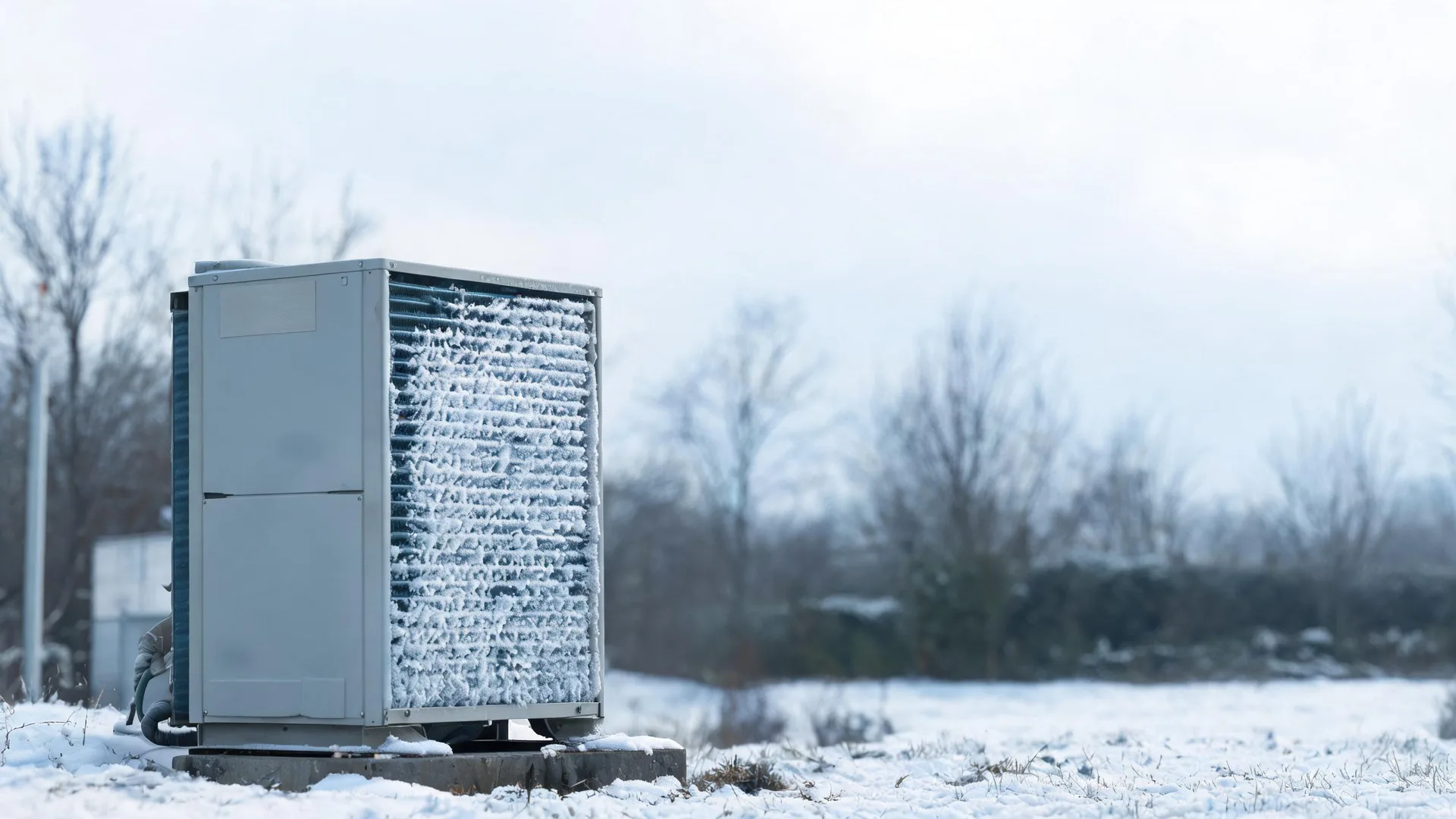
A heat pump in trouble shows up in ordinary ways. Air coming out of the vents feels cool instead of warm, or it blows warm for a while then quits. The outdoor unit runs on and off in short bursts instead of settling into a steady cycle. Sometimes it ices over and stays that way, the coil coated in frost even though the system is running. Rooms that used to heat evenly start running cold in spots. None of this takes a gauge to notice. You feel it in the house.
What those signs are telling you

Short cycling usually points to a bad capacitor or a thermostat sensor giving the system wrong information. Warm air that turns cool or never shows up at all often means the reversing valve is stuck, so the system can't switch properly between heating and cooling. Ice that builds up and doesn't melt off during the defrost cycle points to a failing defrost control board or a fan that's not clearing the coil. Each of these is a specific part doing the wrong thing, and a contractor can usually trace the symptom straight to the cause once they're looking at the unit.

Before anyone comes out, there are a few things worth checking yourself. Look at the thermostat first. Make sure it's set to heat, not auto or cool, and that the set temperature is actually above room temperature. Check the circuit breaker for the outdoor unit and the indoor air handler, since a tripped breaker will stop the system cold with no other warning. Walk outside and look at the outdoor unit itself. If snow or ice has built up around the base or packed in against the coil, it can't move air through properly, and clearing it away sometimes solves the problem on its own. Check the air filter too. A filter clogged with dust chokes off airflow and can make the system ice up or shut down to protect itself. None of this takes tools, just a few minutes of looking before you pick up the phone.

A diagnostic starts with the thermostat and the readings at the unit, not guesswork. The tech checks the temperature split between the air going into the system and the air coming out, since that number says a lot about whether the unit is heating right. Refrigerant pressure gets checked too, along with whether the reversing valve actually switches when it's told to. From there it's electrical testing. The capacitor, the contactor, the control board each get tested for whether they're holding a charge or drawing power the way they should. Outside, the tech checks the defrost cycle itself, watching whether the unit senses ice on the coil and clears it the way it's built to. Most of this takes a gauge set and a multimeter, not guesswork, and it narrows the problem down to one failing part. Once that part is identified, the tech can say plainly what's wrong and whether it's worth fixing.