




A row of dark-sided single-story houses behind a tall trimmed hedge and a large tree, with a mown lawn and a paved path under an overcast sky.

Furnace Maintenance in Terre Haute, IN

Tell us about the job

Takes about a minute. No obligation.

Tune-up, service, or cleaningFurnace or heatingVigo County, IN
Step 1 of 2

What ZIP code is the job in?

Most homes around Terre Haute heat with electricity, and that electricity runs $43.28 per million Btu, straight from EIA numbers for this state. A furnace that's skipping maintenance does not fail outright. It just works harder for the same heat. A dirty flame sensor, a clogged filter, a blower pulling against buildup, any of that makes the system run longer to hit the temperature on your thermostat. Longer runtime against a price like that adds up fast over a cold winter. A furnace that is clean and properly set up gets you back to the heat you want sooner, and shuts off.

Gas heats 44.3% of homes around Terre Haute.

That furnace needs its burner and venting checked every year, not just a fresh filter.

Seven months of heat starts in October. Have it checked in September.

Heat runs October through April
Winter nights average 23°F
Climate zone 4A

Half the homes in Vigo County were built in 1968 or earlier. A furnace that old has usually been replaced at least once, but the ductwork and the wiring feeding it often date back to the house itself, and that does not show from the thermostat. A yearly check is how a contractor catches a cracked heat exchanger or a loose connection while it is still small. Newer construction hides less. An older house asks for a closer look every year, not just when something starts sounding wrong.

A furnace running clean costs less to run

A furnace that's working harder than it needs to runs that cost up every day it's cold. A tune-up gets the burner, the blower and the airflow back to doing their job, so the system isn't fighting itself to hit the thermostat.

Find a contractor
A man in a dark long-sleeved shirt and tan work pants, seen from behind, carries a canvas tool bag up porch steps toward a blue paneled front door of a house with light lap siding and a potted flowering plant.
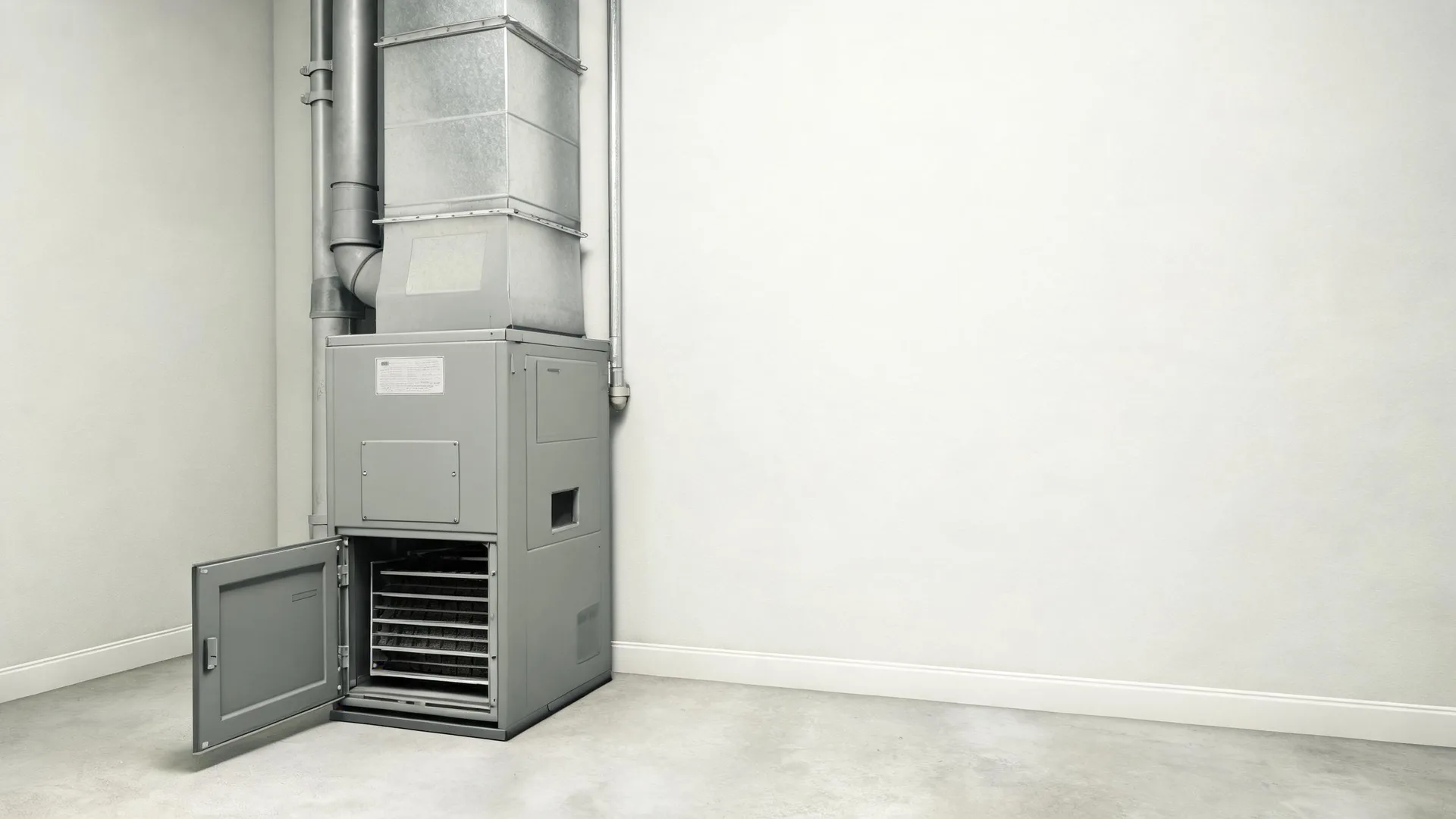
A gray gas furnace with attached ductwork and piping installed in an unfinished concrete basement.

What Running for Months Does to the Filter, the Coil and the Drain

A furnace pulls air across a filter before it ever reaches the heat exchanger. Block that filter with dust and the blower has to work harder to move the same air, and less of it gets through. That strain doesn't stay quiet. A blower working against resistance runs longer and wears faster, and the heat exchanger behind it can run hotter than it should. On the other side, where the furnace is the type that drains condensate, that line only matters once the furnace actually starts cycling regularly. A drain that sat dry most of the year can have a clog nobody noticed, and the first cold snap is when it shows up, usually as a furnace that locks out and won't fire. None of this depends on how old the unit is. It's just what happens to a machine that moves air and burns fuel for months at a stretch without anyone checking the parts that make both of those things possible.

Change the filter

A dirty filter is the one thing worth checking without waiting for a visit. Pull it and hold it up to the light. If you can't see through it, swap it. A filter that's choked makes the blower pull harder and chokes off the airflow the burner needs to work right.
Leave the rest alone

The burner, the flame sensor, the heat exchanger and the venting are not homeowner jobs. Opening the furnace cabinet to poke at anything past the filter risks a connection going back together wrong. If the flame looks off color, or you smell something when it kicks on, that's a reason to call, not a reason to look closer yourself.

A quick tune-up means someone swaps the filter, glances at the flame through the sight glass, and packs up. A thorough one means the burner assembly comes out for a real look, not just a peek. The flame sensor gets cleaned or replaced, since a coated sensor is one of the most common reasons a furnace shuts itself off mid-cycle. The blower wheel gets checked for dust buildup on the blades, which throws off airflow even when the filter is clean. The heat exchanger gets inspected for cracks or corrosion, because that part failing is a safety issue, not just a performance one. Someone also checks the connections at the furnace itself, tightens what has worked loose, and confirms the system is venting the way it should. If the visit is over before any panel past the filter comes off, that was the quick version.

A real tune-up starts with the furnace off and the panels open, not a quick look with the power running. The igniter gets tested under its own power draw, since one that lights the burner fine on a bench can still fail once it's pulling current in the cabinet. Gas pressure gets checked and set to the manufacturer's number for that furnace, because pressure that drifts high or low changes how clean the burner flame actually looks. The condensate line gets checked for a clog if the furnace is the type that drains one, since a blocked line is a common reason a furnace locks itself out and refuses to start. Belts don't factor into any of this on most furnaces built in the last few decades; the blower motor drives the wheel directly, so that worn-belt check some people expect just doesn't apply. The last step is a full cycle, start to shutoff, watching that everything that turned on also turns back off the way it should.