





An unfinished concrete basement containing a gas furnace with sheet-metal ductwork, utility shelving, and exposed overhead joists.

Furnace Repair in Hammond, IN

Tell us about the job

Takes about a minute. No obligation.

RepairFurnace or heatingLake County, IN
Step 1 of 2

What ZIP code is the job in?

Furnaces in Hammond run from October through May, close to eight months straight. That overnight low averages 20°F across December, January and February, so the burner is firing for hours at a stretch most winter nights. A furnace built for occasional use doesn't see that kind of load anywhere milder. The igniter, the blower motor, the heat exchanger, all of it logs more hours here than it would a few states south. When something starts acting up partway through a winter like that, it's usually not bad luck. It's a part that's been working harder than it was built for, finally showing it.

8 months
October through May, your furnace is on duty
20°F
the average winter night it heats against
86%
of homes here heat with gas, so most furnaces here burn gas
11 winter storms
in ten years, the nights a failure hurts most
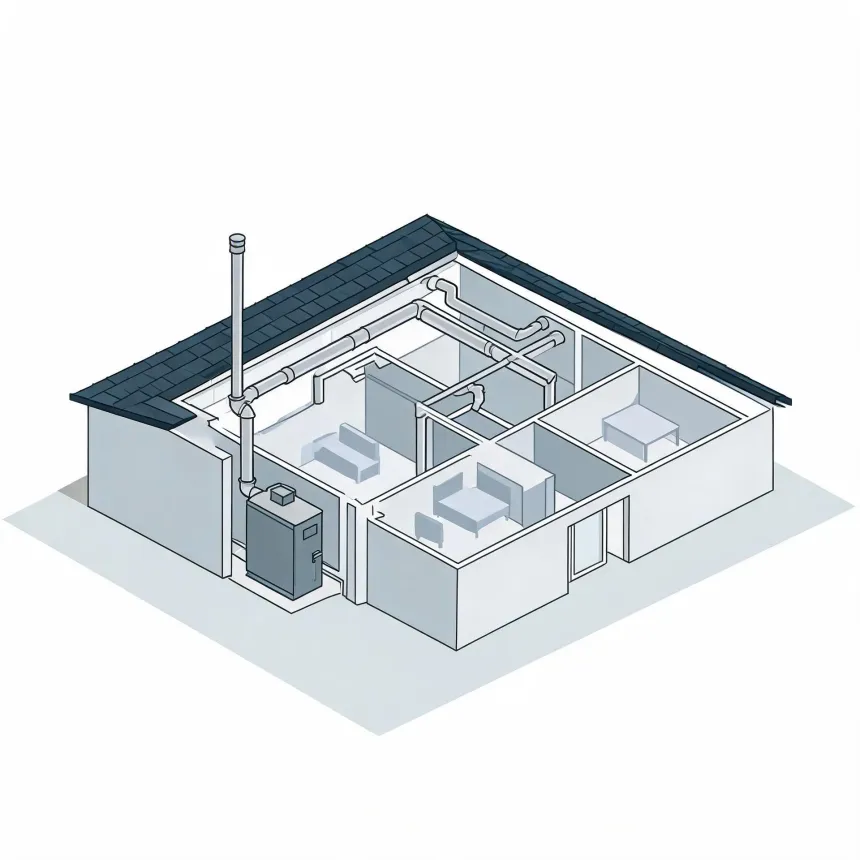
Isometric line illustration of a cutaway single-story house showing interior rooms with furniture, ceiling ductwork, and an exterior furnace unit with a tall flue pipe.
Your furnace works hardest from November through March.

NOAA nClimDiv, 1991–2020 normals

Half the homes in Hammond were built in 1968 or earlier.

A furnace in a house that old has likely been replaced at least once, so a repair call now is also the moment to ask how much life is left in the one that's in there.

October is when the weak part finally gives out

Heat runs October through May
Winter nights average 20°F
Climate zone 5A

A diagnostic call starts with the complaint. Not heating at all. Short cycling. A smell on startup. A noise that wasn't there before. The tech asks when it happens and how often before touching anything. Then comes the sequence. Check the thermostat call. Check for power at the board. Read any fault code blinking on the control panel. Then move to the part that code points to. Flame sensor, igniter, pressure switch, inducer motor, each one gets tested in place rather than swapped on a guess. A dirty flame sensor reads different from a cracked one, and the meter shows which it is. By the end the tech can usually say what failed, why it failed, and whether it's a part worth replacing or a sign the whole unit is wearing out.

Have it checked before the cold asks more of it

Get the furnace looked at before the next cold stretch asks more of it. A straight diagnosis now shows whether this is one worn part or the unit telling you it's done.

Find a contractor
A man in a dark long-sleeved shirt and tan work pants, seen from behind, carries a canvas tool bag up porch steps toward a blue front door beside a potted shrub.
A gray gas furnace with attached ductwork and piping installed in an unfinished concrete basement.

What you can check before you pick up the phone

Before anyone comes out, there's a few things worth checking yourself. Start with the thermostat. Make sure it's set to heat, not fan, and the temperature is set above room temperature. Dead batteries in the thermostat will stop a furnace cold, and that one's easy to fix yourself. Next, check the filter. Pull it out and hold it up to a light. If you can't see light through it, it's choking off airflow, and that alone can cause a furnace to overheat and shut itself down. Then go look at the furnace itself. Most have a door or panel that has to be seated right and latched for the unit to run at all. It's a safety switch, not a suggestion. Check the breaker it's on, and if it's tripped, reset it once. If it trips again, stop and leave that one alone. Last, look at the vent pipe outside where it exits the house. If it's blocked by anything, that's reason enough for the furnace not to fire, and it's not something to clear and forget about. Past that point you're into the gas valve, the igniter, the control board, and those aren't safe or useful to poke at without the right test equipment.

Most failures start with ignition

The igniter and flame sensor cycle on and off with every heat call, more than any other part in the furnace. The igniter is a thin element that gets brittle with age and eventually cracks. The flame sensor just gets dirty, a film builds up on the rod and it stops reading the flame right. Both cause the same complaint, the furnace tries to start and then shuts itself off.

The blower motor wears from the other direction

A blower motor runs anytime air is moving, heating or just the fan, so it logs hours even in mild weather. Bearings dry out, the motor starts running hot, and a furnace with a dying blower often still ignites fine but moves less air or makes a new noise doing it. Catching it early is a bearing problem. Ignoring it usually ends with the motor seizing.

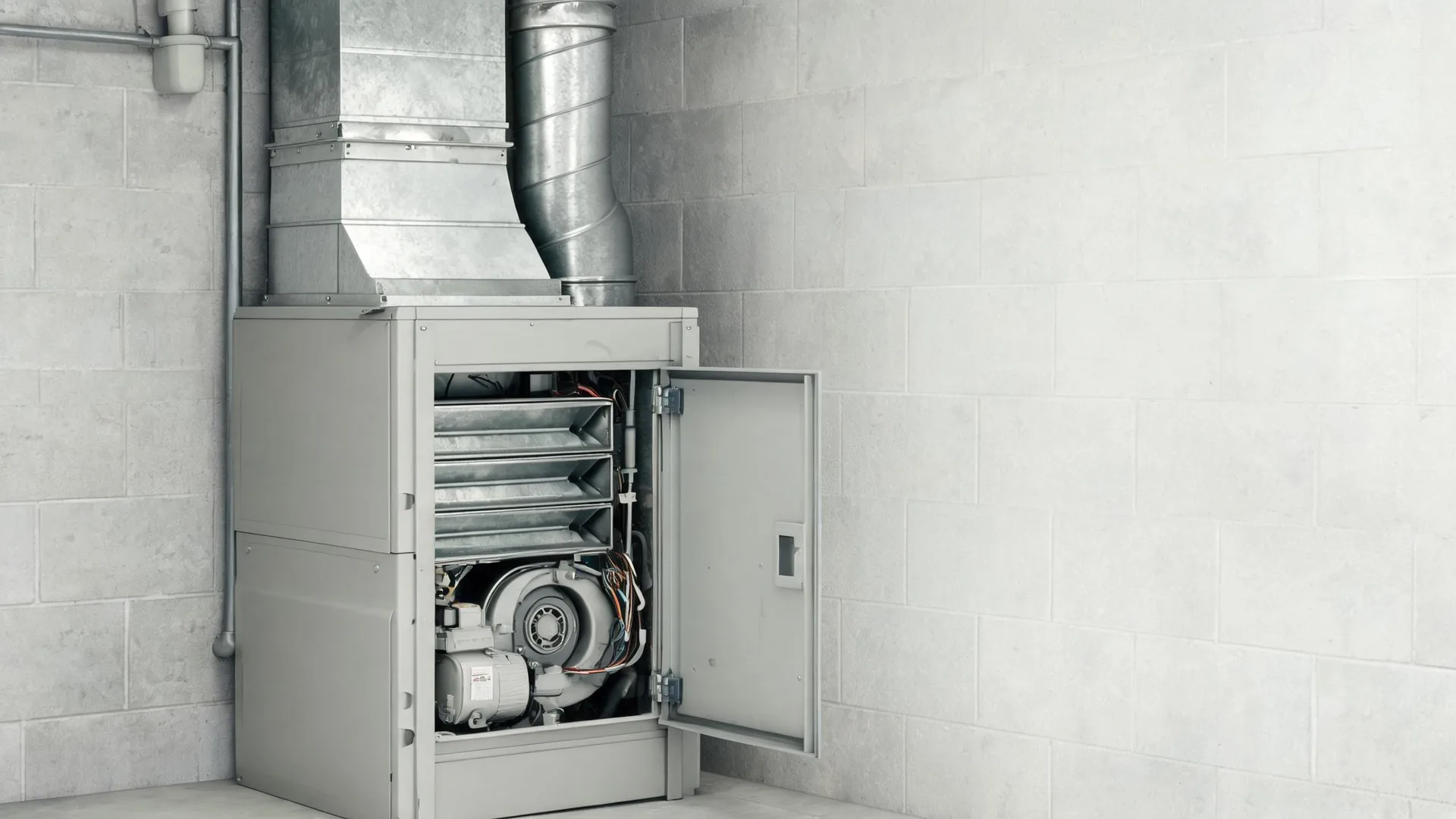
An unfinished basement containing a gas furnace with ductwork in the foreground and miscellaneous stored items along the far concrete wall.

A new furnace would cut about $110 a year off heating for a typical Lake County home.

  • A new high-efficiency furnace$470 a year
  • An older furnace$580 a year

Estimates for a typical Lake County home, compared with an older unit built to the previous federal minimum, from EIA household energy data, Indiana fuel prices and NOAA climate normals. Your home will differ.

Repair makes sense when one part has failed and the heat exchanger is sound.

Replacement makes sense when the heat exchanger is cracked or the furnace keeps needing parts.

A repair is worth doing when the part that failed is one part and the rest of the furnace is still sound. A cracked igniter or a dirty flame sensor doesn't say anything about the heat exchanger or the blower motor sitting next to it. Swap the failed part, and a furnace that's otherwise in good shape goes back to running like it did before. The harder call is the furnace that's failed more than once in the same season, or one where the tech finds rust or scaling on the burner assembly while looking at something else. That's not one part wearing out, that's the unit getting old all at once. A heat exchanger that's cracked isn't a repair at all, it's a safety problem, because that's the part keeping exhaust out of the air moving through the house. At that point the question isn't whether the furnace can be fixed. It's whether it's worth fixing again a year from now.