
Heat pump frozen over in Michigan City, IN

RepairHeat PumpLaPorte County, IN
Step 1 of 2

What ZIP code is the job in?

Why is my heat pump frozen over?

You went out and found the outdoor unit coated in ice, maybe the whole cabinet, maybe just the coil. A little frost in deep winter is normal, but when the unit looks frozen solid and the house isn't heating right, something is keeping it from doing its own defrost. You want to know if this is serious or something that fixes itself.

Ice means it can't finish its defrost cycle

A heat pump frosts over in cold weather by design, then runs a defrost cycle to melt it off before it builds up. When you see heavy ice instead, something is stopping that cycle: a failed defrost control board, a bad sensor that isn't telling the system how cold the coil is, a stuck reversing valve, or a fan motor that's slowed down and letting frost pile up faster than normal. LaPorte County winters push a heat pump into defrost often, so a system that's already struggling gets fewer chances to catch up. Left alone, the ice blocks airflow across the coil, the system works harder for less heat, and running it in that state can damage the compressor.

A gray outdoor condenser unit on a concrete pad beside a house with horizontal lap siding, with a metal disconnect box and refrigerant lines on the wall, river rock and mulch to the sides, and a green shrub at right.

Normal winter frost

Your heat pump should look like this most days: clean cabinet, clear fins, maybe a thin layer of frost that melts off during the defrost cycle. Air moves through it freely. If yours looks like this and the house is still warm, it's working the way it's supposed to.


A dirty outdoor air conditioner condenser unit with debris on its coil grille, sitting on a concrete pad beside a light-colored horizontal siding wall, with bare dirt ground in front and a shrub at right.

Iced over and struggling

This is what trouble looks like. Ice has built up over the fins and grille, airflow is cut off, and the unit can't pull heat from outside anymore. Left alone, it keeps running without doing its job, and the house loses ground.

Normal Defrost or a Failing One

Defrost Cycle Working

  • The unit runs its own defrost cycle automatically, usually every 30 to 90 minutes in cold, humid weather.
  • Steam or heavy vapor rising off the outdoor unit during defrost is normal and means the cycle is doing its job.
  • The ice melts off within 10 to 15 minutes and the fins and coil are clear again once the cycle ends.
  • Warm air still comes from your vents during and after the cycle, even if it dips cooler for a few minutes.
  • The outdoor fan stops during defrost, then starts back up once the coil is clear.
  • A thin, even coat of frost across the coil is normal and clears on its own by the next cycle.

Defrost Cycle Failing

  • Ice builds up across multiple cycles instead of clearing, so the coating gets thicker day over day.
  • The outdoor fan stays frozen in place and won't turn even though the unit is drawing power.
  • The house keeps losing ground on temperature no matter how long the system runs.
  • Ice forms low around the base of the cabinet or climbs up through the fins instead of staying on the coil surface.
  • The system runs constantly without ever cycling off, which points to a stuck reversing valve or a failed defrost control board.
  • Auxiliary or backup heat is running most of the time, a sign the heat pump itself has stopped contributing much warmth.
A white outdoor heat pump unit on rubber feet atop a concrete pad beside a light stucco wall, with gray siding and a small shrub at the left edge.

Why ice beats a heat pump in winter

A heat pump moves heat out of cold outdoor air, and that process pulls moisture out of the air right at the coil. In LaPorte County winters, that moisture freezes fast. The defrost cycle is built to handle normal frost. When something else is wrong, airflow drops, the coil gets colder than it should, and ice builds faster than defrost can clear it. Once that starts, it feeds itself.

A gray outdoor heat pump unit with a large circular fan grille sits on a concrete pad beside a house with horizontal siding, surrounded by gravel and grass, with a conduit and junction box on the wall.

What a blocked coil does to your house

Ice on the coil acts like a blanket. It stops the refrigerant inside from picking up heat from the outside air, so the system works harder and delivers less warmth. Keep running it like that and the compressor takes the strain, since it's trying to do a job the iced-up coil won't let it finish. That's the difference between a quick fix now and a bigger repair later.

Power here costs 19.19 cents per kilowatt-hour

At 19.19 cents per kilowatt-hour, a heat pump that's iced over and struggling is already working harder than it should, and that shows up fast on your bill. A frozen coil blocks airflow, so the system draws power without heating the house the way it's supposed to.

EIA-861 2025

A smiling bearded man in a dark blue henley shirt sits leaning back on a light grey sofa in a living room, with a bowl of popcorn on a wooden coffee table and a large window behind him.
A bearded man in a dark quarter-zip sweater sits smiling on a brown sofa in a dimly lit living room, with a bowl of popcorn and a mug on a table in the foreground and a potted plant near a window behind him.
A smiling man with graying dark hair and a beard, wearing an olive sweater, sits on a sofa in a living room beside a bowl of popcorn on a wooden table.
A smiling man in a dark green henley shirt sits on a gray sofa in a living room with a lit table lamp, wooden shelving unit, and a bowl of popcorn in the foreground.

Stop chasing a heat pump pro

A frozen heat pump doesn't fix itself, and running it while it's iced over just burns power you're already paying too much for. Once a coil is blocked, something in the system isn't shutting the ice down the way it should, and that's a repair job, not something to wait out. With Michigan City winters, waiting usually means more ice, not less, and a house that keeps losing ground on heat. Finding someone to look at it is the part that eats your evening: searching around, calling a few places, explaining what the unit looks like each time, then sitting with quotes trying to guess who's worth trusting. You don't have to do any of that tonight. Send the request and that work is off your plate. Your heat pump still needs a licensed hand on it, but figuring out whose hand that is stops being your problem the moment you hit send.

What it does to your house

While that coil stays blocked, the heat pump can't move warm air through your house the way it should. You'll notice rooms running cooler than the thermostat says, or the system running long stretches without the house ever feeling warm. If your heat pump is the only heat source, that gap gets hard to ignore fast once it's 20 degrees outside. Some homes in LaPorte County have a furnace to fall back on, but if yours doesn't, a frozen unit means the house loses ground on heat until someone deals with the ice itself, not just the thermostat setting.

What it does to your bill

A heat pump fighting a frozen coil still draws power the whole time it runs, it just isn't turning that power into heat the way it normally would. The compressor keeps working, the fan keeps pulling air through blocked fins, and none of that effort reaches your living room. At 19.19 cents per kilowatt-hour, that's not a small drag. The longer the ice stays, the more the unit cycles trying to catch up, and the more that shows up on the next bill without the house ever feeling any warmer for it.

How cold does it get here, and how long does your heat pump have to handle it?

  • Winter nights average 20°F

    Overnight lows here average 20°F through December, January and February, so your heat pump is pulling heat from air that's already near freezing most winter nights.

  • Heat runs October through May

    Heat runs October through May in LaPorte County, about eight months, which means eight months where a frozen coil isn't a one-time problem but a repeat one.

  • Cooling runs June through August

    Cooling only runs June through August here, so the same unit spends far more of the year defrosting and heating than it ever spends cooling.

NOAA nClimDiv 1991-2020

A heat pump coated in ice and a house that isn't heating right means the defrost cycle has stopped doing its job. That's not something that clears up on its own, and running the system while it sits frozen just adds to a power bill that's already high at 19.19 cents per kilowatt-hour. The fix is a repair call, not a wait-and-see. Rather than searching through contractors, calling a few, explaining the ice and the cold rooms over and over, and sorting through quotes to see who actually answers the phone this time of year, you can send one form and let someone else carry that search. You still know your own house best: if the coil looks like more than a thin, normal frost and the rooms aren't holding heat, that's your answer. What's left is getting a licensed contractor out to clear the ice and find out why the defrost cycle let it get there in the first place.

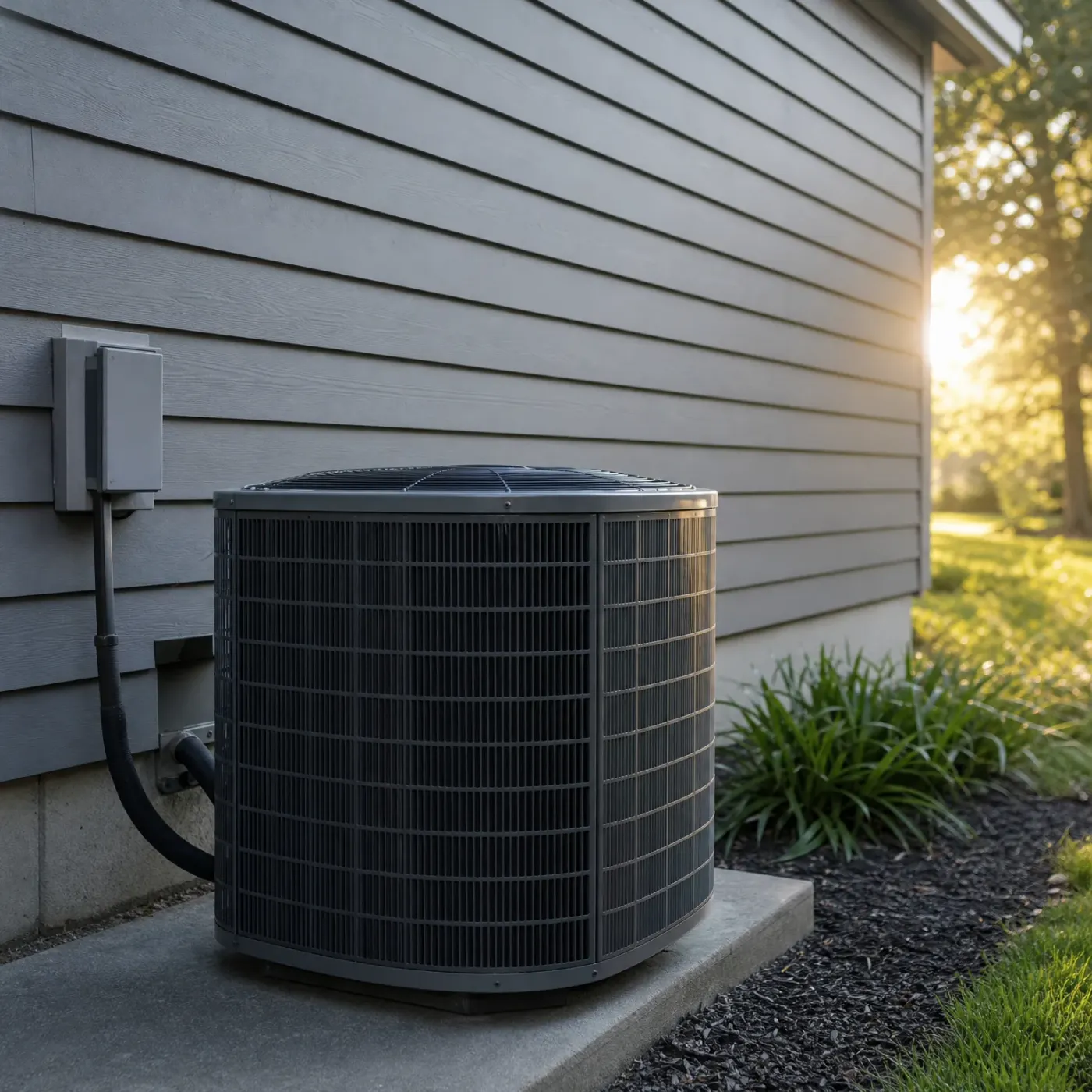
An outdoor air conditioner condenser unit on a concrete pad beside a gray horizontal-lap-sided house, with an electrical disconnect box and refrigerant line on the wall, grass, shrubs and a tree with low sun behind.

Hand off the heat pump problem

Hand off the search

Explain the job once and skip repeating it on every call.

There's no charge for the request.