




A quiet suburban street at twilight featuring two-story brick homes with illuminated windows and large trees lining the sidewalk.

Heat Pump Installation in Greenfield, IN

Tell us about the job

Takes about a minute. No obligation.

New system or replacementHeat PumpHancock County, IN
Step 1 of 2

What ZIP code is the job in?

Indiana homes paid 14.77 cents per kilowatthour in 2024. A heat pump runs on that rate every month, all winter and all summer both, since it's the same machine doing both jobs. That's why the HSPF2 and SEER2 numbers on the unit you pick matter more here than in a state with cheaper power. A few points of difference between two models gets multiplied by that rate on every bill, month after month.

8 months
October through May, your system heats
3 months
June through August, it cools
23°F
the average winter night it heats against
83°F
the average summer afternoon it cools against
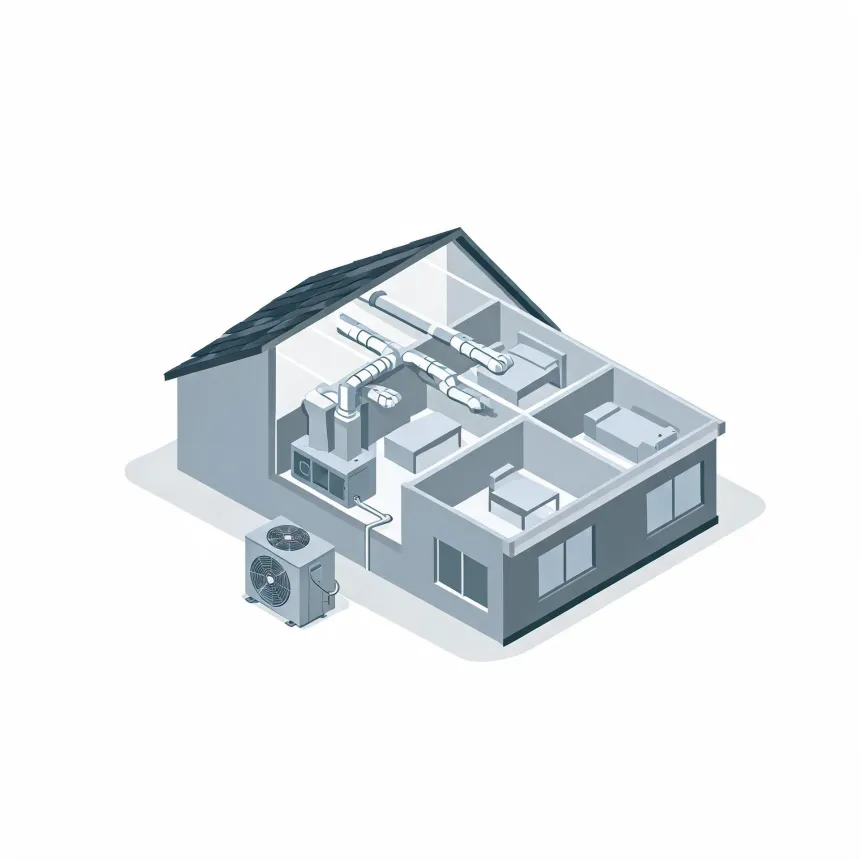
Isometric grayscale illustration of a cutaway house showing interior rooms, ceiling ductwork connected to an indoor air handler, and an outdoor condenser unit beside the exterior wall.
Your system heats October through May and cools June through August.

NOAA nClimDiv, 1991–2020 normals

Heat here starts in October, and a heat pump installed in September has a full month to get checked out before it has to work.

Wait until the first cold snap and you're choosing a system the same week you need it running.

A cold winter here, but nothing that wears a heat pump out

53 damaging wind events from 2015 to 2024
24 hail events from 2015 to 2024
11 winter storms from 2015 to 2024

Gas heats 60.6% of homes in Hancock County, more than anything else. Most of those furnaces already have ducts running through the house, and a heat pump uses the same ducts. That makes dual fuel the common path here. The heat pump handles the mild days and the gas furnace takes over when it gets cold enough to need it. Electricity heats 30.8% of homes, and those are the simpler case. A heat pump there just replaces the electric furnace or baseboard, same fuel, nothing to hand off to. What's already in the house decides which setup fits, not the other way around.

What a heat pump here has to meet, and what it can earn back

Any split-system heat pump installed here has to hit 14.3 SEER2 and 7.5 HSPF2, the federal minimum as of January 2023. That floor exists because Hancock County sits in zone 5A, where heating carries the bigger load. A federal tax credit is available on top of that for qualifying equipment.

Find a contractor
A gray air-source heat pump mounted on a concrete pad next to a house with gray vinyl siding, surrounded by gravel and flanked by green shrubs and white hydrangea flowers.

The old unit doesn't just get unplugged

Whatever is coming out, the installer disconnects it rather than just capping it off. A furnace being removed still has gas and venting to deal with. A central air condenser has a sealed refrigerant circuit, and that refrigerant has to be recovered into a tank, not vented to the air. That part of the job is regulated and it takes real time, so it's worth asking upfront how the old unit leaves the property, not just how the new one gets installed.

Sizing comes from a load calculation, not the old unit's label

A contractor works out heating and cooling load room by room, based on window area, insulation, ceiling height and what direction the house faces. The number that comes out of that calculation is what sizes the heat pump. Matching whatever tonnage was there before skips the one step that tells you if that number was ever right.

Oversized and undersized both cause real problems

A heat pump sized too big satisfies the thermostat fast and shuts off before it's pulled moisture out of the air, so the house feels clammy even at the right temperature. It also cycles on and off more, and every start puts more wear on the compressor. One sized too small runs constantly on the coldest and hottest days and never quite catches up. The right size runs long, steady cycles instead of short ones.

Installed cost comes down mostly to what the ductwork and electrical already look like versus what the new system needs. If the ducts are sized for a furnace and the heat pump needs more airflow across the coil, some runs get modified or replaced, and that's labor the equipment price doesn't show. The electrical panel matters too. A heat pump pulls more dedicated circuit capacity than the system it's replacing, and if the panel is already full, that's a sub-panel or a service upgrade before the heat pump goes in at all. Where the outdoor unit sits and how far the line set has to run between it and the indoor coil adds to the job as well, since every extra foot of refrigerant line is more labor and more refrigerant to charge. The equipment itself varies too. A variable-speed compressor costs more than a single-stage one, but it's the variable-speed unit that can actually run those long, steady cycles instead of switching on and off. None of that shows up on a price list until someone's looked at the house.

Installation day starts with the load calculation and sizing already settled, so the crew isn't making those calls on the fly. The outdoor unit goes in first, set on a pad with clearance on all sides for airflow, then the line set gets run between it and the indoor coil. That line set gets brazed, pressure tested for leaks, then pulled into a vacuum to clear out moisture and air before any refrigerant goes in. Skip that step and moisture sits in the system and causes problems later, so it's not one a good installer rushes. While that's happening, the indoor coil goes in above or beside the furnace, and the electrical runs to the new dedicated circuit. Once everything's connected, the system gets charged, then run through its paces, both heating and cooling, checking temperatures and pressures against what the manufacturer specifies for that unit.