





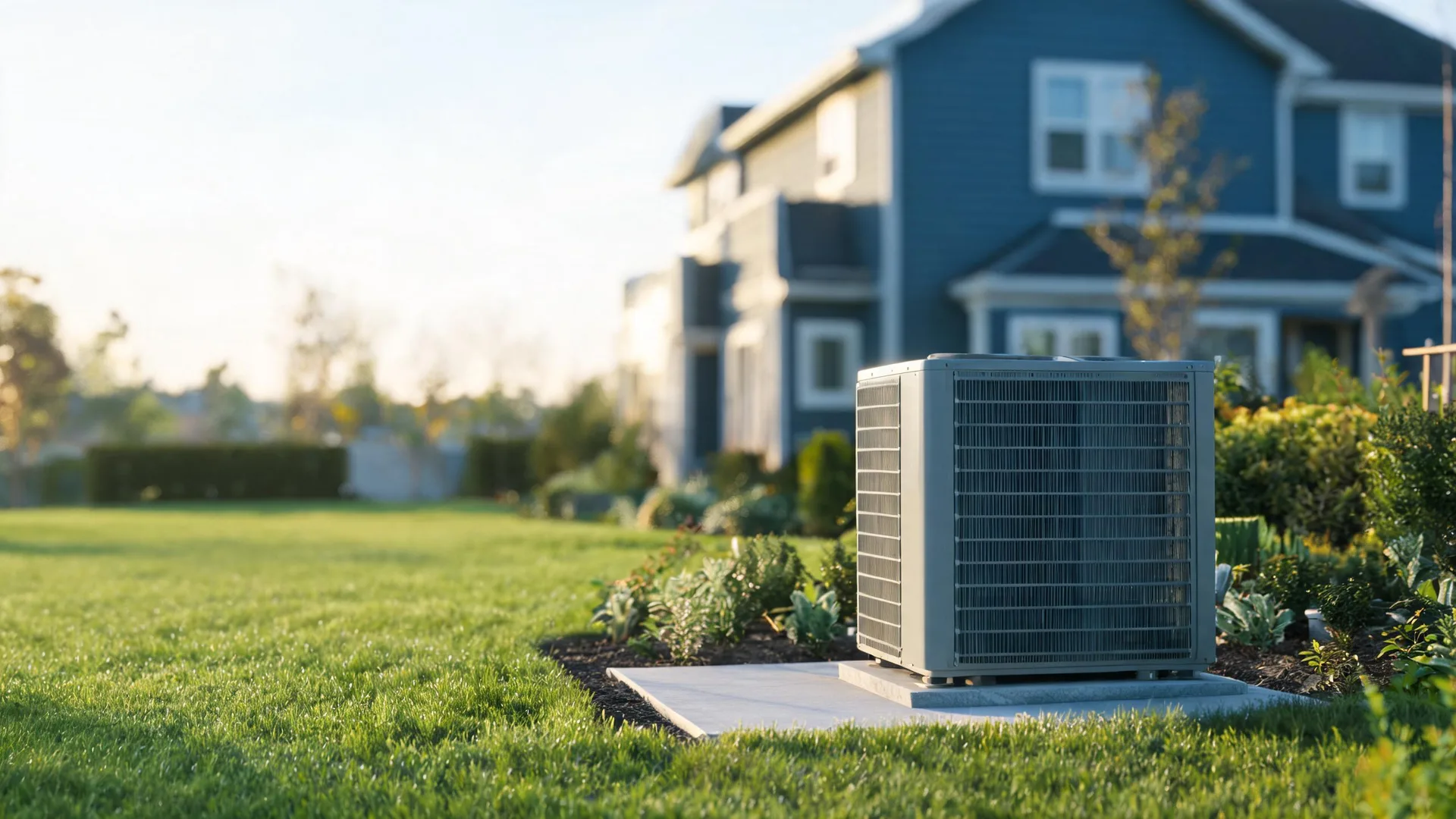
A gray outdoor HVAC condenser unit mounted on a concrete pad in the front yard of a two-story suburban house.

Heat Pump Installation in Huntington, IN

Tell us about the job

Takes about a minute. No obligation.

New system or replacementHeat PumpHuntington County, IN
Step 1 of 2

What ZIP code is the job in?

Electricity in Huntington County runs 14.89 cents per kilowatt-hour on average. A heat pump moves heat instead of burning gas to make it, so this is the number that decides what it costs to run one. Summer here adds its own load, with dew points averaging 62°F across June, July and August, muggy air that keeps the system working to pull moisture out along with heat. Every kilowatt it draws doing that work gets billed at the same rate. A unit that does more with less power matters more here than in a place where electricity costs less to begin with.

8 months
October through May, your system heats
3 months
June through August, it cools
21°F
the average winter night it heats against
82°F
the average summer afternoon it cools against
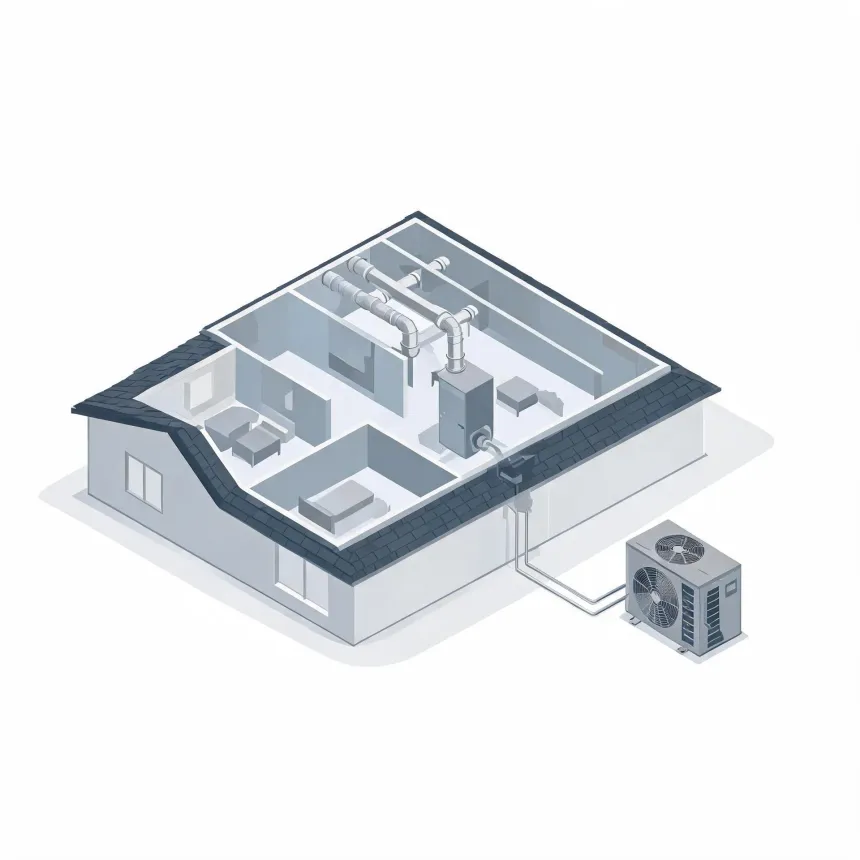
Isometric cutaway illustration of a single-story house showing interior rooms with ductwork, a furnace or air handler, and refrigerant lines running outside to a condenser unit on a pad.
Your system heats October through May and cools June through August.

NOAA nClimDiv, 1991–2020 normals

Half the houses in Huntington County went up in 1966 or earlier.

A heat pump sized for a new build won't always suit the ductwork already in the ground here.

Most of this county heats with gas, so a heat pump here usually means something new, not a swap

46.5% of homes heat with gas
Climate zone 5A
Power here costs 14.89 cents per kilowatt-hour

Huntington County falls under zone 5A in the 2021 energy code, a cool zone where heating costs more over the year than cooling does. That shapes what can legally go in. Any split-system heat pump made from 2023 onward has to clear federal minimums here too, pulling at least 14.3 Btu of heat for every watt-hour it uses cooling the house, and at least 7.5 Btu for every watt-hour heating it. Those are floors, not targets, so every qualifying unit on the market already clears them. A system that does, year round, also qualifies for a federal tax credit, worth checking against before deciding what to install.

Pick the system by what it costs to run, not just what it costs to install

The efficiency rating on the unit you pick is a floor, not a selling point, and every model on the market clears it. What varies is how far above that floor a system runs, and that difference gets billed at the same rate every month, all year. Worth asking an installer to show you both numbers before you decide.

Find a contractor
A man in a navy long-sleeve shirt and tan work pants, seen from behind, carries a canvas tool bag up light-colored porch steps toward a blue front door.
A white mini-split heat pump outdoor unit mounted on a concrete pad beside a gray-sided house, surrounded by gravel and green shrubs.

Eight months heating, three cooling, not much time between

This machine runs eight months of the year here, October through May, then switches over and runs another three, June through August. That leaves one real month, September, before heat season starts, and one, May, before cooling does. Most of its hours are spent heating, not cooling, and it has to do that work down to overnight lows averaging 21°F in January. A heat pump installed right before October gets tested by that cold almost immediately. One installed in May has a season of easier running before winter asks anything hard of it.

The old equipment doesn't just get unplugged

A furnace or AC swap means disconnecting gas lines, venting and an outdoor condenser wired into the electrical panel. A heat pump installation touches all of that, plus it usually needs a dedicated circuit sized for its compressor and backup heat strip. Whatever came out has to be hauled off and the refrigerant in an old AC recovered properly, not vented, since that's a legal requirement on top of being the right thing to do.
What it means for the job here

Pulling an old gas furnace and adding a heat pump isn't a like-for-like swap, it's new wiring, possibly a new breaker, and a conversation about what happens to the furnace if it stays as backup heat. An installer worth hiring will walk through whether the old system gets removed entirely or kept alongside the new one, since that changes the scope of the job and what the electrical panel needs to support.

Sizing a heat pump isn't about matching the old furnace's output or picking the biggest unit available. It comes from a load calculation, a room by room look at square footage, window area, insulation and ceiling height that adds up exactly how much heat the house loses in winter and gains in summer. Skip that step and guess instead, and the system runs wrong in two different ways. Too big, and it blasts the house to temperature fast, shuts off, then starts again a few minutes later, a pattern called short cycling that wears out the compressor early and never runs long enough to pull humidity out of the air. Too small, and it runs flat out without ever catching up on the coldest or hottest days, leaning hard on backup heat strips that cost more to run than the compressor itself. The right size runs longer, steadier cycles, which is also what keeps the air comfortable instead of just technically at temperature. A contractor who skips the calculation and quotes a size off the old equipment is guessing, not sizing.

Half the homes in this county were built in 1966 or earlier, which means a lot of ductwork already in the ground before anyone was sizing systems around heat pumps. That duct run was laid out for whatever heated the house at the time, usually a gas furnace pushing air at different temperatures and pressures than a heat pump does. An installer doing this job right checks that ductwork before touching the equipment, looking at duct size, how air flows to each room, and whether anything needs sealing or modifying to carry what the new system puts out. Skip that check and even a correctly sized heat pump can end up starved for airflow or pushing air through runs that were never built for it. Ask whoever quotes the job whether they're inspecting the ducts you have or just pricing the unit.