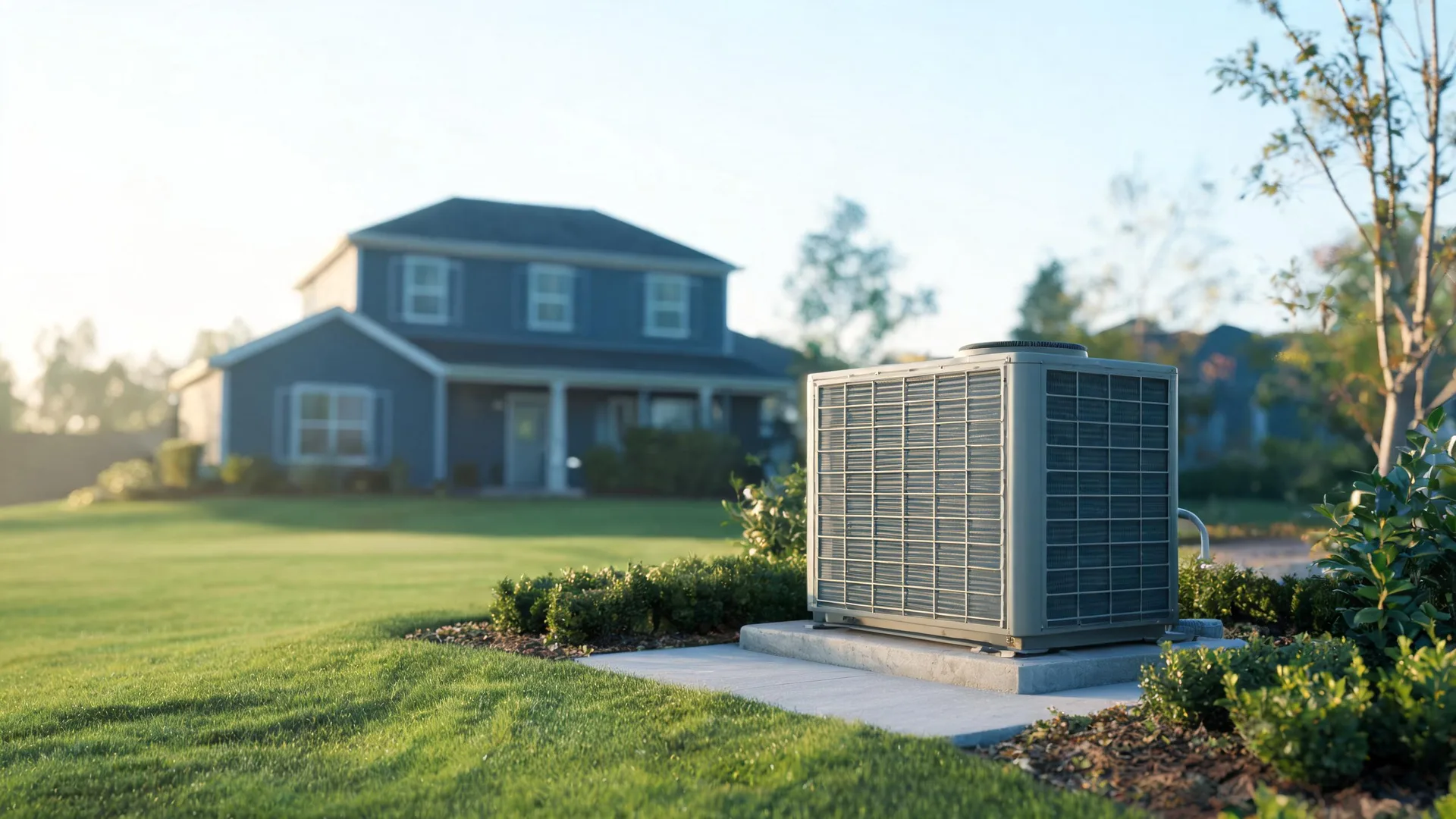
Electricity here costs more
Noble County homes paid 17.60 cents per kilowatt-hour in 2025, more than most US counties pay. A heat pump runs on electricity, so that rate applies to every hour it runs.
Takes about a minute. No obligation.
Noble County homes paid 17.60 cents per kilowatt-hour in 2025, more than most US counties pay. A heat pump runs on electricity, so that rate applies to every hour it runs.
Two heat pumps can heat and cool the same house and land on different bills, because they don't use the same amount of power to do it. At this rate, that difference shows up every month, not just on the install bill.

NOAA nClimDiv, 1991–2020 normals
Gas heats more homes in Noble County than anything else, at 41.8 percent.
Most of the heat pumps going into those homes will work alongside the furnace that's already there, not replace the ductwork or the gas line.



Noble County falls in climate zone 5A under the 2021 energy code, rated cool with heating as the bigger job and some humidity on top of that. Any split-system heat pump installed here, if it was manufactured on or after January 1, 2023, has to clear a federal floor: at least 14.3 Btu of heat moved per watt-hour of electricity over the summer, and at least 7.5 Btu per watt-hour over the winter. That floor is the same for every house in the county, drafty or tight, old or new. It sets the bottom of what a contractor can legally install. It doesn't set the top, and a unit built well above that minimum is still allowed, still common, and still worth asking about.
The rate Noble County pays applies to every hour this unit runs, for as long as it's installed. A model built well above the minimum costs less to run than one that just clears it, and that difference lands on the bill every month, not just once. Worth settling now, while the choice is still yours to make.
Find a contractor
A heat pump here spends most of its year on moderate days, not extreme ones. Winter asks more of it than summer does, since heating is the bigger job in this climate zone, but the swings between the two aren't as hard on the equipment as they are in places that sit in deep cold or heavy heat for months straight. Humidity adds some work in summer, with the dew point averaging 61°F across June, July and August, but that's a steady load, not a punishing one. Less strain over the years means a repair is more often worth making instead of replacing the whole unit, and when something does go wrong early, it's usually age or a missed service, not the system being run into the ground.
A heat pump that's too large for the house will short cycle, running in quick bursts instead of long steady ones. Short runs don't give the system time to pull moisture out of the air before it shuts off, so the house can feel damp even though the temperature looks fine. A unit that's too small runs long enough but never catches up on the coldest or hottest days, so it leans hard on backup heat strip or the furnace more than it should. The right size runs longer, steadier cycles that actually dehumidify and hold temperature without leaning on backup heat to make up the difference.
A contractor works out the right size with a load calculation, not by matching whatever size is already installed or guessing off square footage alone. That calculation looks at the walls, the windows, the insulation, the ceiling height, and how much sun each side of the house gets, then adds it all up room by room. Two houses the same size can need different sized equipment because one has more window area or a different layout. Skipping this step and sizing off square footage alone is how a house ends up with a unit that's wrong in either direction.
A lot goes into what an installation runs beyond the box itself. Setting the right refrigerant line length and running it clean matters, because a line set that's too long or poorly insulated costs the system efficiency before it ever heats a house. The outdoor unit needs a pad or mount that keeps it level and clear of snow and runoff, and the electrical work has to match the unit's actual draw, not a guess. If the home already has ductwork, a contractor has to check whether it can handle the airflow a heat pump needs, since heat pumps typically move more air than a furnace and undersized ducts will choke that. Getting the refrigerant charge right at startup is its own step, and a system that's overcharged or undercharged will never run at the efficiency it was built for, no matter how good the equipment is. None of this shows up on the spec sheet, but all of it decides whether the unit performs the way it's rated to.
Since the load here is moderate, a reliable mid-range heat pump is a reasonable pick, not just the model with every top-tier feature. The savings from chasing the highest efficiency number on the shelf show up slowly in a climate that doesn't push the system hard. Put that money into the install instead: the sizing, the line set, the charge. Those are the things that decide how the unit actually performs, and they matter whether the equipment is mid-range or top of the line. A well-built unit, properly sized and properly installed, holds up here without needing to be the most efficient one available.