Electricity here runs 14.77 cents a kilowatthour
Indiana homes paid 14.77 cents per kilowatthour in 2024. A heat pump runs on electricity for both heating and cooling, so that rate applies to it every month of the year, not just in summer.
Takes about a minute. No obligation.
Indiana homes paid 14.77 cents per kilowatthour in 2024. A heat pump runs on electricity for both heating and cooling, so that rate applies to it every month of the year, not just in summer.
Two heat pumps can heat the same house and cost different amounts to run, because one moves heat with less electricity than the other. At Kokomo's rate, that difference shows up on every bill, not just the first one.

NOAA nClimDiv, 1991–2020 normals
Half the homes in Howard County were built in 1969 or earlier.
A heat pump going into a house that age has to work with the ductwork and walls already there, not the other way around.



Heat here runs October through May, about eight months a year. That's most of the calendar, so the install date matters more than it would for a furnace that only has to prove itself in a cold snap. September is the month before it starts. Get the heat pump in before then and a contractor can size it, test it, and walk through it with you without the weather forcing shortcuts. Wait until October and the first cold night is also the first time anyone finds out if something's off.
Howard County falls under zone 5A, and split-system heat pumps built since January 2023 have to meet 14.3 SEER2 for cooling and 7.5 HSPF2 for heating to be sold here. That's the floor, not a recommendation. A federal tax credit is available on top of that for qualifying equipment.
Find a contractor
If your house was built in 1969 or earlier, its ductwork was laid out for whatever system came first, which was likely not a heat pump. Before install day, a contractor should check that ductwork against what the new heat pump needs to move. That walkthrough has to happen before the unit is set and connected, because changing ducts afterward means opening walls that are already closed up.
SEER2 tells you how efficiently the heat pump cools. HSPF2 tells you how efficiently it heats. A unit can be strong on one and average on the other, so check both numbers on the label, not just whichever one the salesperson leads with.
The label number comes from lab testing under set conditions. What a heat pump actually delivers in a given house depends on duct condition, how the refrigerant charge is set, and how well the unit is sized to the space. A high rating on paper still needs a correct installation to show up on the bill.
Sizing a heat pump isn't about matching the old equipment or guessing from square footage. A contractor works out a load calculation, room by room, counting windows, insulation, ceiling height, and how the space is used. Too big and the unit short cycles, running in quick bursts that cool or heat the air without ever running long enough to pull moisture out or settle into a steady temperature. Too small and it runs constantly, straining to keep up on the coldest or hottest days and wearing down faster for the effort. Either mistake shows up as uneven rooms or a system that needs more repairs than it should. The right size is the one where capacity and the house match, which is why the calculation comes before the equipment is picked, not after.
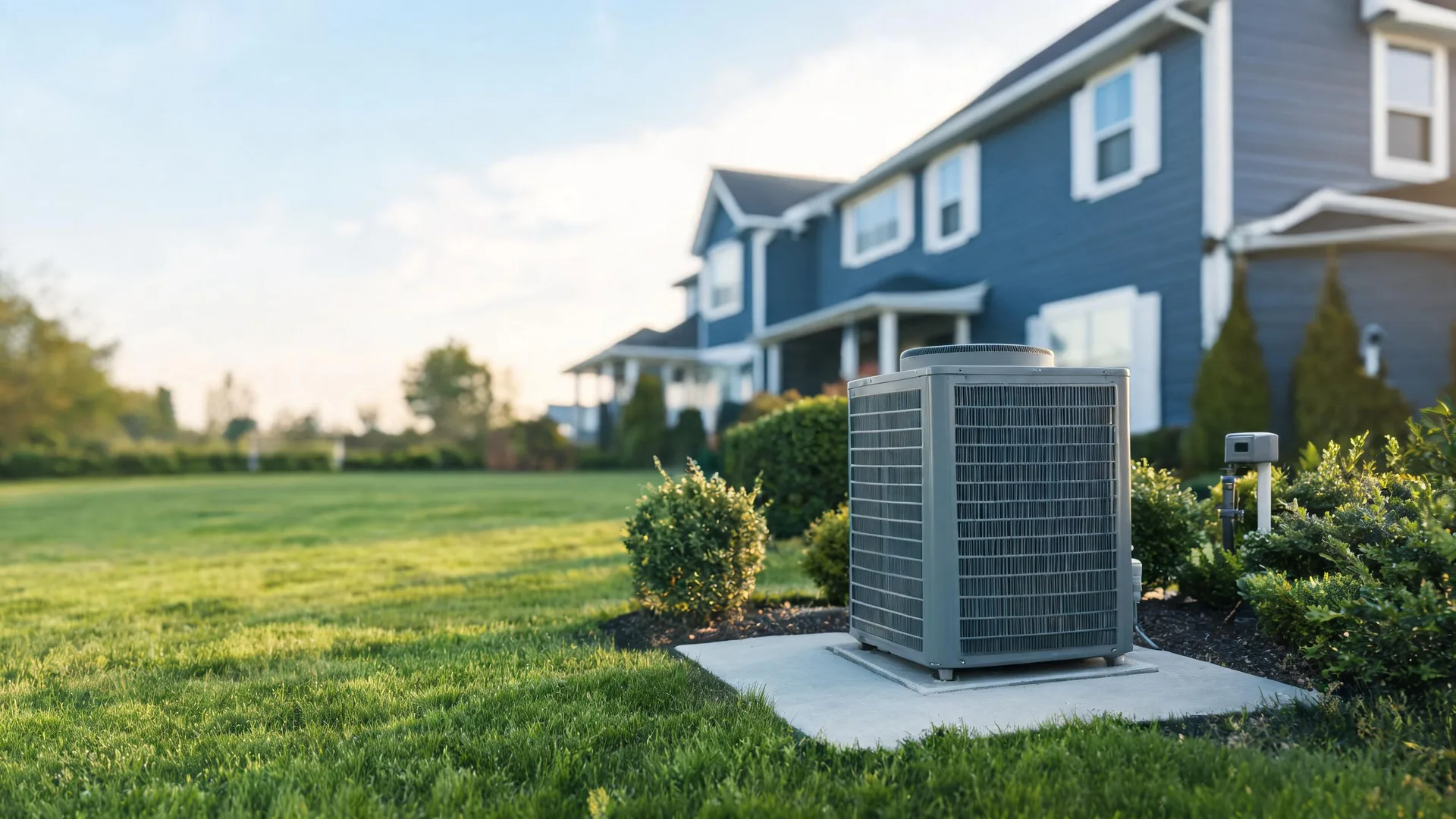
Install day starts before anyone touches the old equipment. A contractor runs the refrigerant lines, sets the outdoor unit on a pad clear of walls and plantings, and checks that the indoor coil and air handler line up with what was sized on paper. The old system comes out first, and if the ductwork needed changes, that work happens now, with the walls still open, not after the new unit is already connected. Once the heat pump is set, it gets charged with refrigerant to the exact level the manufacturer specifies, not just topped off by feel. Then it runs, in both directions, heating and cooling, while the contractor checks airflow at the vents and confirms the thermostat is actually talking to the equipment. A heat pump that looks installed but hasn't been run and measured in both modes isn't finished yet.