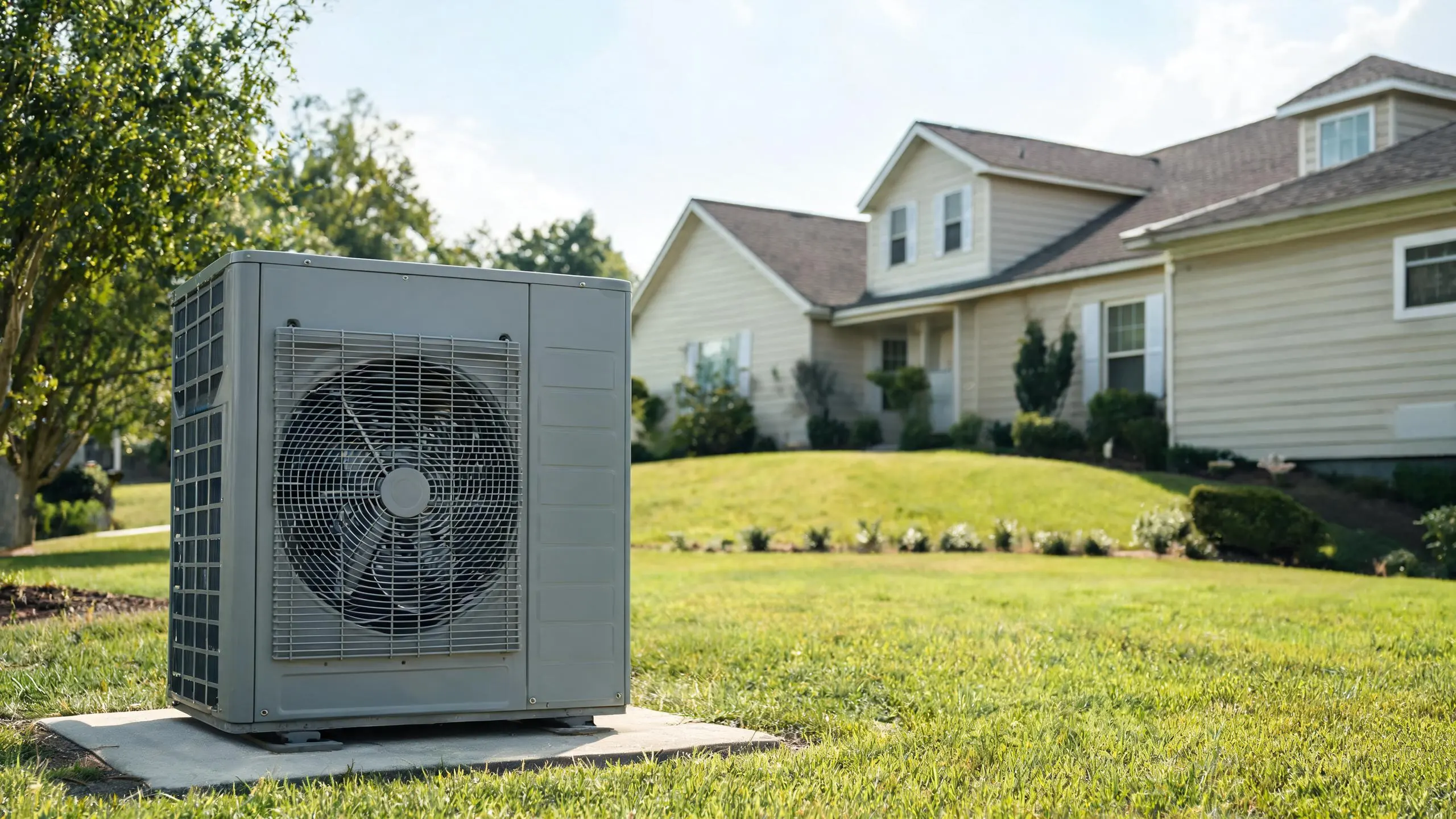




A gray outdoor HVAC condenser unit mounted on a concrete pad in the front yard of a two-story suburban house.

Heat Pump Installation in Lawrenceburg, IN

Tell us about the job

Takes about a minute. No obligation.

New system or replacementHeat PumpDearborn County, IN
Step 1 of 2

What ZIP code is the job in?

Gas heats more homes in Dearborn County than anything else, 44.7 percent, with electricity close behind at 38.6 percent and propane making up most of what's left. A heat pump installed here usually takes over for one of those two. If electric resistance heat is what's in the house now, a heat pump does the same job for less to run, since it moves heat instead of generating it. If gas is what's there now, a contractor can size a heat pump to handle cooling and most of the heating, with the furnace staying in place for the coldest stretches. Either way, the existing ductwork and electrical panel are what decide how the installation goes, and that's worth having a contractor look at before anything else.

7 months
October through April, your system heats
4 months
June through September, it cools
25°F
the average winter night it heats against
84°F
the average summer afternoon it cools against
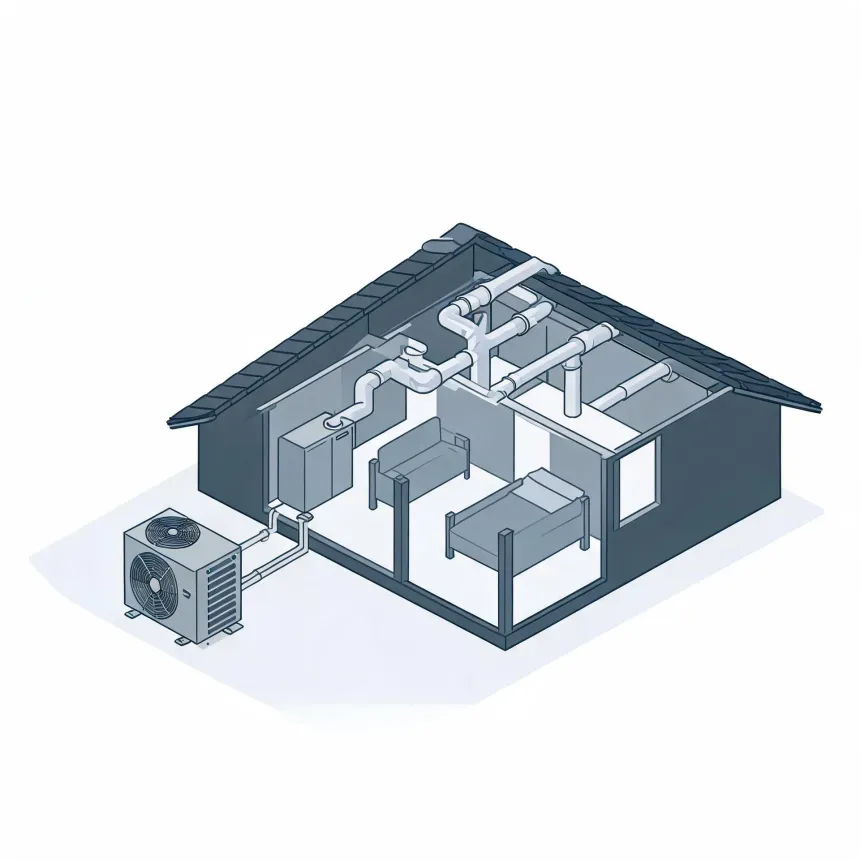
Isometric cutaway illustration of a house showing interior ductwork, an indoor air handler, and beds, with an outdoor condenser unit connected by lines outside the wall.
Your system heats October through April and cools June through September.

NOAA nClimDiv, 1991–2020 normals

Heat in Dearborn County runs October through April.

Put the heat pump in before September and it's ready for that first cold morning instead of catching up to it.

Nothing about the wind, hail or power rates here calls for sizing a heat pump beyond the standard fit

Power costs 14.77 cents a kWh statewide
57 damaging wind events from 2015 to 2024
13 hail events from 2015 to 2024

Dearborn County sits in zone 4A, a mixed climate that asks real work of both the furnace and the AC side of things. Any split-system heat pump installed here has to meet a federal minimum of 14.3 SEER2 for cooling and 7.5 HSPF2 for heating. That floor is the same whether the unit goes into a house in Lawrenceburg or out in the county. A contractor sizing your system starts from that minimum and works up from there depending on what the house needs.

This climate asks for a well-matched heat pump, not the biggest one on the lot

Dearborn County sees wind, hail and winter storms most years, but none of that is heat load. The overnight average across December, January and February is 25°F, cold enough for a heat pump to need backup heat on the worst nights, not cold enough to run the system hard day after day. A heat pump here is doing honest work in a mixed climate, not fighting extremes. That's a reasonable system matched to a reasonable job, and it's worth getting the sizing right before you buy anything.

Find a contractor
A gray heat pump outdoor unit mounted on a concrete pad next to the stone-accented exterior wall of a house.

A cold season, not a brutal one

The overnight average here only drops to 25°F in the dead of winter, December through February. That's the coldest stretch, and it's not extreme. A heat pump sized to the house handles that fine, leaning on backup heat for the worst nights instead of running flat out for months. Buying bigger than the load calls for doesn't add safety margin, it just means the system short cycles and wears its parts faster. Ask the contractor to size it off a load calculation done for this house, not a guess based on square footage.

The rating has a cooling side and a heating side

SEER2 tells you how the system cools, HSPF2 tells you how it heats, and they're on the same label because a heat pump does both jobs with the same equipment. A higher SEER2 means the compressor and coil move heat out of the house using less electricity per degree of cooling. A higher HSPF2 means the same unit pulls heat from outside air more efficiently when it runs in reverse for winter. Neither number says how big the system is or how warm the house will feel. It only says how much electricity goes into getting there.
The label sets a floor, not a grade

Every heat pump sold has to clear a federal minimum for its category, so the rating you're comparing is how far above that floor a given unit sits. A unit rated well above the minimum costs less to run over the years it's installed, but it usually costs more to buy, and that gap only pays off if the system is sized right to begin with. A high-efficiency heat pump that's oversized for the house still short cycles and still gives up the efficiency it's rated for. The rating is worth paying for once the sizing is settled, not before.

Installation cost mostly comes down to what's already at the house versus what has to change. If the ductwork is in good shape and sized right for a heat pump's airflow, the crew connects to it. If it's undersized or leaky, that gets reworked or sealed first, and that's labor and material beyond the unit itself. The electrical panel matters too. A heat pump draws power the way an old gas furnace never did, and a panel without the capacity to add that circuit needs an upgrade before the system goes in. Where the outdoor unit sits, how far the line set has to run, and whether a crane or tight access is involved all add or save time on install day. None of that shows up on the equipment's price tag, but all of it shows up on the invoice, which is why houses that look similar from the street can still end up with very different bids for the same heat pump.

Install day starts outside. The old unit comes out first if one's being replaced, then the new outdoor unit gets set on a pad or bracket and leveled. A unit that rocks or sits crooked wears its compressor mounts early. The line set gets run between the outdoor and indoor units. If the old line set is being reused, a contractor flushes it first, since leftover oil or refrigerant from the previous system can contaminate the new one. Indoors, the air handler or coil goes in, ductwork gets connected or adapted, and the condensate drain gets checked so it actually slopes toward the drain instead of pooling. Once everything's connected, the line set gets pressure tested for leaks before any refrigerant goes in, then the system gets evacuated to pull moisture out of the lines. Only after that does the contractor charge it to the weight the manufacturer specs, not just until it feels cold. Startup comes last. The contractor checks refrigerant charge, airflow across the coil, and that the thermostat is actually talking to both the heat pump and the backup heat if there is any. A system that's wired but never gets that final check can run for a while looking fine and still be short on charge or airflow underneath it.