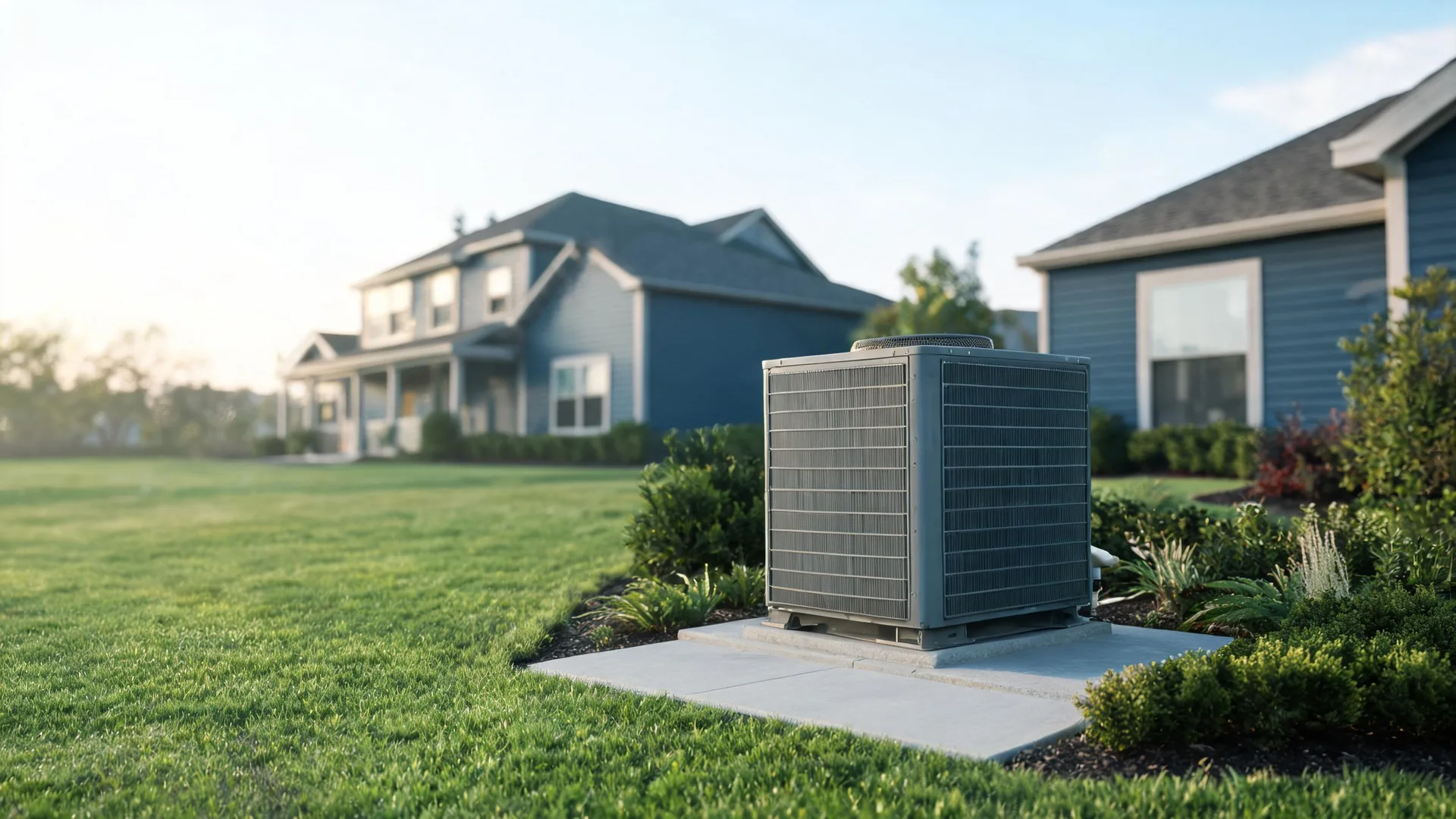
Electricity here runs 14.77 cents per kilowatthour
Indiana power costs more than in a lot of states, and a heat pump runs on electricity year round. That rate applies to every hour the compressor runs, whatever the season.
Takes about a minute. No obligation.
Indiana power costs more than in a lot of states, and a heat pump runs on electricity year round. That rate applies to every hour the compressor runs, whatever the season.
Two heat pumps can heat and cool the same house and cost different amounts to run every month. At this rate per kilowatthour, the difference between a unit that runs efficiently and one that doesn't shows up on every bill, not just the first one.
NOAA nClimDiv, 1991–2020 normals
Utility gas heats 55.7% of homes in Grant County.
A heat pump works alongside a gas furnace or replaces it outright, so either way this is a decision worth getting right.



Grant County is a cool climate zone, and heating carries the bigger load here, not cooling. A heat pump in this area isn't fighting extreme heat for months on end. The harder pull is cold, and even winter here has a floor. The overnight low averages 22°F across December, January and February. That's cold enough to work a heat pump, not cold enough to push it to its limit. Less strain over the years means a well-matched system holds up fine without reaching for the highest efficiency tier on the shelf.
Heat here runs October through May, eight months out of the year. June through August is the quiet stretch, and it's also the stretch where an install happens on your timeline instead of a breakdown happening on its own. Get it done before September and the heat pump is tested and settled in before it has to carry the first cold morning.
Find a contractorA heat pump has to be sized to the house, not picked off a shelf by habit. Too big and it short cycles, reaching the setpoint fast and shutting off before it's run long enough to pull moisture out of the air or settle into a steady draw. Too small and it runs flat out in the coldest stretches, leaning on backup heat strip more than it should and never quite catching up. The right size runs longer, steadier cycles, which is what lets a compressor last. Getting there means a room by room load calculation, weighing wall and window area, insulation, ceiling height and air leakage against each other, not just matching the tonnage of whatever unit came out. A unit sized off square footage alone is a guess wearing a number.
SEER2 is the cooling rating. HSPF2 is the heating rating. A heat pump carries both because it does both jobs, and they don't move together. A unit can rate well on one and middling on the other, so it pays to check which number matters for the way this machine will actually run.
The rating on the label comes from a test run at a steady setpoint, with clean coils and a correctly sized system. Leaky ducts or a unit that's oversized or undersized for the house won't reach that number once it's installed. Sizing and installation decide how close the system gets to its rating, more than the rating itself does.
Equipment is only one line on the invoice. The bigger swings usually come from what it takes to get the system onto the house and tied into it. A straightforward swap, where the new unit matches the old one in size and location, goes faster than one where the line set has to run further or the electrical panel needs a new circuit to carry it. Ductwork matters too. A heat pump moves a different volume of air at different temperatures than a furnace or an old AC did, and if the ducts weren't sized for that, modifying them adds to the job. Where the indoor and outdoor units go, how much refrigerant line runs between them, and whether the existing electrical can carry the new load all factor in before the heat pump itself ever gets priced.
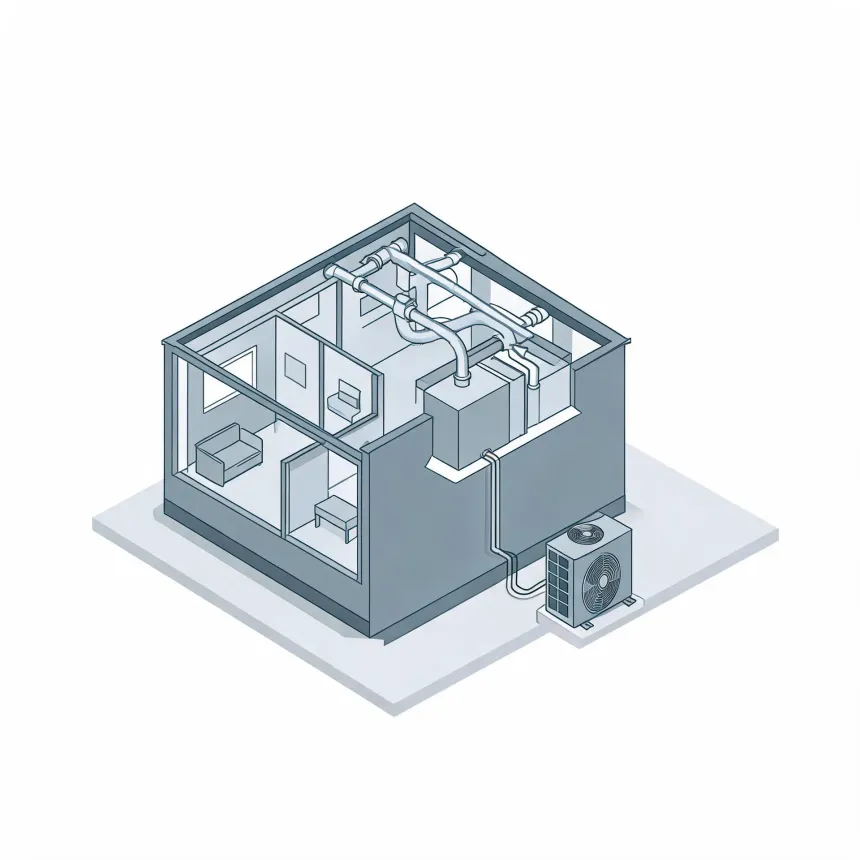
Installation starts with the outdoor unit and the indoor coil. Those go in first, before anyone touches the refrigerant lines. Once the lines run between them, the system gets evacuated to pull out air and moisture. Then it gets charged with refrigerant to the weight the manufacturer specs, not just until the pressure looks right. That charge is what separates a heat pump that hits its rating from one that falls short of it for its whole life, so it's worth asking how it gets checked. Electrical work usually comes next, tying the outdoor unit into its own circuit with a disconnect set beside it. Last comes startup, running the system in heating and in cooling and checking airflow at the vents rather than just listening for the compressor to kick on. A job that skips that check can look finished and still be wrong.