






A lit residential street at dusk featuring large two-story brick houses with glowing windows, mature trees, and a street lamp.

Heat Pump Installation in New Castle, IN

Tell us about the job

Takes about a minute. No obligation.

New system or replacementHeat PumpHenry County, IN
Step 1 of 2

What ZIP code is the job in?

Indiana homes paid 14.77 cents per kilowatthour in 2024. A heat pump moves heat instead of burning fuel or resisting current for it, so it gets more warmth out of every kilowatthour than electric resistance heat does. At that price, the difference between a unit that runs efficiently and one that doesn't shows up on every bill, not just the first one. Ask what HSPF2 and SEER2 rating the installer is proposing, and compare that number across the systems you're considering.

8 months
October through May, your system heats
3 months
June through August, it cools
22°F
the average winter night it heats against
82°F
the average summer afternoon it cools against
Isometric cutaway illustration of a single-story house showing interior ductwork, an indoor air handler and furnace unit, and an outdoor condenser connected by a line, on a white background.
Your system heats October through May and cools June through August.

NOAA nClimDiv, 1991–2020 normals

Half the homes in Henry County were built in 1961 or earlier.

A heat pump going into a house that age has to match the ductwork and the walls it already has, not a generic spec sheet.

Cold winters work a heat pump hard. Hail and ice don't.

9 hail events from 2015 to 2024
12 winter storms from 2015 to 2024
Winter nights average 22°F

Heat here runs October through May, about eight months of the year. That's a long stretch for a heat pump to carry the load, so the work of putting one in is best done before the cold sets in, not after. September is the month to get it done. A unit installed then has a chance to get checked over and set up right while the weather is still mild, instead of getting rushed in during the first cold snap when every other homeowner in Henry County is calling for the same thing. Summer matters less here for scheduling since cooling only runs three months, June through August, but heat is the long season and the one worth planning around.

A heat pump here has to meet a minimum efficiency before it meets your house

Henry County sits in climate zone 5A, where heating carries most of the load. Any split-system heat pump installed now has to clear federal minimums of 14.3 SEER2 and 7.5 HSPF2. That floor rules out the lower end of the market and sets the baseline for what a contractor can quote you here.

Find a contractor
A man in a cap, navy T-shirt and brown work pants walks up concrete steps toward a blue front door, carrying a worn canvas tool bag with a hammer inside, beside a potted shrub in a blue planter.
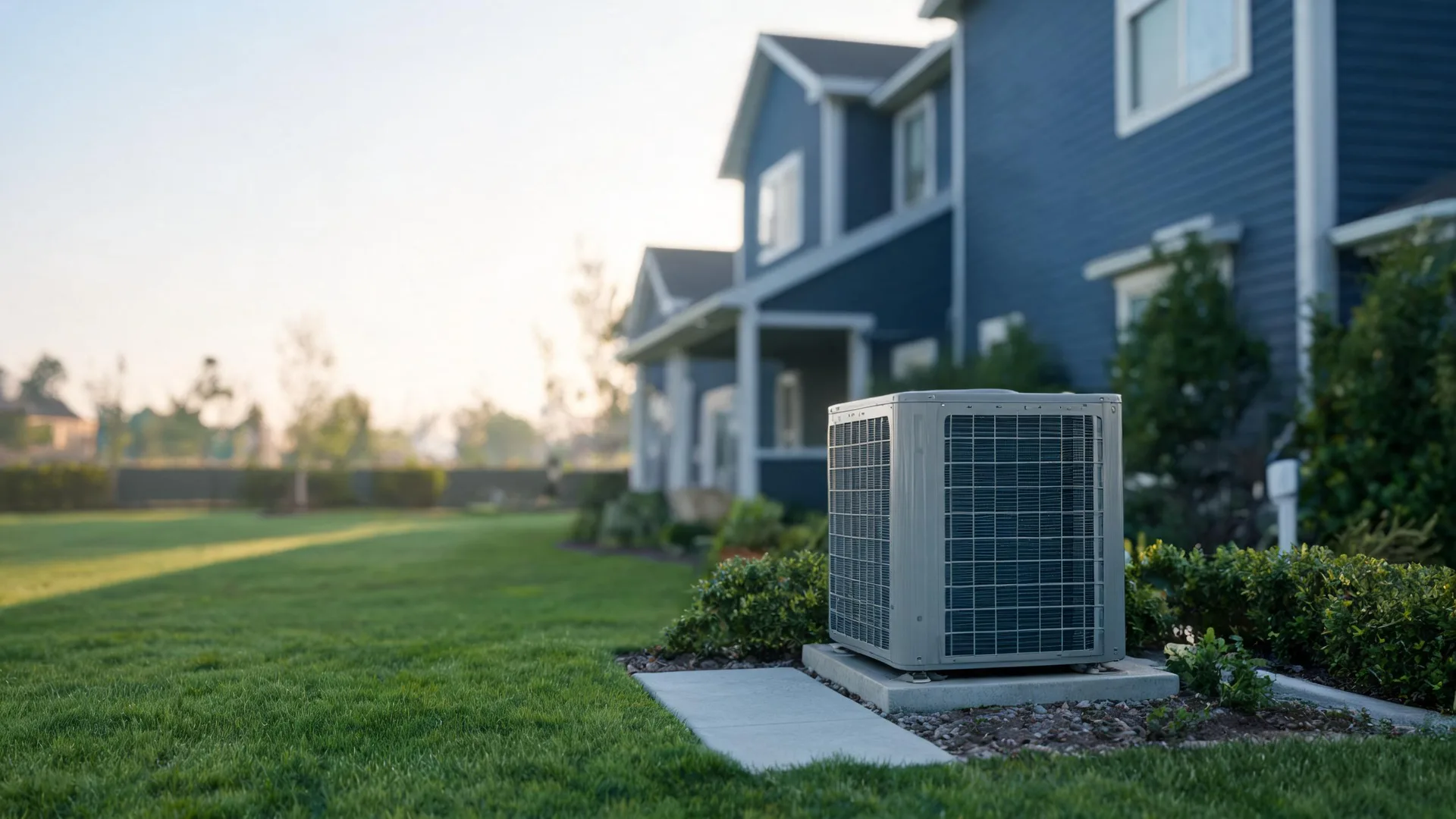
A gray outdoor HVAC unit mounted on a concrete pad beside a house with gray lap siding and a stone foundation.

A steady load, not a heavy one

A heat pump here runs through cold nights, not hailstorms. Henry County sees overnight lows near 22°F in December, January and February, and that's the load the system works against each winter. Hail and ice are weather events that pass through. Winter cold sits on the system for months. That steady load is lighter than what a heat pump carries in colder parts of the country, so a well-built mid-range unit, sized right for this house, holds up fine here. The money is better spent on correct sizing and a good installation than on chasing the highest HSPF2 number on the sheet.

The old equipment doesn't just get unhooked and left

Refrigerant has to be recovered from the old system before any copper gets cut. That's not optional, it's how the line set and coil get disconnected safely without venting refrigerant into the air. Once that's done, the outdoor unit, the indoor coil, and any abandoned ductwork or line set get hauled out to make room for what's replacing them.
What's underneath gets reused or it doesn't

If the old system ran on a gas furnace with a separate AC coil, a heat pump install usually means pulling that coil and deciding what to do with the furnace, keep it as backup heat or take it out too. The line set gets replaced rather than reused in most cases, since the old lines were sized and cleaned for the old refrigerant, not necessarily what the new system runs on.

SEER2 and HSPF2 aren't the same kind of number. SEER2 measures cooling, how much heat the system moves out of the house per unit of power it draws, over a season of summer cycling. HSPF2 measures heating the same way, over a season of winter cycling, and it's the one that matters more where heating carries the load. A higher number on either means less power drawn for the same amount of heating or cooling, and that holds true across the unit's whole lifespan, not just when it's new. But the rating is measured under set conditions in a lab, not inside your walls. A heat pump sized wrong for the house, or installed with a duct system that restricts airflow, won't deliver the number on the sticker no matter how high that number is. The rating tells you what the equipment is capable of. Whether the house gets that performance depends on the sizing and the install.

A rating sheet tells you what a heat pump can do in a lab. It won't tell you what it'll do in your house, so ask the installer to walk through a load calculation on this house specifically, not a quick estimate based on square footage. Ask what happens at the coldest point in the season, whether the unit carries the heat on its own or leans on a backup heat strip, and how that backup gets controlled. Ask about sound, where the outdoor unit sits and how close that is to a bedroom window. Ask what the warranty covers on the compressor versus the labor to get at it, since those are often different lengths. And ask who's doing the load calculation and duct inspection, the salesperson or the installer, because the answer tells you whether the quote is based on your house or on a guess.