






A row of dark-clad houses with gray gabled roofs behind trimmed hedges and a lawn, framed by overhanging tree branches under an overcast sky.

Heat Pump Installation in South Bend, IN

Tell us about the job

Takes about a minute. No obligation.

New system or replacementHeat PumpSt. Joseph County, IN
Step 1 of 2

What ZIP code is the job in?

A heat pump runs on electricity, and electricity here averages 16.62 cents per kilowatt-hour, more than most of the country pays. That rate applies to every hour the system runs. Summers in St. Joseph County carry a dew point around 62°F through June, July and August, which is heavy air, the kind that keeps a system cycling to wring moisture out of the house, not just to cool it. A unit with a weak SEER2 rating has to work harder through that load to do the same job as one built for it. On a bill priced the way this one is, that gap between an efficient system and a middling one shows up every month, not just in summer.

8 months
October through May, your system heats
3 months
June through August, it cools
20°F
the average winter night it heats against
81°F
the average summer afternoon it cools against
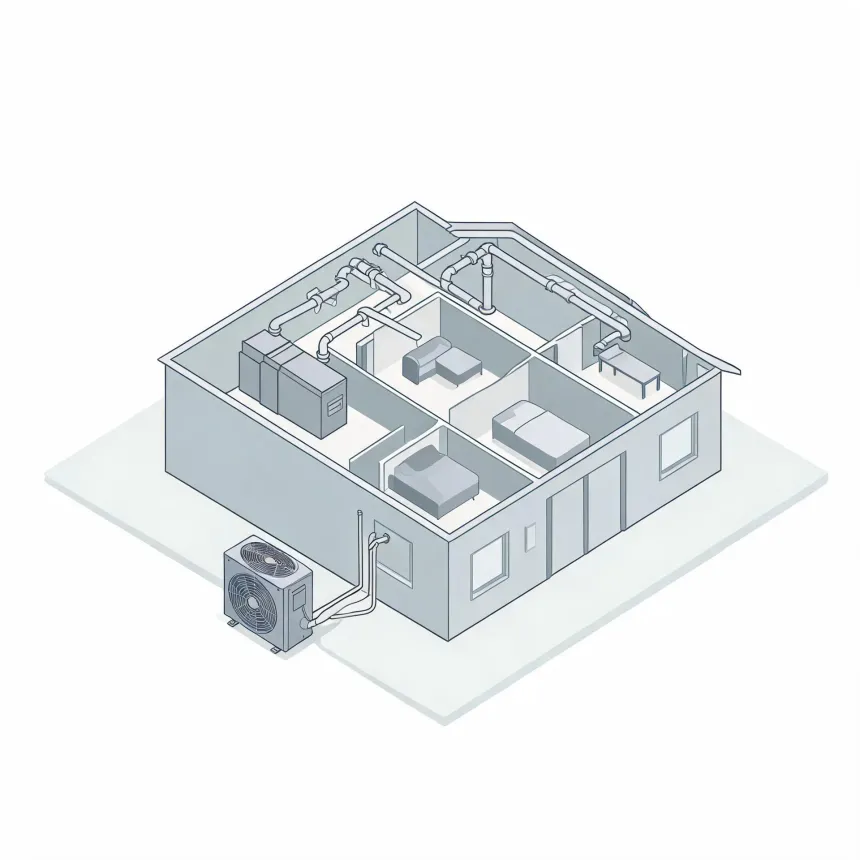
Isometric line illustration of a cutaway single-story house showing interior rooms with beds and furniture, ceiling ductwork connected to an indoor air handler, and an outdoor condenser unit linked by refrigerant lines.
Your system heats October through May and cools June through August.

NOAA nClimDiv, 1991–2020 normals

St. Joseph County saw 233 severe weather events between 2015 and 2024, including 159 damaging wind events and 51 hail storms.

An outdoor heat pump unit sits outside year round, so where it's placed and how it's protected matters here.

Most homes here heat with gas, so a heat pump is usually the second system, not a swap

81% of homes heat with gas
Climate zone 5A
Power here costs 16.62 cents per kilowatt-hour
Half the homes here were built in 1968 or earlierHalf the homes in St. Joseph County were built in 1968 or earlier, and a heat pump going in now has to match the house it's heating, not just a specs sheet.

St. Joseph County falls under zone 5A in the 2021 energy code, a cool, humid zone where heating carries the bigger load over the year. Any split-system heat pump installed here has to meet the federal minimum for units built from 2023 onward: at least 14.3 Btu of cooling delivered for every watt-hour it draws, and at least 7.5 Btu of heat for every watt-hour in winter. That floor narrows what a contractor can offer you. It also means the system going in is already built to handle a heating-dominant climate, not just adapted to it. A federal tax credit is available for qualifying installations, worth looking into before you settle on a model.

The system you pick decides what every bill after it looks like

The rate on your bill isn't something a contractor can change. The SEER2 rating on the unit they install is. Ask what rating you're being quoted before you settle on a model, not after it's in.

Find a contractor
A man in a dark shirt and tan pants carries a canvas tool bag as he walks up concrete steps toward a blue front door on a porch with a potted shrub.
A gray heat pump outdoor unit mounted on a concrete pad next to a residential house with lap siding and stone accents.

Eight months of heat, three of cooling

This machine runs heat from October through May and cooling from June through August. Eight months doing one job, three doing the other. That heat stretch includes December, January and February, when the overnight low here averages 20 degrees, so most of its working life is spent pulling warmth into the house, not pushing it out. September is the month before heat starts. May is the month before cooling starts. Installing it in either of those windows means it gets set up and checked before the house is actually counting on it.

The equipment is most of the number

A heat pump installation is priced around the outdoor unit, the indoor coil or air handler, and the labor to set both up correctly. Beyond that, what drives the price is what the job takes to do right: new line sets if the old ones won't work with the new refrigerant, a larger electrical circuit if the unit draws more than what's already run to that spot, and ductwork modified if the air handler or coil doesn't match what's there. A straightforward swap where the old equipment lines up with the new costs less than a job where any of that has to change.

The bid should reflect the house, not a price list

A contractor who sizes the system to the house, checking the duct layout, the insulation, and the heating load room by room, is pricing a system that will actually run the way it's rated to. A bid that skips that step and quotes off the square footage alone might come in lower, but it's a guess, and a heat pump that's undersized or oversized for the house costs more to run for as long as it's installed. The lowest bid and the right-sized system aren't always the same quote.

The number on the label is a ratio, not a grade. It tells you how much heat the system moves for the electricity it draws, and a higher number means it moves more for less. What the rating doesn't tell you is how the unit behaves at the edges of that range. Lab testing runs the unit at set conditions to get that number, so two units with the same rating can still perform differently once the temperature swings hard in either direction. A rating also assumes the system is sized and installed correctly. An efficient unit crammed into ductwork it's fighting against, or set up with a refrigerant charge that's off, will run worse than the label promises. The rating tells you what the equipment is capable of. Everything after installation decides whether it actually gets there.

That half-and-half split matters most when the ductwork and the heat pump don't come from the same era. A system sized off a spec sheet alone doesn't know what it's feeding into. Have the contractor measure the duct layout and the room-by-room heating load before they quote equipment, not after. If your ducts were sized for an old gas furnace, they may not move enough air for a heat pump to hit its rated output, and that's worth finding out before the unit is set, not once it's running. Ask what they checked beyond the house's age to land on the model they're proposing.