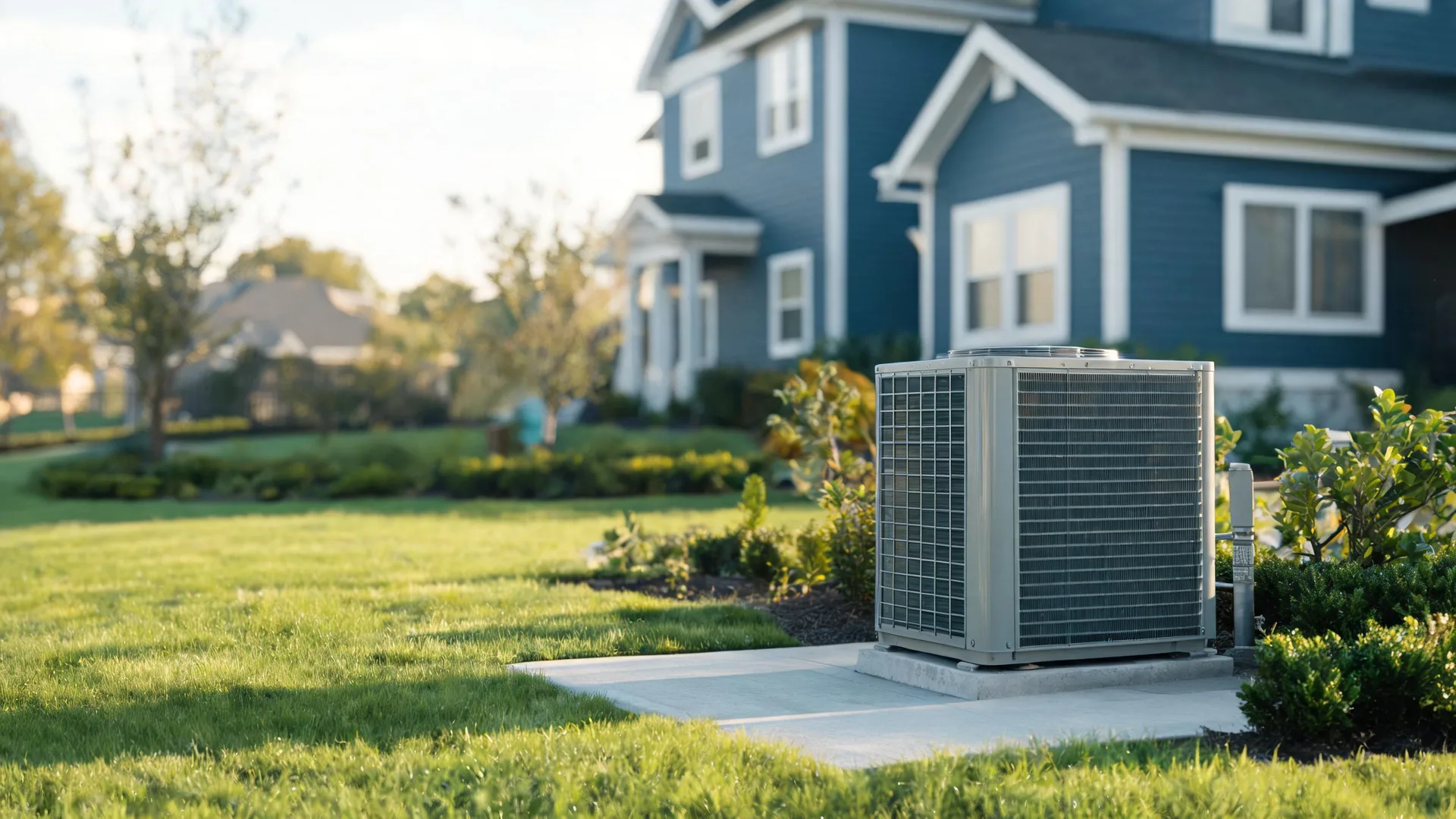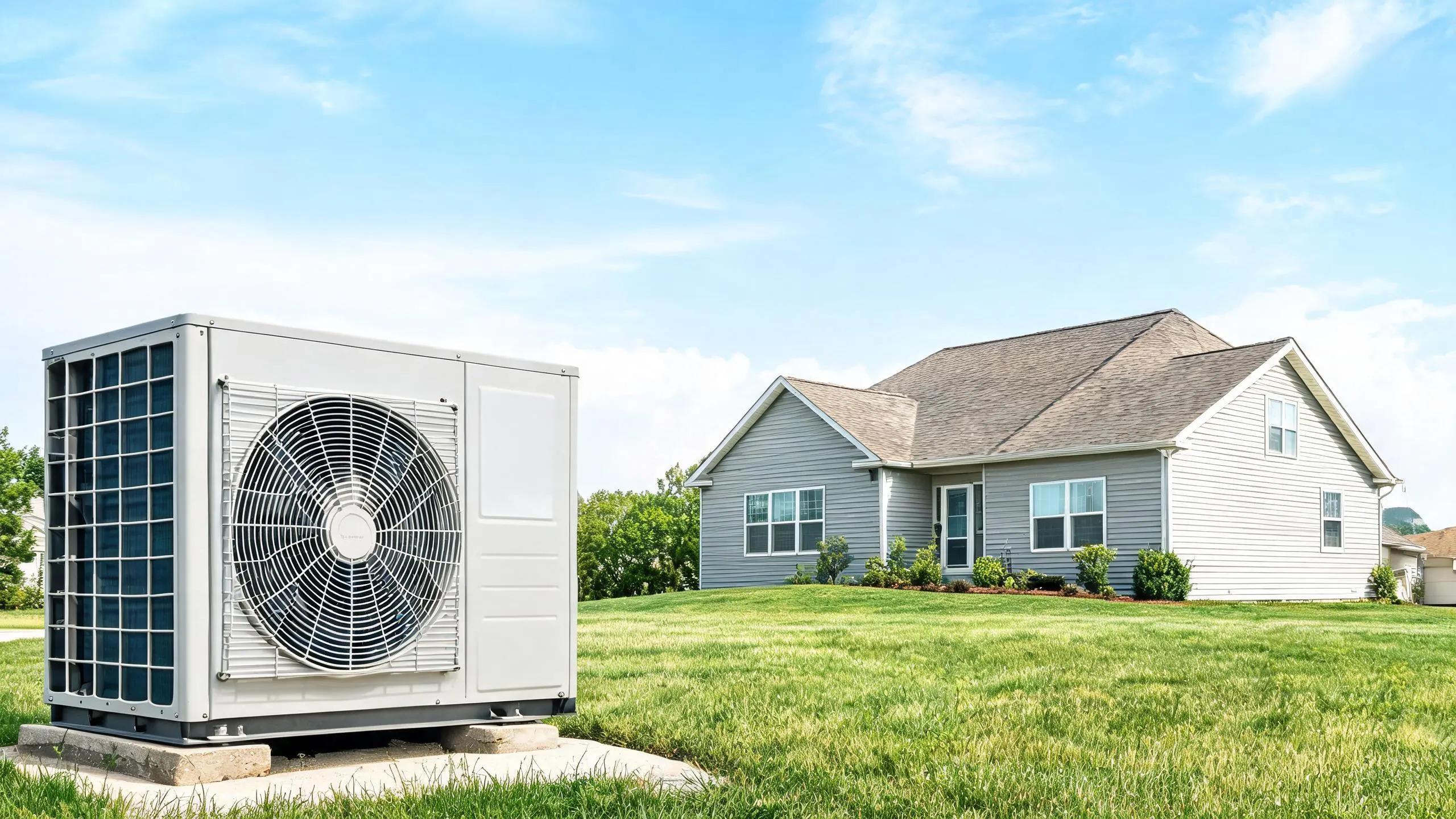
An outdoor HVAC condenser unit on a concrete pad in front of a single-story house with gray siding and a shingle roof.

Heat Pump Installation in Zionsville, IN

Tell us about the job

Takes about a minute. No obligation.

New system or replacementHeat PumpBoone County, IN
Step 1 of 2

What ZIP code is the job in?

Electricity here runs 14.77 cents a kilowatt-hour

Indiana power costs more than in most states, and a heat pump runs on electricity year-round. That rate applies to every hour this system runs, so how efficiently it runs matters more here than somewhere with cheaper power.


Efficiency is the number to compare

When you're pricing out units for this job, look at the efficiency rating next to the price. A heat pump with a higher rating uses less electricity to move the same heat, and at Indiana's rate that difference shows up on every bill, not just the first one.

8 months
October through May, your system heats
3 months
June through August, it cools
21°F
the average winter night it heats against
82°F
the average summer afternoon it cools against
Isometric line illustration of a cutaway single-story house showing interior rooms, ceiling ductwork, an indoor air handler unit, and an outdoor condenser connected by a line set.
Your system heats October through May and cools June through August.

NOAA nClimDiv, 1991–2020 normals

Gas heats 57.5 percent of homes in Boone County.

A heat pump here usually means adding ductwork and controls to a house built around a furnace, not swapping one box for another.

Heat pumps work year-round here, so have yours in before September

Cooling runs June through August
Heat runs October through May
41 damaging wind events from 2015 to 2024

Winter is the bigger job for a heat pump in Boone County, not summer. Overnight lows average 21°F across December, January and February, well above where a heat pump struggles to keep up, so it can carry the heating load most days without leaning on backup heat. Summer here asks less of it. A system sized for this climate doesn't need to be the highest-efficiency model on the lot to hold up well. What matters more is picking one built for the cold side of the job, since that's where it'll earn its keep.

A new heat pump here has to meet zone 5A's efficiency minimums

Boone County falls in climate zone 5A, and any split-system heat pump installed here has to clear federal minimums of 14.3 SEER2 and 7.5 HSPF2. That floor rules out older, lower-efficiency units still sitting on some lots. A federal tax credit is available on top of that for equipment that qualifies, which narrows the field to systems worth comparing in the first place.

Find a contractor
A man in a gray t-shirt and brown work pants carries a canvas tool bag up porch steps toward a blue front door of a house with gray siding.
A gray heat pump condenser unit mounted on a concrete pad against the gray lap-siding exterior wall of a house.

Built for cold nights, not pushed past its limit

This unit will run most days of the year without ever hitting its limit. Not because winter is easy here, but because 21°F overnight is still well short of where a heat pump has to lean on backup heat. So the system doesn't spend years getting pushed to its edge. Over time that's less wear than a unit in a harder climate sees. Picking one built to handle the cold nights here matters more than chasing the top efficiency number on the lot.

Sizing comes from a heat loss and heat gain calculation

A contractor works out heat pump size from the house itself. How much area there is to condition, how many windows, what the insulation looks like, which way rooms face. That calculation sets the output the unit needs to deliver. Square footage alone doesn't get you there. Homes built differently need different sized systems even when they look the same from the street.

Oversized hurts as much as undersized

A heat pump that's too big cools or heats a room fast, then shuts off before it's pulled the moisture out of the air or settled into a steady temperature. It cycles on and off instead of running long, steady stretches. That short cycling wears the compressor down faster and leaves rooms feeling clammy even when the thermostat reads right. Undersized does the opposite. It runs constantly and still can't keep up on the hardest days of the year.

Ask what happens below the balance point, the outdoor temperature where the heat pump alone can't pull enough heat from the air to keep up. Every unit has one, and below it, backup heat has to pick up the slack. Ask what that backup is and how it's controlled, since electric strip heat run too often costs far more than the heat pump itself. Ask about the defrost cycle too. A heat pump collects frost on its outdoor coil in cold, damp weather and has to pause heating to melt it off. Some units handle that smoother than others, with shorter cycles and faster recovery. Ask for the sound rating on the outdoor unit as well, since it runs through winter, not just summer, and sits outside a window or a patio longer than a central AC ever would.

The equipment is only part of what you're paying for. A contractor has to run refrigerant lines between the indoor and outdoor units, tie in a new electrical circuit, and set a pad or mount outside for the compressor. That labor takes real time to do right, and it's the same whether the unit itself is a mid-tier model or a high-efficiency one. What often costs more than the equipment swap is what the house needs to support it. Ductwork built around an old furnace may not move enough air for a heat pump without sealing or modification. If the electrical panel doesn't have room for a new circuit, that's its own job before the heat pump goes in. A contractor can't price any of that from a brochure. It comes from walking the house and seeing what's actually there.