Dark-sided single-story buildings with gray shingled roofs behind trimmed hedges, a mown lawn, and large leafy trees overhead.

Heat Pump Repair in Huntington, IN

Tell us about the job

Takes about a minute. No obligation.

RepairHeat PumpHuntington County, IN
Step 1 of 2

What ZIP code is the job in?

Winters here are the real work

Huntington County sits in zone 5A, a cool climate where heating carries the bigger load through the year. Overnight lows average 21°F across December, January and February, so a heat pump here spends plenty of time running the heat strip or working hard on defrost cycles.


That points to common causes

A heat pump that struggles in cold weather is usually dealing with a stuck reversing valve, a defrost sensor that's failed, or a refrigerant charge that's too low to keep up. None of that is unusual for this area. A contractor checking yours will likely start with those before looking anywhere else.

8 months
October through May, your system heats
3 months
June through August, it cools
21°F
the average winter night it heats against
82°F
the average summer afternoon it cools against
Isometric line illustration of a cutaway single-story house showing interior ductwork, an indoor air handler unit, and an outdoor condenser connected by refrigerant lines, with a dark shingled roof.
Your system heats October through May and cools June through August.

NOAA nClimDiv, 1991–2020 normals

Heat pumps in Huntington County run heat from October through May.

September is when a weak part gets found, right before eight months of relying on it.

Storms here are common, not unusual, and your heat pump is built for them

144 severe weather events from 2015 to 2024
17% of homes statewide lost power a day or more in 2024
99 damaging wind events from 2015 to 2024
This is an older county, and heat pumps don't last foreverHalf the homes in Huntington County were built in 1966 or earlier.

Electricity in Indiana ran 14.77 cents per kilowatthour in 2024, on the higher side for this part of the country. A heat pump that leans on its heat strip because the reversing valve is stuck or the charge is low burns through that rate fast. That is the expensive way to heat a house, and it is exactly what happens when the unit cannot pull enough heat off the outdoor coil on its own. A problem that costs a little now costs more the longer it sits, since every cold week ahead gets paid for at that rate.

Before you fix it, find out what you're fixing

If your heat pump came with an older house, repairing it is only worth so much. Ask whoever comes out how much life is left in the unit before you pay for anything major.

Find a contractor
A man in a cap, gray long-sleeve shirt and tan work pants carries a canvas tool bag up gray porch steps toward a dark blue front door, with a blue ceramic planter and shrub beside it.
A gray heat pump outdoor unit mounted on a concrete pad next to a residential house with lap siding and stone accents.

What it sounds and feels like before it fails

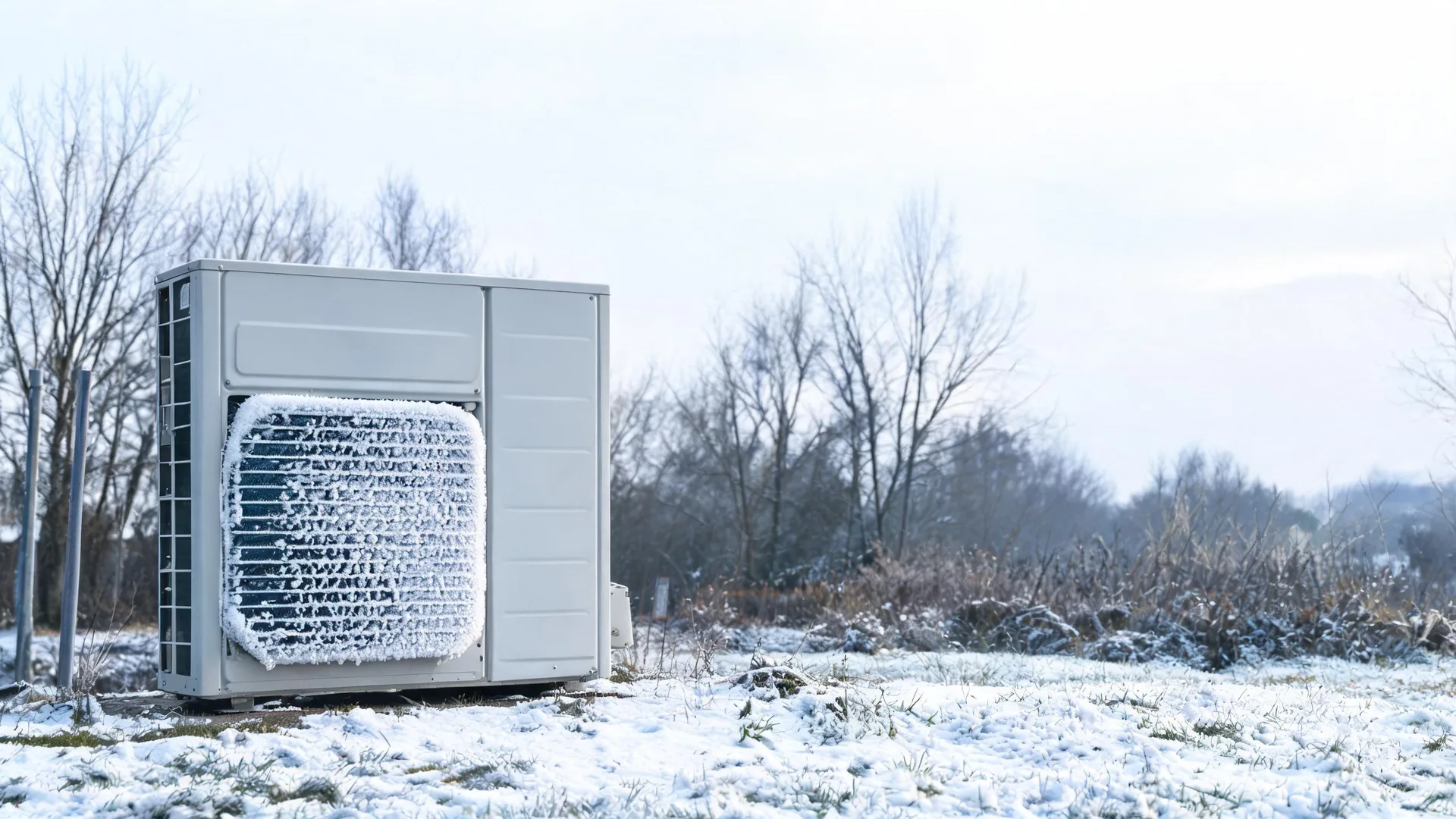
A heat pump usually gives warning before it quits for good. Short cycling is one sign. The unit kicks on, runs a few minutes, shuts off, then starts again before the house has warmed up at all. That can point to a dirty filter choking airflow, a bad thermostat sensor, or a compressor on its way out. Frost on the outdoor coil is normal in cold weather, but it should clear during the defrost cycle. A coil that stays caked in white ice means the defrost board or the reversing valve isn't doing its job. Listen for new noise too. Clicking, buzzing, or grinding that wasn't there before usually means a motor bearing or a failing contactor. And if the air from the vents feels barely warm, or the house takes much longer to come up to temperature than it used to, the unit is struggling to move heat the way it should. None of this means the heat pump is done for. It means something inside it is already failing, and the longer it keeps running that way, the more it tends to take other parts down with it.

Outdoor parts wear out first

The outdoor unit takes the beating. Fan motor bearings dry out, the contactor pits from switching on and off thousands of times, and the run capacitor loses its charge over years of use. Any of those can stop the outdoor fan or the compressor from starting at all, while the indoor side seems fine and nothing happens outside.

The compressor is the one that ends things

Most repairs are smaller than that. A capacitor, a contactor, a sensor. Those get replaced and the unit runs on like before. A failing compressor is different. It usually shows up late, after other warning signs were ignored, and once it starts going, it rarely gets better on its own.

A few things are worth checking before anyone comes out. Look at the thermostat first. Make sure it's set to heat and the set temperature is actually above room temperature, since a setting bumped by accident looks exactly like a dead system. Check the outdoor unit for anything blocking it. Leaves, a snowdrift, anything piled against the cabinet keeps it from pulling air through the coil. Go to the breaker panel and see if anything has tripped. A heat pump draws on separate circuits for the outdoor unit and the air handler, and either one tripping will shut the whole system down. Pull the filter and hold it up to a light. If you can't see through it, swap it, since a clogged filter chokes airflow and can bring on a lot of what looks like bigger trouble. None of this fixes a stuck reversing valve or a low charge, but it rules out the easy stuff before anyone starts charging to look at the hard stuff.

A repair is worth it when the part that failed is small and everything around it is still sound. A capacitor, a contactor, a defrost sensor, these get swapped out and the unit runs like nothing happened. Replacement starts to make sense when the compressor is the thing that's gone, or when the unit has needed a string of separate repairs in a short stretch of time. Age matters too, but not by itself. An old unit with a healthy compressor can still be worth fixing. A newer one with a dying compressor often isn't. The question to ask isn't just what this repair costs, it's whether the unit is otherwise sound enough to be worth putting money into at all.