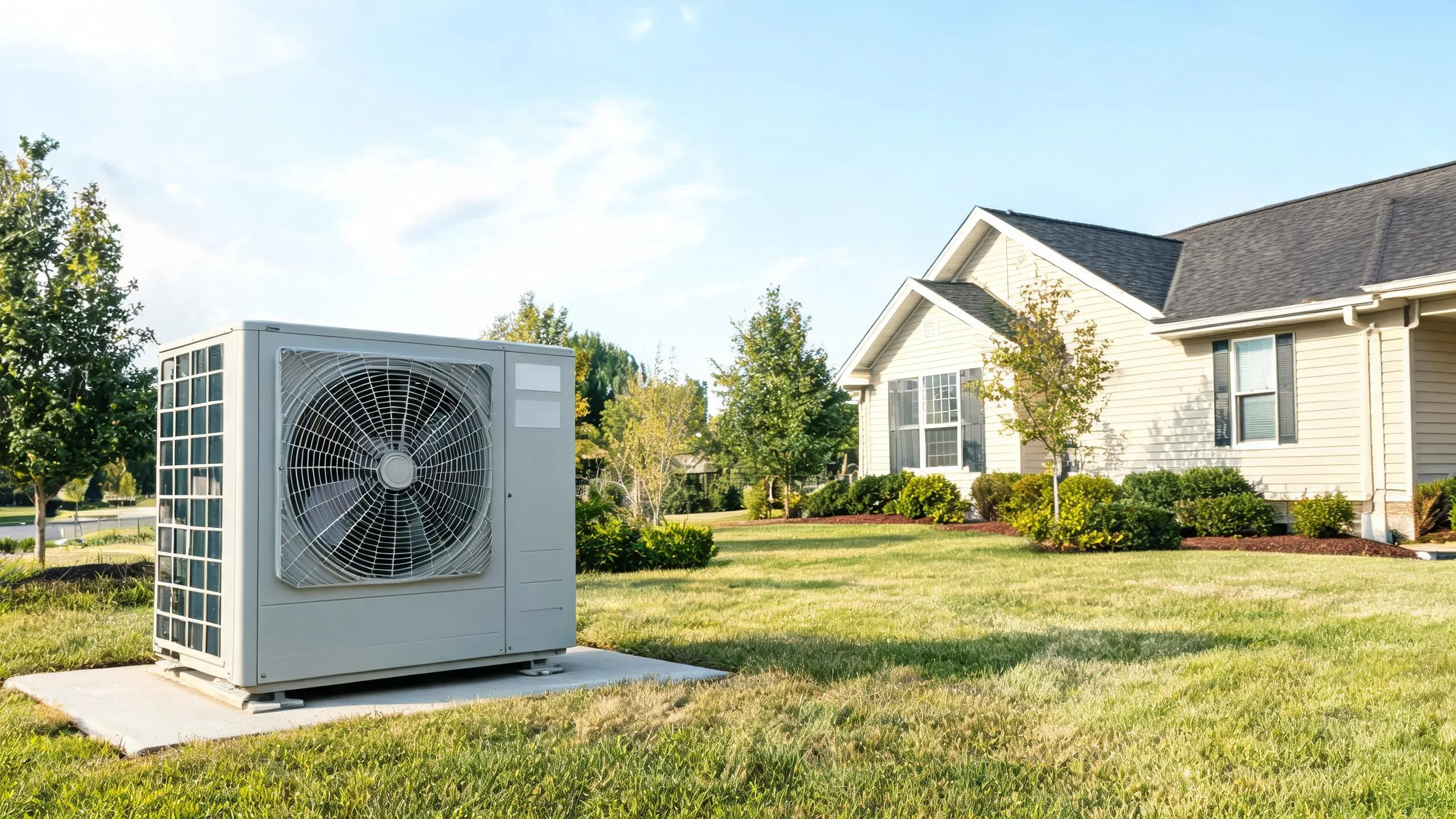
A grey heat pump outdoor unit mounted on a concrete pad in a suburban backyard, with a single-storey house visible behind it.

Heat Pump Repair in Kokomo, IN

Tell us about the job

Takes about a minute. No obligation.

RepairHeat PumpHoward County, IN
Step 1 of 2

What ZIP code is the job in?

September is when a weak heat pump still looks fine

Cooling here runs through August, so the heat pump has been working all summer. A part that was already struggling, a weak capacitor or a contactor going bad, can still limp through warm days when the load is light.

October is when that same part gives out

Heat starts in October after months of cooling. The switch to heat puts a new kind of strain on the system, and a part that was barely holding on in August is the one most likely to fail in the first cold week.

8 months
October through May, your system heats
3 months
June through August, it cools
21°F
the average winter night it heats against
82°F
the average summer afternoon it cools against
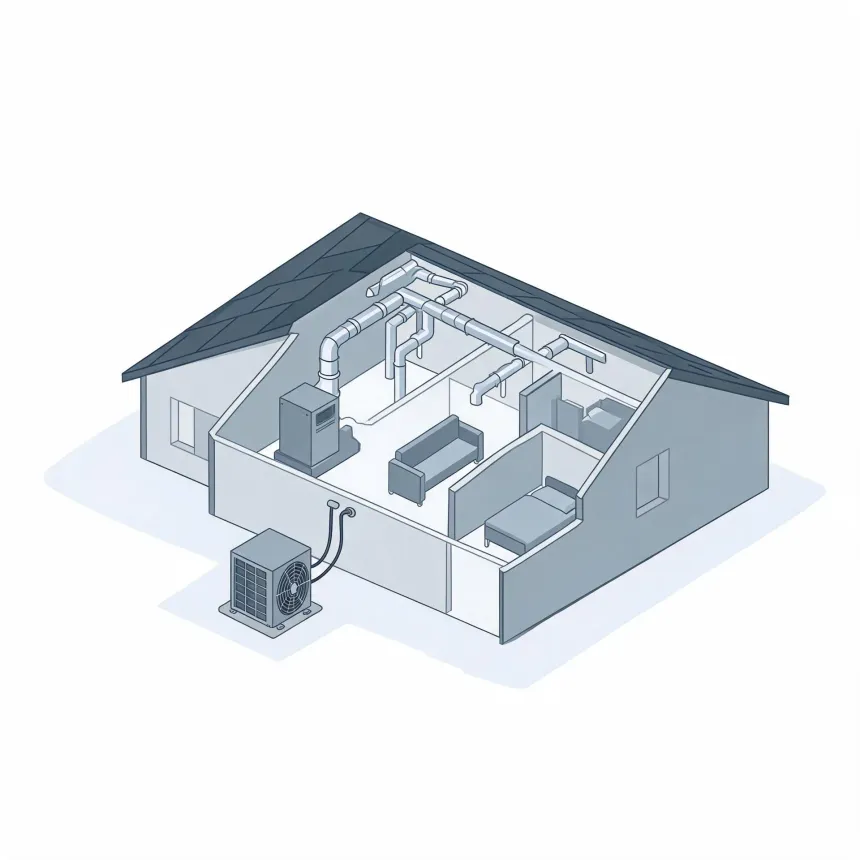
Isometric cutaway illustration of a single-story house showing interior rooms with furniture, an attic duct network connected to a furnace or air handler, and an outdoor condenser unit linked by lines outside the wall.
Your system heats October through May and cools June through August.

NOAA nClimDiv, 1991–2020 normals

Kokomo winters sit cold, with overnight lows averaging 21°F in December, January and February, so your heat pump's main job is heating, not cooling.

A heat pump that's never been pushed hard by extreme heat or extreme cold is usually a heat pump worth repairing instead of replacing.

Half the homes in Kokomo are older, and so are the heat pumps that came with them

Half the homes here were built by 1969
51 damaging wind events from 2015 to 2024
10 winter storms from 2015 to 2024
Electricity here isn't cheapIndiana homes paid 14.77 cents per kilowatthour in 2024, so a heat pump running wrong runs up the bill every month it's left that way.

A heat pump in Kokomo isn't fighting triple-digit heat or deep sub-zero cold most years, and that matters when something breaks. If the system has been getting serviced, a repair now is usually a straightforward fix to a part that wore out on schedule, not a sign something bigger is wrong. Wind and winter storms do roll through here, so it's worth asking whether the outdoor unit took a hit or iced over before the trouble started. Rule that out first. If the unit's been sitting fine and just started acting up with the cold snap, there's a good chance it's one part, not the whole system.

The longer it runs wrong, the more it costs

A heat pump that's cycling wrong or short on charge still draws power the whole time it runs. Left alone, that cost shows up on every bill until the part gets replaced.

Find a contractor
A white mini-split heat pump outdoor unit mounted on a concrete pad beside a gray-sided house, surrounded by gravel and green shrubs.

Ask how old it is before you fix it

If this heat pump came with the house, ask the contractor for its age and how many years it has left before deciding on a repair. A unit installed new within the last several years is worth fixing without much thought. One that's original to an older home may be close to the point where a repair just buys a little time. Either way, get the number before you spend on parts.

What it sounds like before it quits

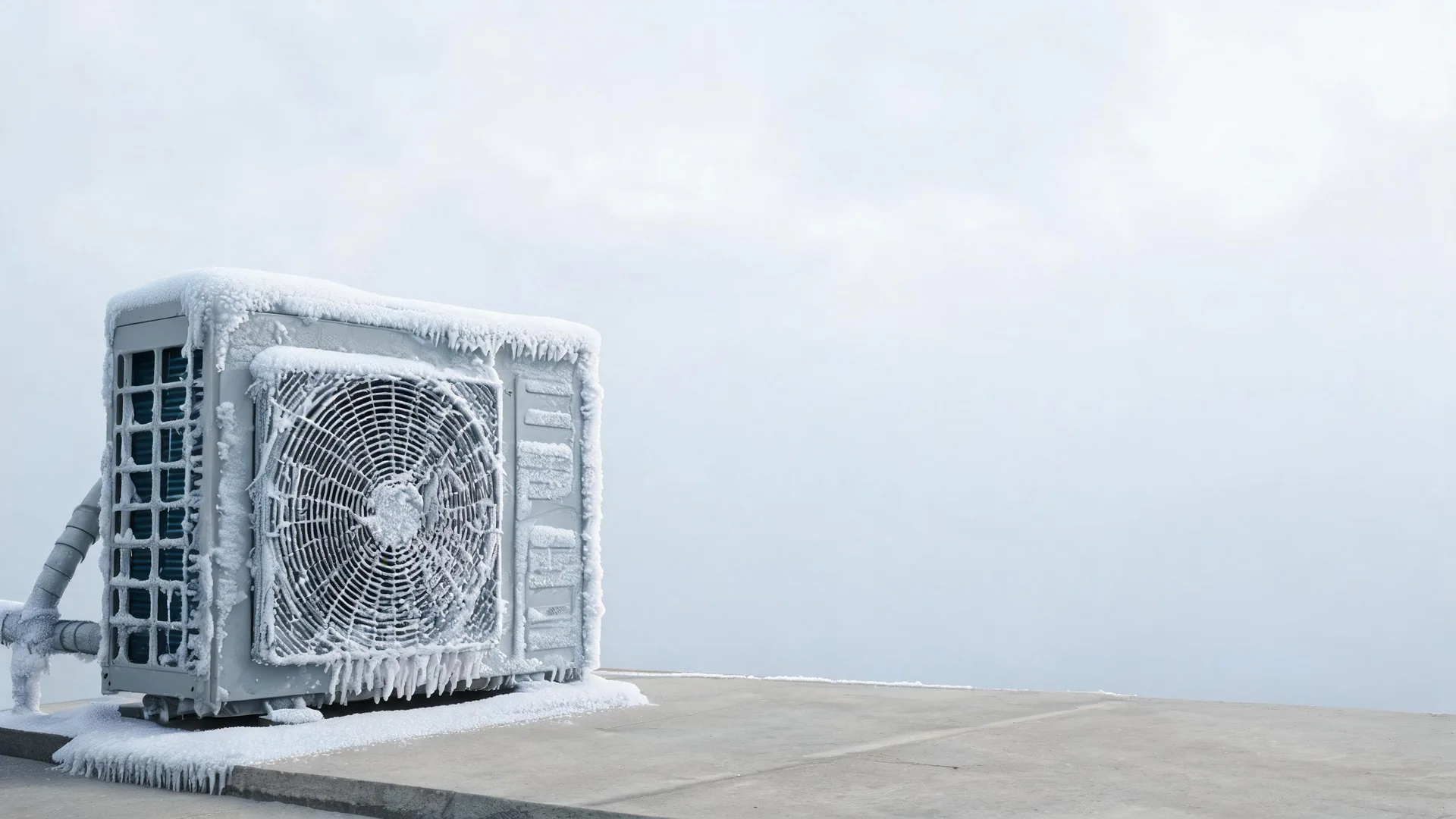
A heat pump in trouble usually says so first. Air coming from the vents that's cooler than it should be when it's set to heat, or the outdoor unit running without ever catching up to the thermostat. A clicking at startup that wasn't there before, or the system switching between heat and defrost more than it used to. Ice building up on the outdoor coil and not clearing on its own is another one worth noticing.

What's worth a same-day call

Short cycling, where the system turns on and off again and again, puts real strain on the compressor and is worth getting looked at fast. So is a total loss of heat in cold weather, or a breaker that trips every time the unit starts. A system that's just noisier than usual or running a little long can usually wait. One that's tripping breakers or not heating at all can't.

Most heat pump failures trace back to a handful of parts, and they don't fail at random. The capacitor wears down from constant cycling and is one of the most common reasons a system won't start or runs weak. A contactor's contacts pit and burn over years of opening and closing, until one day they don't close at all. The reversing valve, the part that switches the system between heat and cooling, can stick from corrosion or a weak solenoid, leaving the system stuck in one mode. Outdoor coils collect dirt and debris over time, and a coil that can't transfer heat properly makes the whole system work harder to do less. Refrigerant charge drops only if there's a leak somewhere in the line, never from normal use, so a system low on charge has a specific problem that needs finding, not just topping off. None of these fail overnight. They weaken gradually until a cold snap or a hot stretch finally asks more of the system than the worn part can give.

Age and repair history matter more than what the repair itself costs. A heat pump that gets a yearly checkup usually fails one part at a time, and replacing that part brings it back to normal. One that's been ignored tends to fail in a way that drags other parts down with it, since a bad capacitor left in place can take a compressor with it over time. So the real question isn't just what broke, it's whether the rest of the system was keeping up before this happened. A unit that's been quiet and reliable until now is a good candidate for a repair. One that's had repeated problems over the last couple of years is telling you something different, and another repair may just be a pause before the next one.