







A row of dark-sided houses with brown shingled roofs behind trimmed hedges, lawn, and large deciduous trees under an overcast sky.

Heat Pump Repair in New Castle, IN

Tell us about the job

Takes about a minute. No obligation.

RepairHeat PumpHenry County, IN
Step 1 of 2

What ZIP code is the job in?

Zone 5A means heating does most of the work here, and a heat pump built for that is just doing its job, not fighting conditions it wasn't meant for. Henry County winters average 22°F overnight across December through February. That's cold enough to lean on the system but not the kind of extreme that wears down its parts year after year. Hail events here are rare, and the ones that happen mostly hit roofs and siding before they'd touch an outdoor unit. So if yours is acting up, the cause is more likely something ordinary, a worn contactor, low refrigerant, a sensor out of calibration. That kind of problem is almost always worth fixing rather than replacing.

8 months
October through May, your system heats
3 months
June through August, it cools
22°F
the average winter night it heats against
82°F
the average summer afternoon it cools against
Isometric line illustration of a cutaway house showing interior rooms with furniture, ceiling ductwork connected to an indoor air handler, and a line running outside to an outdoor condenser unit.
Your system heats October through May and cools June through August.

NOAA nClimDiv, 1991–2020 normals

Your heat pump here runs eight months a year, October through May.

A part that was already weak usually gives out in October, right when the system switches over and starts carrying the load again.

A heat pump idling on a bad part runs up a bigger bill at 14.77 cents a kWh

Power costs 14.77 cents a kWh statewide
9 hail events from 2015 to 2024
12 winter storms from 2015 to 2024
Half the homes in Henry County are from 1961 or earlierA heat pump in a house that old is worth asking about before you pay for a big repair

A technician coming out for a heat pump in New Castle is more often repairing than condemning it. Winter storms have hit Henry County a dozen times in the past decade, and that kind of weather can knock a unit out of balance or ice up a line without doing any real harm underneath. So the first call is usually the right one, not a replacement quote. Get the actual part named, a contactor, a sensor, a low charge, before anyone talks about swapping the whole system.

Ask how much life is left in it before you fix what's broken

If your heat pump is original to the house, ask the technician how much life is left in it before you agree to the repair in front of you. A straight answer on both at the same visit is worth having.

Find a contractor
A man in a dark shirt, tan pants and a cap carries a canvas tool bag up wooden porch steps toward a blue front door, with a potted shrub beside the entry.
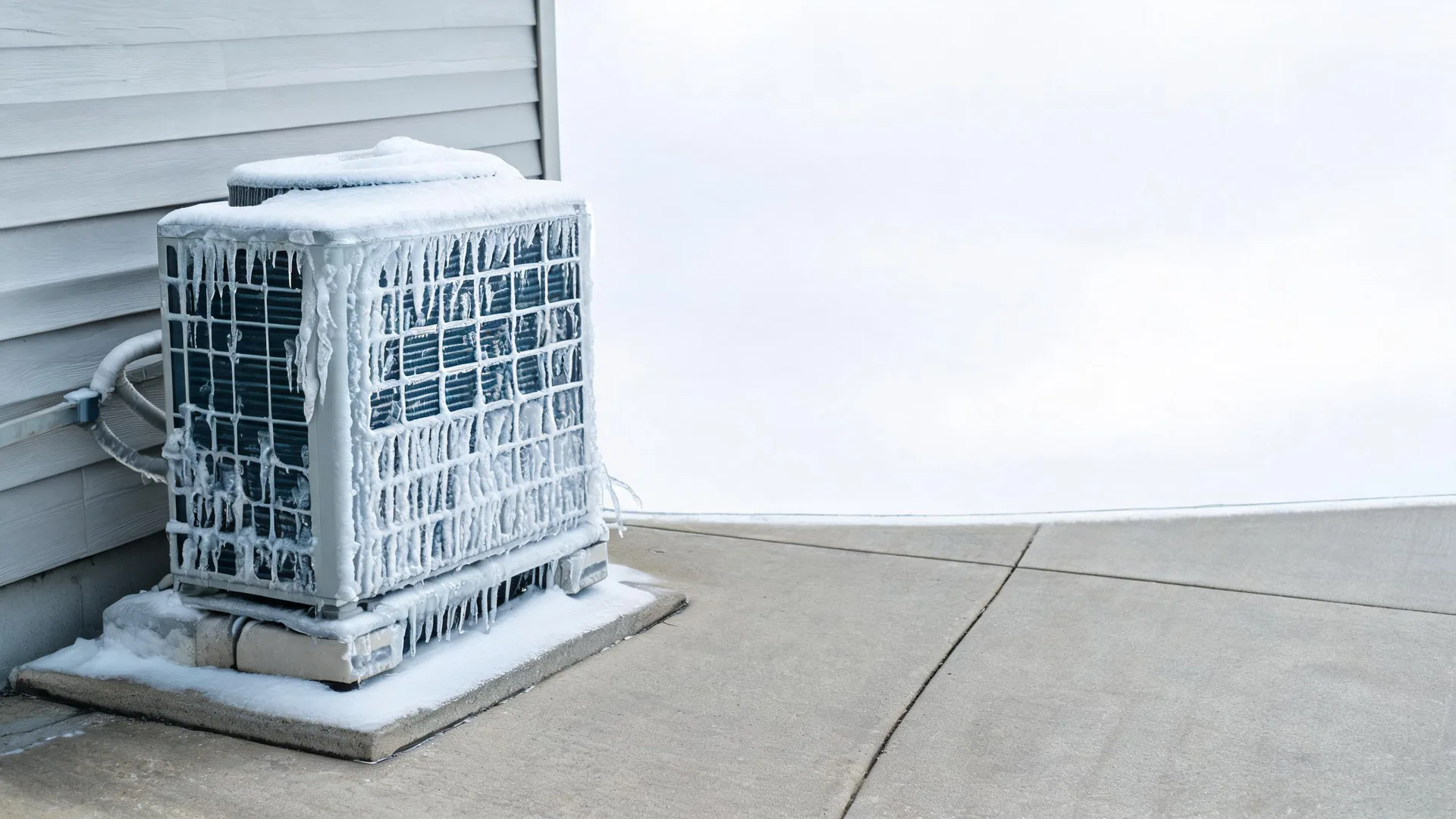
A residential heat pump outdoor unit mounted on a concrete pad next to a house with gray vinyl siding.

What a heat pump tells you before it quits

A heat pump that runs for months straight will show trouble before it quits outright. The outdoor fan might run rough or stop coming on. You might hear a click where the compressor should kick in and then silence. Defrost cycles can get stuck, so ice builds up on the outdoor coil and stays instead of melting off like it should. Airflow from the vents turns weak or lukewarm when it used to run warm and steady. None of that means the unit is worn out. It usually means one part has already failed and another is straining to cover for it. Catching that part early, a contactor, a defrost sensor, a failing capacitor, is what keeps a small repair from turning into a bigger one.

A small fault pulls other parts into it

A failing capacitor makes the compressor draw harder to start every cycle, and that extra strain wears the compressor down too. A low refrigerant charge makes the compressor run hotter than it should, and heat is what shortens a compressor's life. Left alone, one failing part puts load on the part next to it.
Waiting to call rarely buys you anything

A heat pump with a developing problem does not fix itself by running more. A contactor that is pitting keeps pitting. A sensor that is reading wrong keeps misleading the system until it short-cycles or quits outright. Getting the actual part named early is what keeps a repair small.

Before anyone comes out, there are a few things worth checking yourself. Go outside and look at the unit. If the outdoor coil is caked in ice or snow is packed against the fan, that alone can stop a heat pump from working right, and it's not a repair, it's just needing to be cleared. Check the thermostat is actually set to heat and not fan only, and that the setpoint is above room temperature. Inside, pull the air filter and hold it up to a light. If you can't see through it, swap it, because a clogged filter starves the system of airflow and can trip it into a fault on its own. Walk around and check that no vents are closed or blocked by furniture. Last, check the breaker for the outdoor unit hasn't tripped. None of this fixes a bad capacitor or a failing sensor, but it rules out the simple stuff before anyone gets billed for a service call.

A diagnostic starts outside at the unit itself, not with a laptop or a gauge. A technician will check the contactor and capacitor first, since those fail often and are quick to test. Refrigerant pressure gets checked next, on both the high and low side. A charge that's off tells you whether you're looking at a leak or just a part that's worn out. The technician will run the system through a defrost cycle on purpose, to see whether it reverses and clears the coil the way it should. Inside, they'll check the air handler for the same airflow problems that show up outside, a dirty coil, a weak blower motor, a filter nobody's changed. Naming the actual part is the point of the visit, not a guess at what might be wrong.