Three lit brick homes on a tree-lined residential street photographed at dusk.

Heat Pump Repair in Plainfield, IN

Tell us about the job

Takes about a minute. No obligation.

RepairHeat PumpHendricks County, IN
Step 1 of 2

What ZIP code is the job in?

Half the homes here were built in 1998 or later

Hendricks County splits evenly down the middle: half the homes were built in 1998 or earlier, half in 1998 or later. If your house falls on the newer side, the heat pump that came with it is likely not an old machine nearing the end of its life.


A newer heat pump is usually worth fixing

A heat pump with years of life left ahead of it is a good candidate for repair rather than replacement. The year your house was built is worth checking before you decide what this breakdown really means for the unit.

8 months
October through May, your system heats
3 months
June through August, it cools
22°F
the average winter night it heats against
82°F
the average summer afternoon it cools against
Isometric cutaway illustration of a house showing interior ductwork, an indoor air handler, and beds, with an outdoor condenser unit connected by lines outside the wall.
Your system heats October through May and cools June through August.

NOAA nClimDiv, 1991–2020 normals

Hendricks County asks real work of a heat pump, humid summers and cold winters both, but it's not the harshest climate a system can face.

A heat pump that isn't fighting extreme load year after year has less reason to wear out early, so a breakdown is more often something worth fixing.

Electricity here runs 14.68 cents per kilowatt-hour. A heat pump that's struggling, icing up, short cycling, blowing air that's not warm or cool enough, pulls more power to do the same job, or runs longer trying. You pay for that every month it goes unfixed. This isn't a machine to let limp along through a season while you decide. The sooner the problem gets found, the sooner your power bill stops carrying the cost of it.

A machine that hasn't been fighting extreme load is worth fixing, not replacing

This isn't a system that's been through the wringer every year. Get the repair done and it should give you plenty more good seasons.

Find a contractor
A gray heat pump outdoor unit mounted on a concrete pad next to the stone-accented exterior wall of a house.

A young system breaking down is a part failing, not the unit giving out

Find the year your house was built before you call anyone out. If it's from the newer half of the county, the heat pump has likely only been running a handful of years, maybe a decade or two at most. That's a system still early in its working life, not one limping toward the end of it. Knowing that number changes the question you ask the contractor. Instead of "is this worth fixing", you're asking "what's wrong with it", because a machine that young breaking down usually means one part failed, not that the whole unit is giving out.

It's not heating or cooling like it should

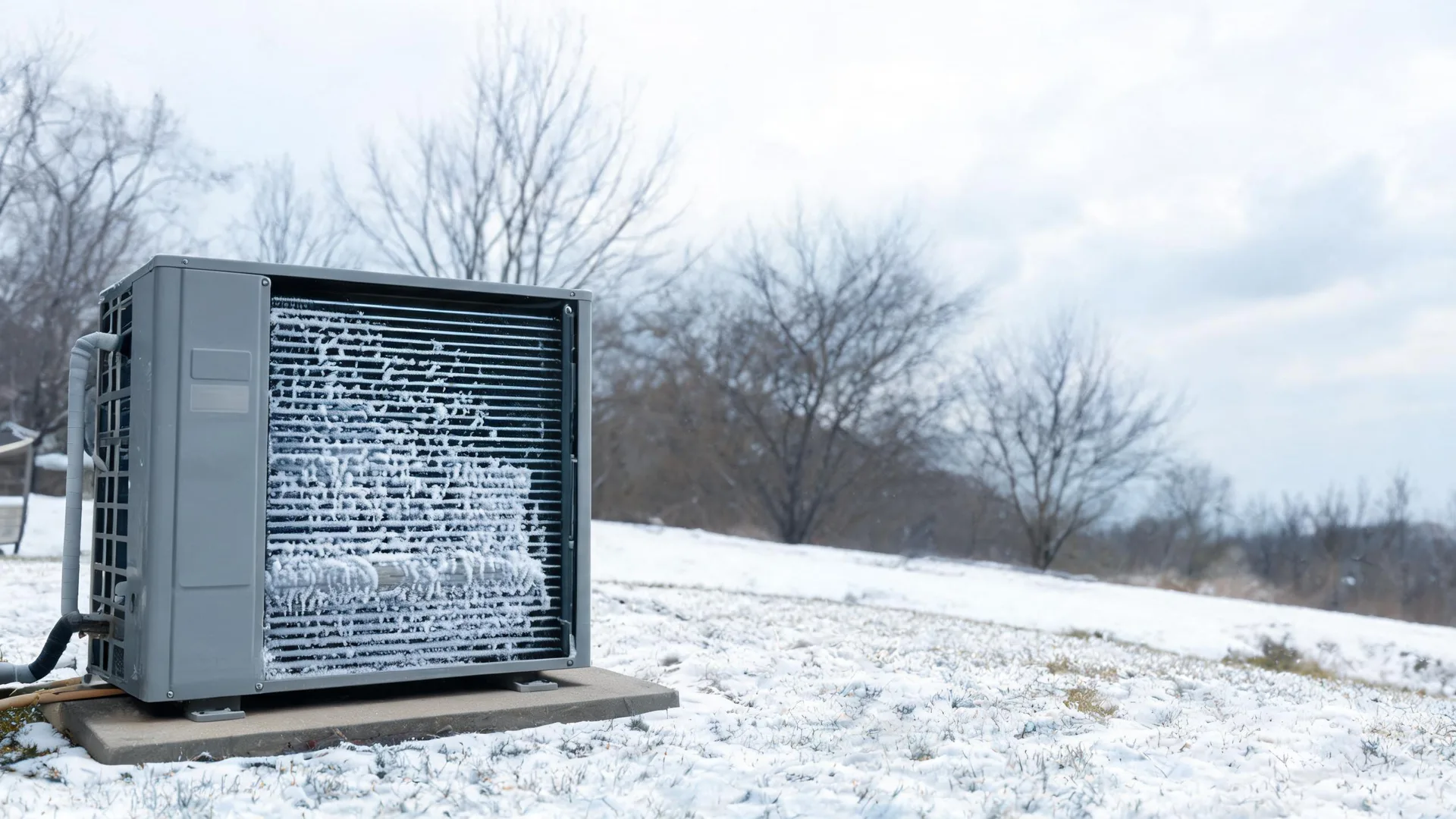
Warm air blowing in winter that never feels warm enough, or a system that runs and runs without the house catching up. Sometimes it's ice building up on the outdoor unit when it shouldn't be there. These are signs the refrigerant charge is off, a coil is dirty, or the reversing valve isn't doing its job switching between heat and cool.

It's cycling oddly or making noise it didn't before

A heat pump that shuts off and restarts constantly, called short cycling, is usually struggling with airflow or a failing part trying to protect itself. Grinding, buzzing, or a hard clunk when it switches modes points to the compressor, a motor bearing, or the reversing valve. Noise that's new is the system telling you something changed.

A heat pump that's struggling doesn't fix itself by running longer. If ice is building on the outdoor coil and the system keeps cycling anyway, that ice just keeps building, and it blocks airflow across the coil the unit needs to work at all. A compressor working against a bad refrigerant charge runs hotter than it's built to, and heat is what wears a compressor out early. A reversing valve that's sticking can get worse with use until it stops switching between heat and cool at all. Letting a small problem run is how it turns into a bigger one, and sometimes into the one part on this machine that's expensive to replace.

Once the problem's found, fixing it is the easy part. A stuck reversing valve or a low refrigerant charge is a repair, not a teardown. The part gets replaced, the charge gets set right, and the heat pump goes back to doing its job without pulling extra power to get there. Waiting doesn't save you anything here. Every week it runs wrong is a week added to the next power bill, on top of whatever that week does to the part that's already failing.